
On the road between Kibbutz Dan and Kibbutz HaGoshrim, there is a clump of large cement blocks, stacked like one might stack Lego. They are in a field near Kibbutz Dafna. They appear to be one of the many fortifications added or improved in this region after October 7, when there was fear of a mass Hezbollah attack.
Today the cement-block fort is a gathering place for kids, climbing on it and playing.
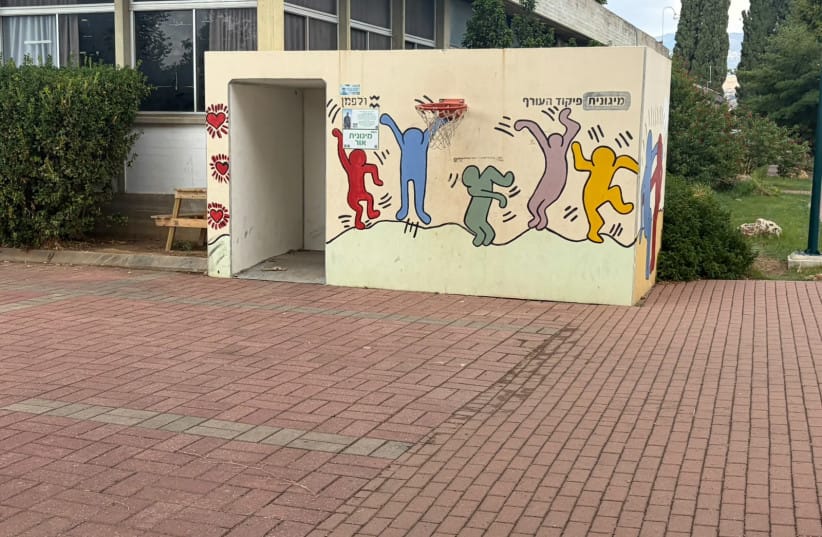 Today the cement-block fort is a gathering place for kids, climbing on it and playing. (credit: SETH J. FRANTZMAN)
This is a symbol of how Northern Israel has changed. This area at the northern end of the Huleh valley forms a kind of large basin that is surrounded by hills and mountains.
On one side is the ridgeline over Kiryat Shmona. On the other side are the feet of Mount Hermon, which rises up into the clouds, its summit shrouded obscured. Today Israel controls that summit. It was seized on December 8, 2024 when the Assad regime collapsed.
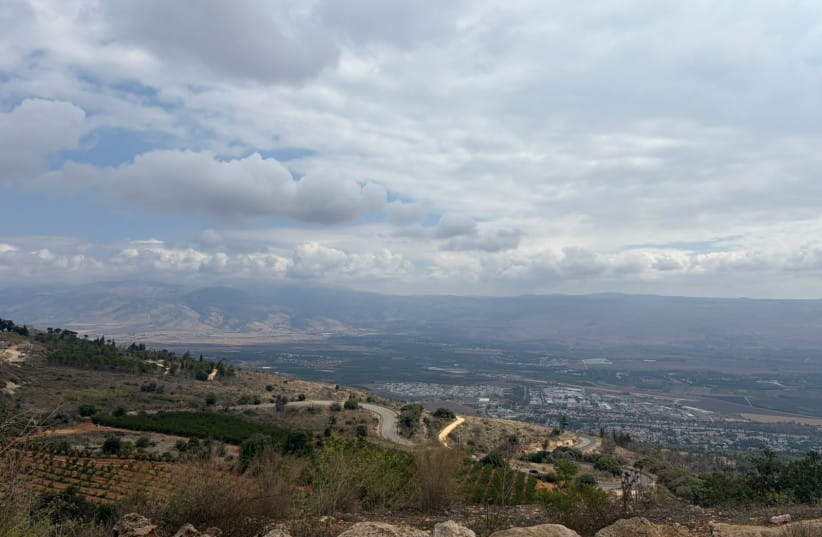 An overlook of Kiryat Shmona. (credit: SETH J. FRANTZMAN)
Israel also controls Mount Dov which sits just below the Hermon.
Residents returned to northern Israel after November 2024 ceasefire
In 2024 this area was a warzone. Most of the residents had been evacuated, including the entire city of Kiryat Shmona. Hezbollah missiles and drones were frequently falling in the valley. Israeli artillery was responding. However, until September 2024 Israel held off an a ground offensive against Hezbollah. Then, after triggering the exploding pagers, the IDF began a limited ground offensive against Hezbollah. There was a ceasefire in November 2024.
It’s hard to remember now how forsaken this place was during the war. Communities such as Metula, north of Kiryat Shmona, were not only a ghost town, but many homes were struck by Hezbollah. The only people in this area mostly consisted of members of local security teams. There were personnel drawn from the local communities who were then given arms and kitted out and recruited back into service so that they could receive proper support from the state to defend their communities. Many of them adopted an esprit de corps, with matching logos on their green shirts, and spray-painted logos and symbols all around the valley. The message to the enemy was that this area was protected. However, it didn’t feel protected to visitors. Everyone knew that Hezbollah’s large rockets could fall here quickly and kill.
A view of the Tel Hai ‘Roaring Lion’ monument. / Seth J. Frantzman
On July 27, 2024 a Hezbollah rocket fell in the Druze town of Majdal Shams in the Golan and killed 12 children near a soccer field. This massacre was an example of the deadly threat. Today that threat appears greatly reduced.
Kibbutzim are flooded with visitors over Sukkot
I drove up to Kibbutz Dafna on September 29. Founded in 1939 as one of the many “tower and stockade” communities built by Zionist pioneers, today it has around 1,000 residents. It sits on the Dan river, which is more like a stream that snakes through this area.
The community is simple like many of these kibbutzim up here. The people are friendly. There is a museum devoted to chocolate. A hotel chain called Melonot Metailim or Travel Hotels has a site here. There is a pool. The Kibbutz was crowded with visitors during Sukkot. It is an example of how tourists have returned to the north. People discussed what to do this week. Rafting on the Jordan river? Visiting Kiryat Shmona? Hiking in the Golan. At nearby Kibbutz Amir, the excellent Italian restaurant Loulou was full in the evening.
Hezbollah can no longer set up camp on Mount Dov
It has a feeling of a return to “normal” before October 7. There is a sense now that one can drive where they want. A hike on Ayun stream, near Metula, for instance is one option. Before October 7 this area was on the Lebanese border and there were large signs put up by Hezbollah.
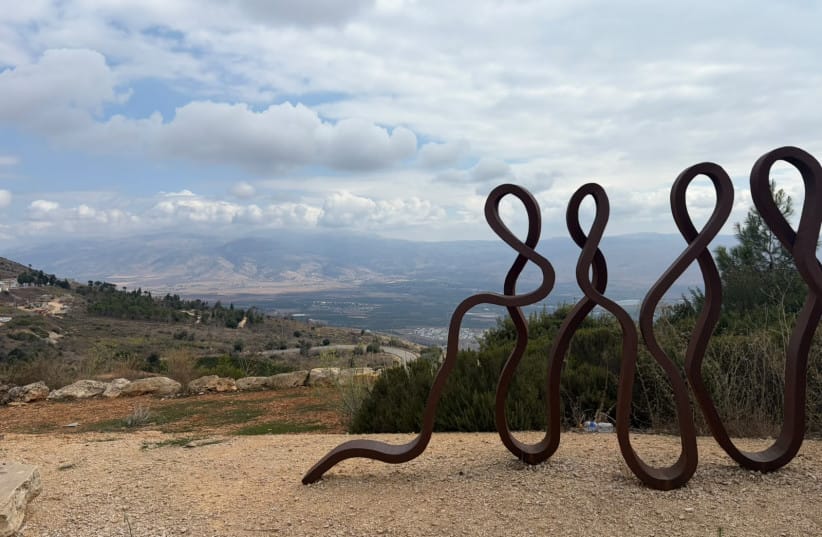 An overlook of Kiryat Shmona in northern Israel. (credit: SETH J. FRANTZMAN)
There were Hezbollah flags and a picture of Al Aqsa Mosque and a Palestinian flag on the other side of the border. The message from Hezbollah is that it can do what it wants. The UN used to be seen across the border, doing its usual nothing to stop Hezbollah.
Today that has changed. The enemy is gone, pushed north by the IDF. Homes of Lebanese on the other side of the border have been flattened. Hezbollah positioned eviscerated. The Hezbollah flags and signs are gone. Israel now controls both sides of the border. No longer can Hezbollah set up “tents” in Mount Dov as it used to. Before October 7 there was fear that a clash over the Hezbollah tent provocation would lead to war. Now the war has come.
The feeling of war is still clear here. At night helicopters fly in the distance, the echo of their motors reverberating back and forth across the valley. There are explosions and what sounds like artillery fire. At night sound travels further, and this valley is like a giant auditorium. The explosions could be in Syria or the artillery could be practicing in the Golan. Or it could be controlled demolition of Hezbollah sites in Lebanon. What is clear is that although the war is now somewhere else, it is still ever present.
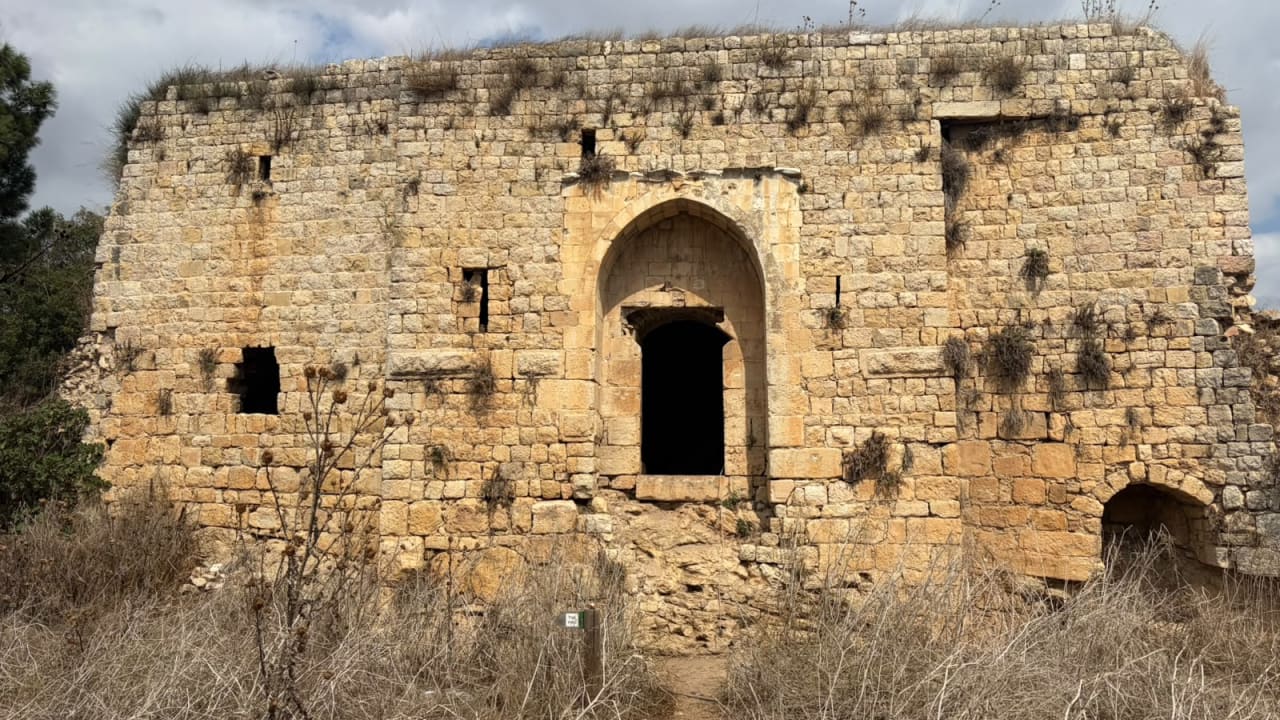
Hunin castle on the ridge line, overlooking Kiryat Shmona. / Seth J. FrantzmanThreats remain despite return to normalcy
On September 29 the Syrian government detained a terror cell in the Yarmouk Basin which is between the Golan and the Kingdom of Jordan. That means that there are still threats. Israel has also been detaining Syrian civilians and there are concerns about where Israel’s actions in Syria will lead. However, for the masses of visitors who have returned here, to once again turn the north into an area of hiking and sport, it is clear that a feeling of peace and normalcy is at hand.
The Kibbutzim here have known war for 90 years since their founding in the 1930s. This whole area at the time was under threat during the Arab revolt. Zionist pioneer Joseph Trumpeldor was killed in 1921 at Tel Hai, two miles from Dafna. After the War of Independence the area came under fire from Syria and later from Palestinians in Lebanon in the 1970s and then from Hezbollah in the 1980s and 1990s.
They built large bunkers underground, covered in the dark volcanic rock that is common here. The bunkers look like porcupines now, all over the landscape. They are remnants of a different war. Today the communities have modern fortified rooms, attached to many of the small homes. Many of these are new, since October 7. New ones have been added outside. Like the fortified positions along the road, now turned into places for kids to play, these are symbols of the changing landscape from war to peace.