
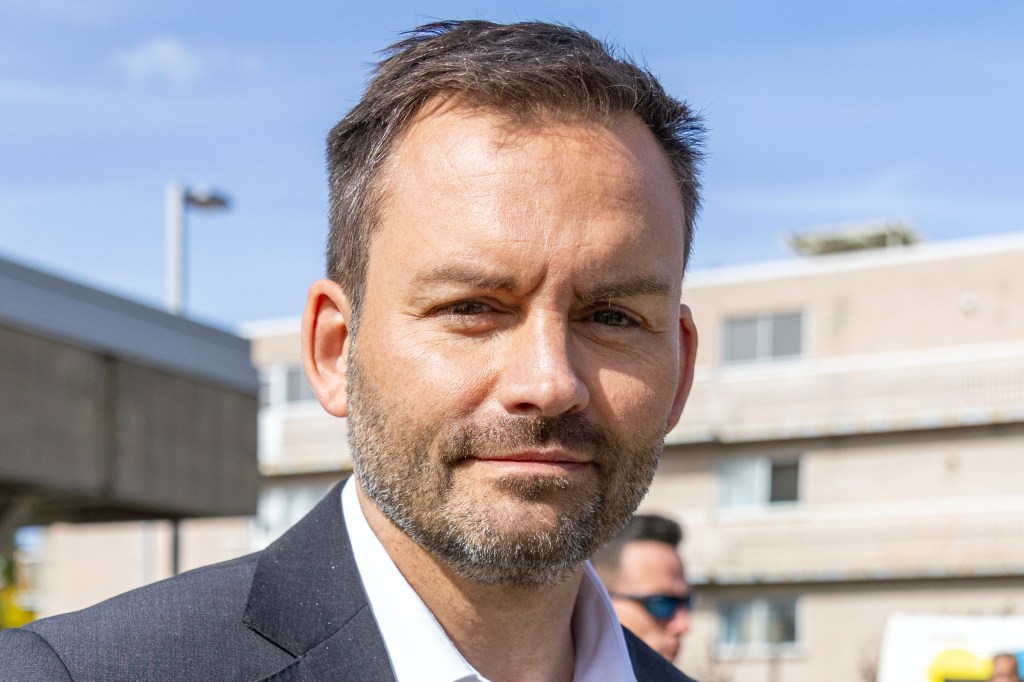
Parti Québécois Leader Paul St-Pierre Plamondon is laying the groundwork for confrontations with Prime Minister Mark Carney’s federal government beyond the question of Quebec independence, promising to challenge it over immigration and the monarchy.
On Tuesday, St-Pierre Plamondon said a PQ government would move within its first 100 days to strip Quebec’s lieutenant-governor of funding and effectively “abolish the office,” even though it is entrenched in the Canadian Constitution. He also vowed to oppose from “Day 1” any attempt by Ottawa to increase immigration.
The PQ is gaining momentum in the latest polls with less than a week before election day, with analysts increasingly focused on whether it would form a minority or majority government. The party has also maintained its commitment to hold a referendum on Quebec independence during its first term, though not while President Donald Trump remains in the White House.
For Carney, a PQ government could complicate his “Team Canada” approach when confronting U.S. tariffs and strengthening the domestic economy.
St-Pierre Plamondon’s monarchy pledge came after it emerged that a seven-day trip by former governor general Mary Simon and her delegation to Norway, Denmark and Greenland in February cost taxpayers about $711,000.
The lieutenant-governor position, which represents the Canadian monarch in Quebec, formally appoints the premier and cabinet, opens sessions of the legislature and grants royal assent before bills become law.
But actually abolishing it would therefore be considerably harder than cutting its funding, which St-Pierre Plamondon acknowledged. Under the Constitution, any amendment affecting the office of the monarch, governor general or a provincial lieutenant-governor requires the consent of the House of Commons, Senate and every provincial legislature.
St-Pierre Plamondon said the monarchy costs Canadian governments between $50 million and $60 million annually, with Quebec taxpayers contributing between $12 million and $15 million. Those figures are consistent with an estimate of the Monarchist League of Canada, which put the cost at about $1.61 per Canadian in 2021-2023, of which $1.26 went to the governor-general and $0.29 to lieutenant-governors.
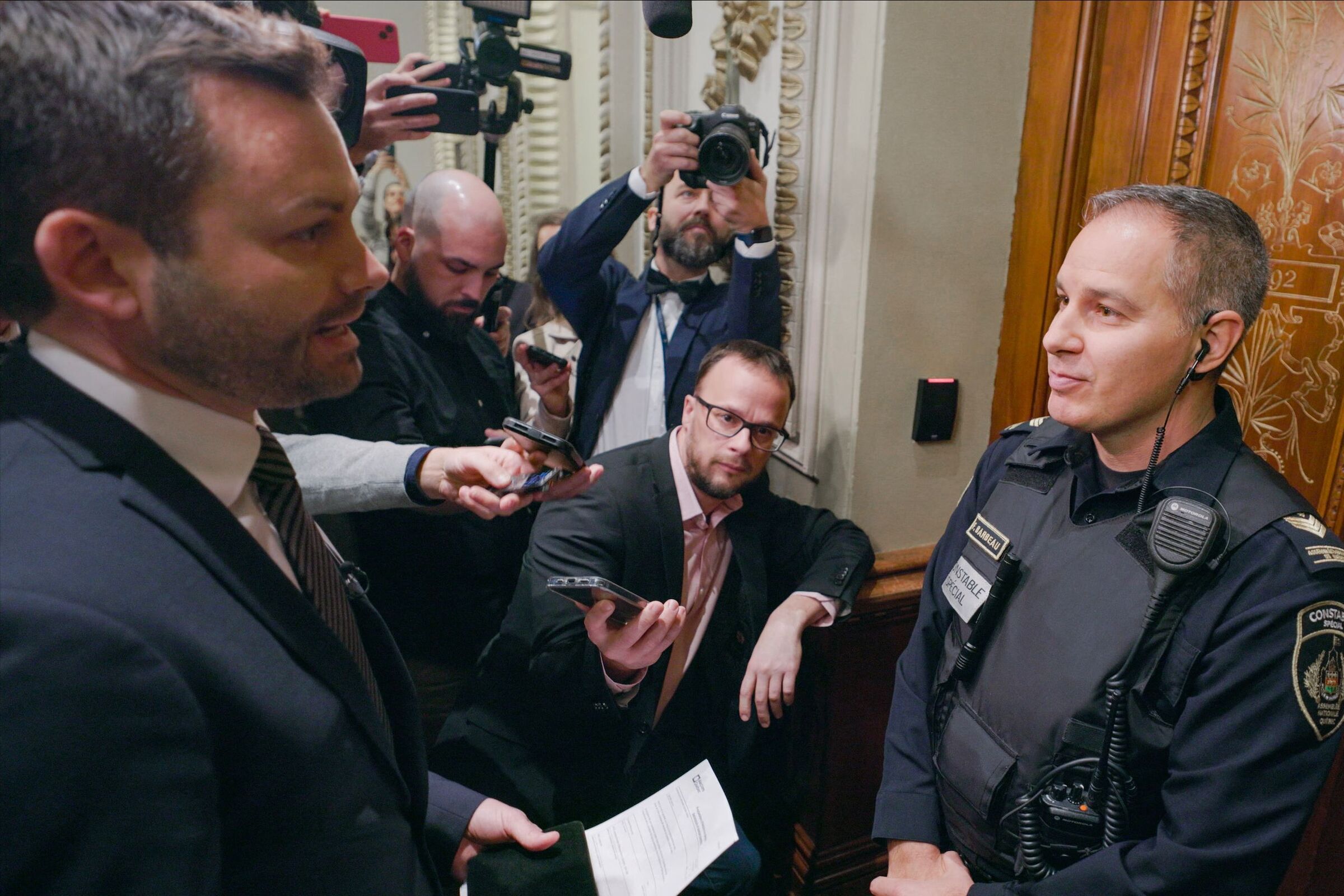 Parti Québécois Leader Paul St-Pierre Plamondon is denied entry to Quebec’s National Assembly after refusing to swear oath to King, on Dec. 1, 2022. PHILIPPE-OLIVIER CONTANT / AFP via Getty Images files
In 2022, three PQ MNAs elected, including St-Pierre Plamondon, refused to swear allegiance to King Charles III and were initially barred from sitting in the National Assembly. Quebec subsequently passed legislation making an oath to the King unnecessary for MNAs to take their seats.
Coalition Avenir Québec minister Simon Jolin-Barrette later proposed replacing the lieutenant-governor with an “Officer of Quebec” in a draft Quebec constitution that died on the order paper. He said discussions with Ottawa would be necessary.
On immigration, St-Pierre Plamondon wrote on X: “A PQ government will oppose from Day 1 any increase in immigration quotas imposed by the federal government and any attempt to circumvent Quebec democracy to achieve it.”
It followed an interview in which Carney told The New York Times that, after reducing population growth, the federal government would eventually have to consider a “controlled increase” in its next immigration levels plan, which is tabled annually and set to come next month.
“Now the question starts to become, when do we resume some controlled increase in the population, which is the nature of Canada?” Carney said. “So that will happen, and we just want to make sure that we’ve got it under control.”
Quebec already has broad powers over immigration, but Ottawa still sets admission, refugee claims and parts of the temporary immigration system.
The CAQ government’s current plan aims for about 45,000 permanent residents a year through 2029, while the PQ has campaigned on lowering that number to about 35,000 and reducing the temporary resident population.
The Gazette reached out to Carney’s office for comment but did not receive a response before publication.

I’ve been writing for the Montreal Gazette since 2023. My favourite stories are ones that make you think and I’m always looking for new ways to tell them. At McGill, I studied economics and computer science. Now I live in the city’s Plateau, where I wear Doc Martens to try and blend in among the hipsters. Got a story? Email me.
hnorth@postmedia.com