
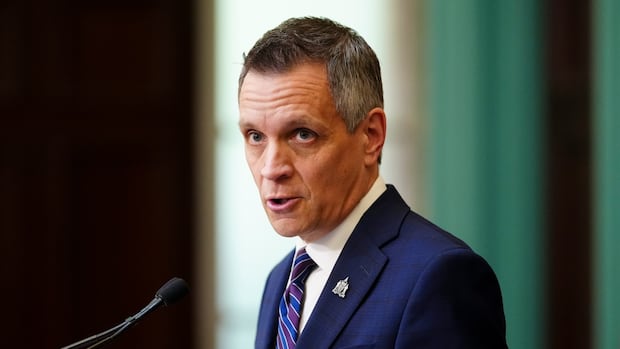
Ottawa Mayor Mark Sutcliffe is looking to hold any property tax increase next year to 3.75 per cent, as he prepares to go to city councillors with his high-level budget asks to fund “critical areas” like policing and transit.
That number is only a target, an upper limit meant to guide city staff as they draw up a detailed draft budget over the coming months. It comes as part of the 2026 budget directions report released Thursday.
The report lays out the cost pressures facing the city and how much money it will have to raise to cover them.
“Once again, we are committing to keeping taxes as low as possible while investing in safety and reliability,” Sutcliffe told a news conference on Thursday.
Much of the tax target increase could go to pay for police. The upper limit of tax increases to support most city services would be 2.9 per cent under the proposal, while a levy that funds the Ottawa Police Service could rise by much as 6.5 per cent. The 3.75 per cent figure is a combined average.
Sutcliffe said it would be the biggest boost to the police budget in more than 15 years. He said it will help support the move to a district policing model and implement a staff stabilization strategy.
“Our residents have been asking for better and more effective policing,” Sutcliffe said. “They want to see more officers patrolling our streets. They want faster response times. They want to feel safe in their community.”
If the budget directions pass, city staff will also look at fare increases and operating efficiencies at OC Transpo, which Sutcliffe said is still facing a structural deficit.
Months-long budget process
It’s only the first public step in a months-long budget process. Councillors will debate and vote on the report next month, when they could adjust the proposed tax target up or down.
City staff would then go back to the drawing board and write up a detailed budget proposal that meets the council-approved directions. It will then come back to council for approval later in the fall.
The proposed 3.75 per cent tax increase for 2026 is similar to the final number in this year’s budget, though the higher range for the police levy is new.
City staff initially proposed a 2.9 per cent tax increase for 2025, though that didn’t account for a deep deficit at OC Transpo. Ultimately, city council raised transit fares and a transit levy that effectively pushed the tax hike up to 3.9 per cent.
The transit pressures haven’t disappeared. For 2026, the directions report contemplates raising fares and a levy for transit yet again.
“This report includes a range of options to increase funding for public transit to record levels,” Sutcliffe said. “Public transit it vitally important to our community and our economy.”
While the transit levy could rise in a range between three and 15 per cent, fares could rise anywhere between 2.5 and 7.5 per cent. Staff could also look for further “operating efficiencies” and keep seeking support from higher levels of government.
Those are at least the options staff will consider as they draft the budget, assuming council approves the directions report.
In his election campaign, Sutcliffe had promised to limit tax hikes to 2.5 per cent, but only for the first two years of his term. He accomplished that in 2023 and 2024.