
By Sharon Zhang
This article was originally published by Truthout
The war has knocked out six hospitals, including a children’s cancer hospital that was temporarily rendered inoperable.
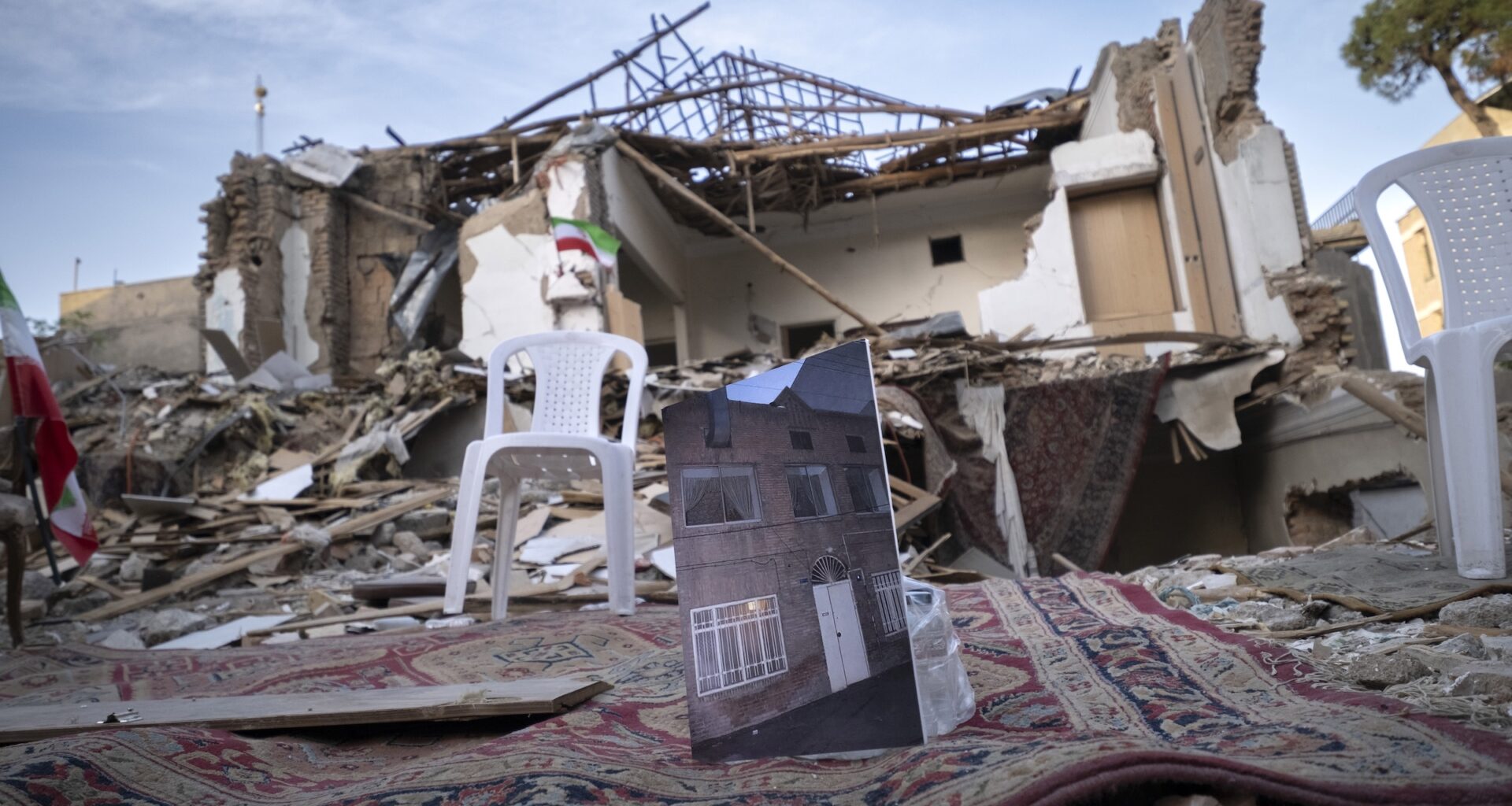
A new report details the widespread damage to civilian infrastructure in Iran amid the U.S.-Israeli war, adding to war crimes allegations as the U.S. openly targets civilian sites and threatens genocide against the country’s 92 million residents.
An analysis of media, economic, and government reports by the National Iranian American Council (NIAC) released on Tuesday found that strikes against sites like schools, airports, health centers, and civilian-related industries “present a pattern in which economic infrastructure was a target category itself.”
“The consequences did not remain at the strike sites. They propagated through every system that connects a modern society,” the report found. “Iran’s people entered this war already impoverished, already traumatized by a lethal crackdown, already disconnected from the war. The war took much of what remained.”
As of late August, before the latest renewal of strikes, the war had damaged or destroyed 80 energy facilities, 27 airports, 12 bridges, two tunnels, over 210 health centers, and at least 1,288 schools, including 32 universities, in Iran, the report finds. The war has also had dire impacts on industries that support Iran’s economy, taking out, at one point, 70 percent of Iran’s refining throughput, while 70 percent of steel production capacity has been destroyed.
It is difficult to statistically quantify the human toll amid the war, as Iran’s government does not regularly report losses. According to the UN, over 3,400 civilians had been killed in Iran as of the end of June, with 33,000 injured and 149,000 civilian units damaged.
The damages have had catastrophic consequences for the economy, with over 1 million jobs lost and food inflation up by 100 percent, deepening deprivation in a country already suffering from widespread poverty as a result of decades of U.S. and other international sanctions. Some strikes have directly hit food-related infrastructures, like wheat storage silos and fishing vessels.
This week, the rial hit another record low after the Trump administration’s latest escalation of its sanctions regime, which has been likened to collective punishment by Iranian officials. The economic impacts of the war have led to “daily deprivation” for Iranians, the report says, citing testimonies from residents who say they are cutting back on certain types of food or going without it altogether because of skyrocketing prices.
While NIAC’s report focuses on damage to civilian sites in Iran, Iranian forces have also struck civilian sites in other countries as Iran retaliated against U.S.-Israeli strikes.
NIAC’s findings come as the U.S. has come under international scrutiny for civilian harms and war crimes. A UN mission found in a report released this month that the U.S. committed war crimes in its strikes on February 28 on a school in Minab and a sports facility in Lamerd.
One airport, the Bushehr International Airport, was completely destroyed during 13 nights of consecutive U.S. strikes in July, the report found. The airport was the main civilian airport in the area, but was also used for military purposes; the report notes that the “military function at one part of a shared airfield cannot license the destruction of the passenger terminal … particularly in a war waged without authorization from the UN Security Council.”
In April, Iranian officials announced that over 210 medical centers were hit during the war, but the Iranian Red Crescent said that month that 339 medical facilities had been damaged. Around that time, the UN noted that between 24 and 26 health workers had been killed.
One of the worst incidents was the damage to a cancer hospital for children, the Shahid Baghaei Hospital in Ahvaz, in southern Iran. The hospital was temporarily taken out of service in July and over 200 patients were forced to evacuate after U.S. strikes nearby caused shockwaves that damaged the facility.
This article was originally published by Truthout and is licensed under Creative Commons (CC BY-NC-ND 4.0). Please maintain all links and credits in accordance with our republishing guidelines.