
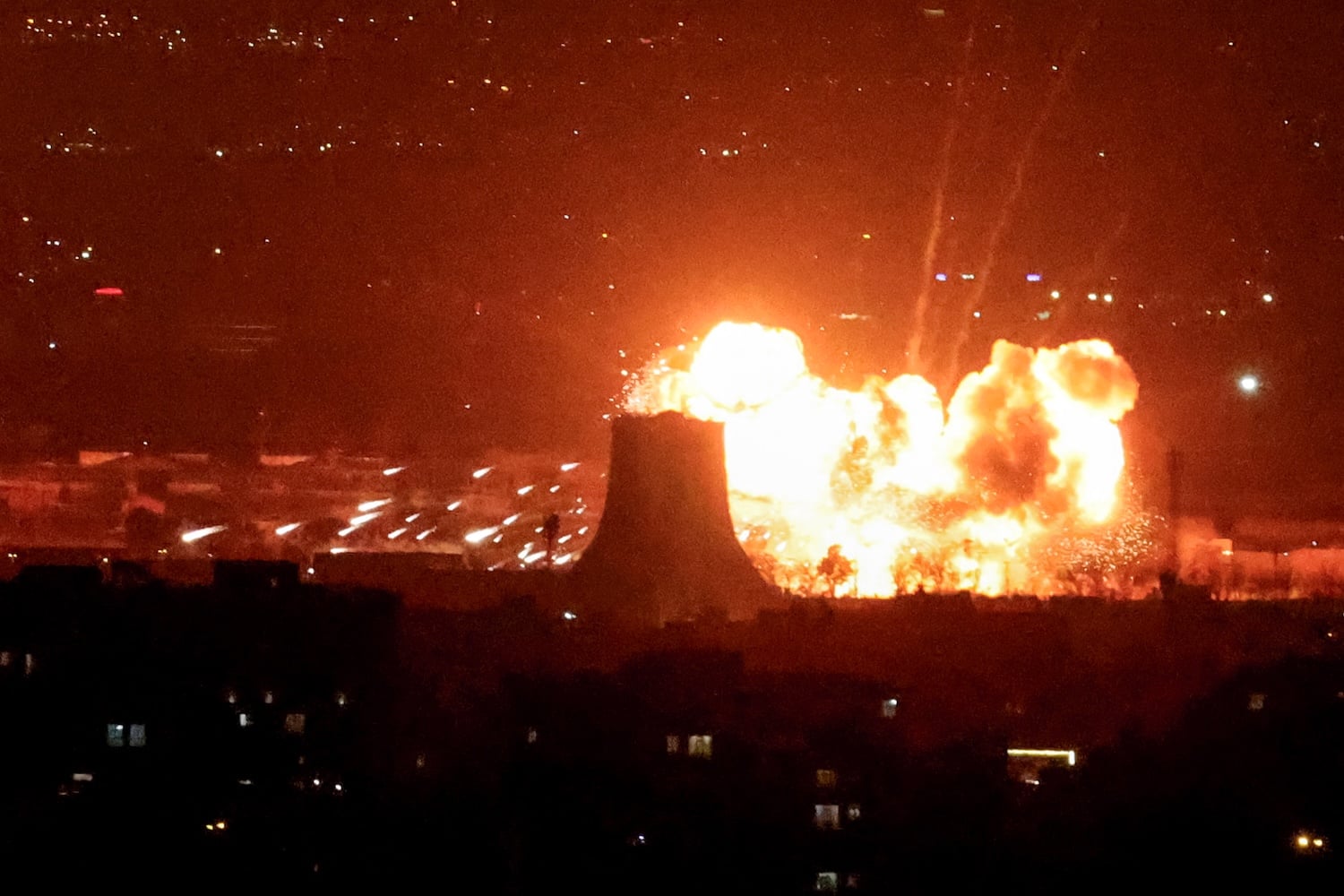
There is reason to believe that once the U.S. midterm elections have passed, President Donald Trump will escalate against Iran. Until now, the risk of surging energy prices has acted as a check on Trump’s behavior. In April, it forced him to retreat from open conflict and pursue a diplomatic solution. When the resulting Memorandum of Understanding (MOU) collapsed over disputed interpretations, Trump pivoted back toward economic pressure on Iran. But he has largely avoided more intense fighting in order to avoid provoking further domestic backlash over rising energy costs.
Now, the United States and Iran have settled into a battle of wills to see which side can endure more economic pain. Both Iran and the global economy are under significant duress. But both sides have avoided significantly escalatory steps, such as targeting energy infrastructure, buoyed by the belief that time is on their side.
There is reason to believe that once the U.S. midterm elections have passed, President Donald Trump will escalate against Iran. Until now, the risk of surging energy prices has acted as a check on Trump’s behavior. In April, it forced him to retreat from open conflict and pursue a diplomatic solution. When the resulting Memorandum of Understanding (MOU) collapsed over disputed interpretations, Trump pivoted back toward economic pressure on Iran. But he has largely avoided more intense fighting in order to avoid provoking further domestic backlash over rising energy costs.
Now, the United States and Iran have settled into a battle of wills to see which side can endure more economic pain. Both Iran and the global economy are under significant duress. But both sides have avoided significantly escalatory steps, such as targeting energy infrastructure, buoyed by the belief that time is on their side.
Trump, for his part, has repeatedly expressed confidence that Iran’s position will soften after the November midterms, implying that Tehran is trying to make him pay a political cost for the war before pivoting to make a deal. However, Trump’s prognostication may say more about his own thinking than Iran’s. After the midterms, he may decide that winning the Iran war is central to his legacy and that maintaining the status quo will not achieve his goals. Pressure from U.S. and Israeli hawks and Gulf partners to “finish the job,” coupled with growing fears over critical munition shortages, may also weigh in his calculation.
If Trump decides to escalate in pursuit of victory, he has a range options, although none are likely to deliver the outcome he seeks.
More Epic Fury. The United States, possibly joined by Israel, could decide to launch new, more intense strikes against the same types of targets—military installations, deployed missile systems, and energy infrastructure—that were struck March. In this scenario, the United States could certainly impose further pain and degrade Iran’s military and its ability to threaten the Strait of Hormuz and its neighbors. But it is unclear how these actions would change Iran’s behavior when they didn’t earlier in the year, especially if Iran is again able to hide enough munitions to maintain a counterstrike capability.
The best-case scenario is that Trump uses such strikes as a pretext for returning to negotiations. However, the risk is that Iran may again focus its retaliation on the Gulf states, which are already growing skittish about the collateral damage they’ve faced. The worst-case scenario for Trump would be if he authorizes strikes against Iranian civilian infrastructure, prompting Iran to reciprocate with strikes on vulnerable Gulf energy sites. If the White House calculates that, with the midterms over, an energy crisis is an acceptable price to pay for defeating Iran, global consumers will be left to suffer.
The season finale. Another possibility is that Trump seeks a high-profile “finale” to claim victory, thereby bringing the war to a narrative conclusion even without securing his initial objectives. This could involve actions such as a special forces operation intended to secure the highly enriched uranium (HEU) that is currently buried underground but remains the biggest near-term nuclear threat. Eliminating Iran’s stockpiles would greatly reduce the risk of an immediate nuclear breakout and would enable Trump to claim that the war was part of a coherent strategy to significantly degrade Iran’s nuclear program. Alternatively, Trump could launch a surprise raid to seize the Iranian oil terminals at Kharg Island and hold them for ransom as part of a peace deal.
Needless to say, this would be highly risky, possibly involving significant U.S. casualties. Iran’s HEU is likely dispersed in multiple locations. What’s more, any raid into Iranian territory—whether aimed at reactors or Kharg Island—would require U.S. troops to hold static positions inside Iran while taking incoming fire.
Arming the opposition. Trump and Israel have flirted with arming opposition groups, such as the Kurds, since the outset of the war. This might seem like a low-cost way to dislodge the regime, but it, too, is unlikely to work.
First off, there is no unified opposition or popular dissident leader to whom the United States could easily channel weapons. This means Washington would quickly find itself organizing, training, and protecting any nascent rebel force. Further, arming ethnic or separatist groups would be a propaganda boon for the Islamic Republic, allowing the regime to rally support from disaffected citizens in the Persian heartland. Finally, even in the unlikely event that such a campaign defied expectations and fractured the regime, this is more likely to spark a messy civil war than a clean transfer of power. Such a conflict could prove bloodier than the Syrian civil war, producing a massive refugee crisis and destabilizing the region for a decade.
Go for broke on the economy. Washington has tried to use a military blockade and economic sanctions to bring Tehran to its knees. These measures—especially the new air embargo—are having a significant impact on Iran. But China’s willingness to keep trading with Iran gives the regime an economic lifeline. Before the blockade, China purchased 90 percent of Iran’s oil exports and hosted much of Iran’s financial deposits in Chinese banks. With this in mind, Trump may decide that imposing aggressive sanctions against the Chinese banks, refiners, and ports still doing business with Iran could finally break the regime’s resistance. This could be combined with kinetic measures aimed at disrupting overland exports to Iran’s neighbors.
Even without the midterms to worry about, however, this would be a dramatic step. Trump may be willing to risk his trade détente with China. But he would still be loath to damage an already struggling U.S. economy. Treasury Secretary Scott Bessent essentially admitted this in August when he rhetorically questioned why the United States would intentionally “blow up the global financial system” with Iran-focused sanctions on Chinese companies, thereby acknowledging that overly aggressive enforcement of U.S. sanctions in China could threaten the wider economy. Similar to the Epic Fury scenario, Iran retains agency and the ability to impose reciprocal economic costs on its neighbors if its own suffering reaches critical levels.
Boots on the ground. Putting U.S. troops on the ground represents the best chance for overthrowing the Iranian regime, but the downsides are obvious. Iran is a vast nation, four times the size of Iraq, with more than 90 million people and more than a million members in its military and security services. Most estimates of a successful U.S. ground campaign suggest it would require at least several hundred thousand soldiers—and as many as 1 million. The U.S. military campaigns in Iraq and Afghanistan would likely be considered cakewalks in comparison.
While some U.S. hawks are still hoping Trump takes this step, even they are loath to say so out loud, given how politically toxic the idea remains. As a result, this will likely remain Trump’s last—and least likely—option.
There are dozens of variations and permutations to these scenarios. The bottom line, though, is that these are bad options that would gamble massive economic and political costs for an uncertain chance of changing Iran’s regime. After all, there is a reason the United States has not attempted them already.
It is certainly possible that Trump seeks to escalate after the midterms, but there is no silver bullet that puts more pressure on Iran without imposing reciprocal pressure on the United States, its regional partners, and the global economy. While the midterms have added a heightened level of sensitivity and near-term feedback to the White House for its performance in the Iran war, Trump’s political instincts will still influence administration thinking after November.
There is an alternative possibility as well. After the midterms, Trump may no longer feel burdened to pretend to be interested in the Iran war. As a result, he may well look to cut his losses so he can spend his final two years in office focusing on other projects.
In this case, Trump may look to resurrect a version of the MOU, even potentially giving Iran more concessions to ensure Hormuz is opened and possibly limits on Iran’s nuclear progress. Trump would undoubtedly face backlash from the hawkish parts of his base and Israel—just as he did after the MOU was announced in June. But if he is no longer concerned about electoral politics, he may decide that he can weather the criticism and declare victory, without having to worry about a new forever war to tarnish his legacy.
Trump sometimes zigs before he zags, so he may well briefly escalate to save face before cutting such a deal. This type of “escalate to de-escalate” maneuver would still carry significant risks, however, and would be unlikely to shape Tehran’s calculus for all the reasons discussed above. Sadly, the past seven months suggest Iran is unlikely to budge from its demands, giving Trump few options for walking away without accepting the concessions included in the Iranian interpretation of the June MOU.
The reality is, Trump is stuck with bad options for exiting this quagmire. The only thing worse would be doubling down on destructive and futile escalation.
All statements of fact, opinion, or analysis expressed are those of the authors and do not reflect the official positions or views of the U.S. government. Nothing in this article should be construed as asserting or implying U.S. government authentication of information or endorsement of the authors’ views.