
There is no doubt: The Jewish people, and especially the State of Israel and its citizens, are living through a difficult, turbulent national and security period, one unfolding on multiple fronts.
Time and again, we are required to explain our very right to live, to protect our families, to rescue our hostages, and to ensure that our children can go to school without fearing a missile, a terrorist attack, or hatred.
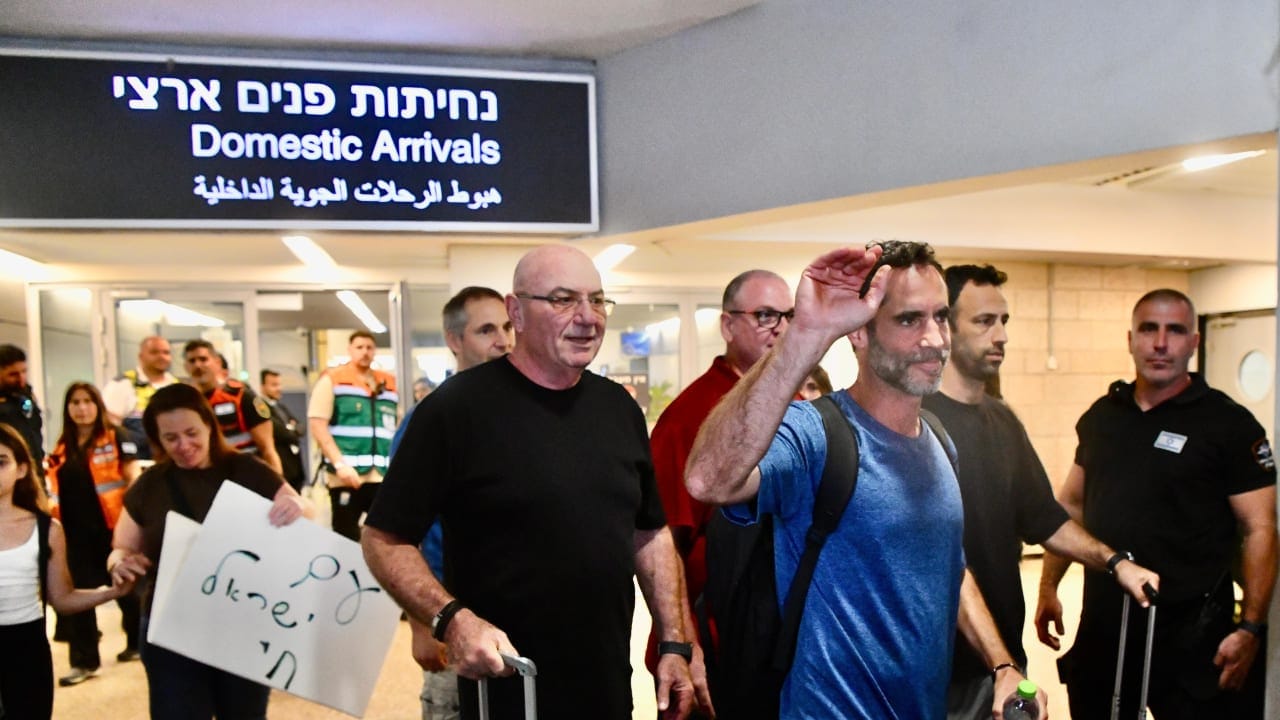
This was brought into sharp focus by the attempted hijacking of a flydubai flight en route to Israel, which, according to reports, included an intention to crash the aircraft with all its passengers aboard. Faced with that threat, Israeli passengers did not freeze in place: they rushed the hijacker, neutralized him, and prevented a devastating disaster. Yet, almost chronically and often unfairly and through a distorted lens, we are judged not by our intentions or the circumstances in which we live, but by a pre-assigned image: aggressive, forceful, uncompromising.
Willingness to take responsibility
But anyone who truly looks at reality understands one simple thing: Israeli identity is not aggression. It is the willingness to take responsibility when there is no other choice.
When a terrorist incident occurs, when someone seeks to harm innocent people, when civilians, passengers, or families face an immediate threat, the Israeli response is not to stand by. It is not violence for its own sake, but a deep instinct to protect: to defend life, prevent catastrophe, and stop those who come to kill. This is not merely the result of security experience but a part of our national ethos.
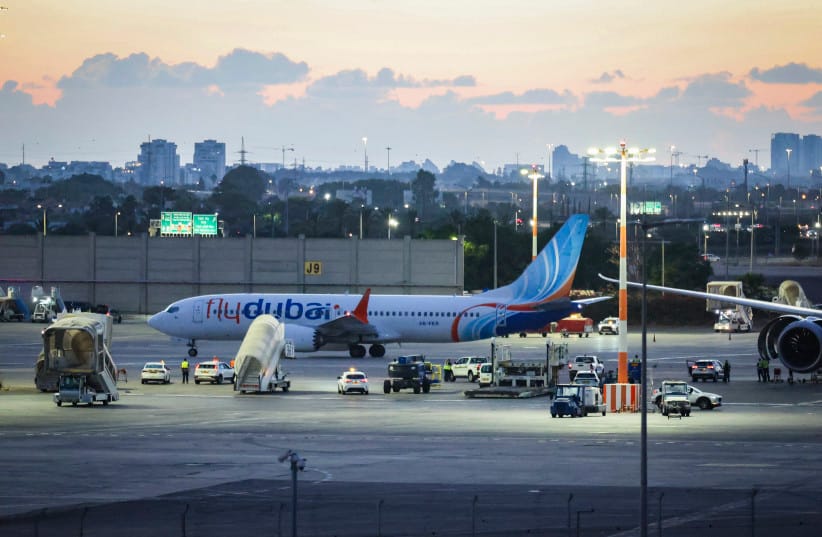 A flydubai plane carrying passengers from flight FZ1073 arrives at Ben Gurion International Airport near Tel Aviv, after a suspected terror attack aboard their original flight from Dubai to Israel forced an emergency landing in Saudi Arabia, September 30, 2026. (credit: FLASH90)
We are known around the world as the “People of the Bible”, a people of learning, thought, creativity, and questioning. A small people that has produced an exceptional share of scientists, physicians, writers, economists, and innovators; a people that turned desert into a thriving country and built universities, hospitals, educational systems, and groundbreaking innovation. Israel is a startup nation, a center of research, entrepreneurship, and development. But alongside all of this, one cannot ignore the other component of our identity: we are also a nation of fighters.
Not because we seek war, but because history has taught us what happens when no one fights for the right to exist.
A generation born after the Holocaust and raised on stories of murder, deportation, humiliation, and extermination in Europe, a generation that also remembers the persecutions, pogroms, and expulsions of Jews from Arab countries, a generation repeatedly confronted with the reality that Jews paid a heavy price for weakness, dependence on others, and promises left unfulfilled – will not agree to be led like sheep to the slaughter. This is not an empty slogan. It is historical consciousness. It is a moral line.
Israel’s actions are not about revenge
“No longer led like sheep to the slaughter” does not mean revenge, nor does it mean denying the value of others’ lives. I. It means recognizing that a sovereign Jewish state must protect its citizens, because if it does not, no one can guarantee that anyone else will do so in its place.
Since the massacre of October 7, Israeli society has been compelled to confront pain that is difficult to describe: murder, abduction, loss, fear, and the feeling that the ground had fallen away beneath our feet. Yet another spirit rose out of this rupture as well – a spirit of mobilization, mutual responsibility, reserve service, volunteering, lifesaving action, and rebuilding. We did not seek this war, it was imposed upon us. But when enemies openly declare their wish to destroy, expel, and devastate, the answer cannot be to close our eyes.
It is worth asking: what is this pathological hatred of Jews and of Israel meant to produce? What is expected of a people that survived an attempt at total annihilation, that faces military, terrorist, and psychological threats, and that hears in the streets of London, New York, and Paris chants that blur its right to exist? Are we expected to sit silently in the face of delegitimization that fuels more hatred? Are we meant to believe that calls for Israel’s erasure are merely “political criticism”?
This is where the deepest mistake lies. Israel is not the problem for those who seek freedom, life, and human dignity. It is part of the struggle for them. We live in a complex region, surrounded by forces that do not conceal their opposition to our very existence. In the face of the threat of an Iranian nuclear capability, armed militias, and terrorism from Gaza, Lebanon, Yemen, and Iraq, we cannot afford the luxury of naivety.
In the 1990s, Samuel Huntington wrote about a “clash of civilizations.” One need not accept all of his conclusions to recognize that Israel often stands on a fault line between worldviews: between liberty and oppression, between civilian life and terror, between a desire to build and a desire to destroy. Israel extends a hand in peace to all who genuinely seek peace; but it will not offer its neck to those who seek its destruction.
Therefore, in response to the slogan “From the river to the sea,” we must state the truth: freedom is a worthy value – but not at the cost of erasing another people. “A free people in our land” is not merely a lyric or a symbol; it is the most enduring Jewish aspiration and the foundation of our existence here.
We will continue to confront violence and extremism within our own society as well, because a moral society is measured by its ability to criticize itself. But anyone who looks at Israel fairly must understand this: our strength does not stem from a lust for power, but from a resolute decision to live.
No longer led like sheep to the slaughter.
A free people in its land.
A people that seeks peace yet is prepared to fight for the very right to live.