
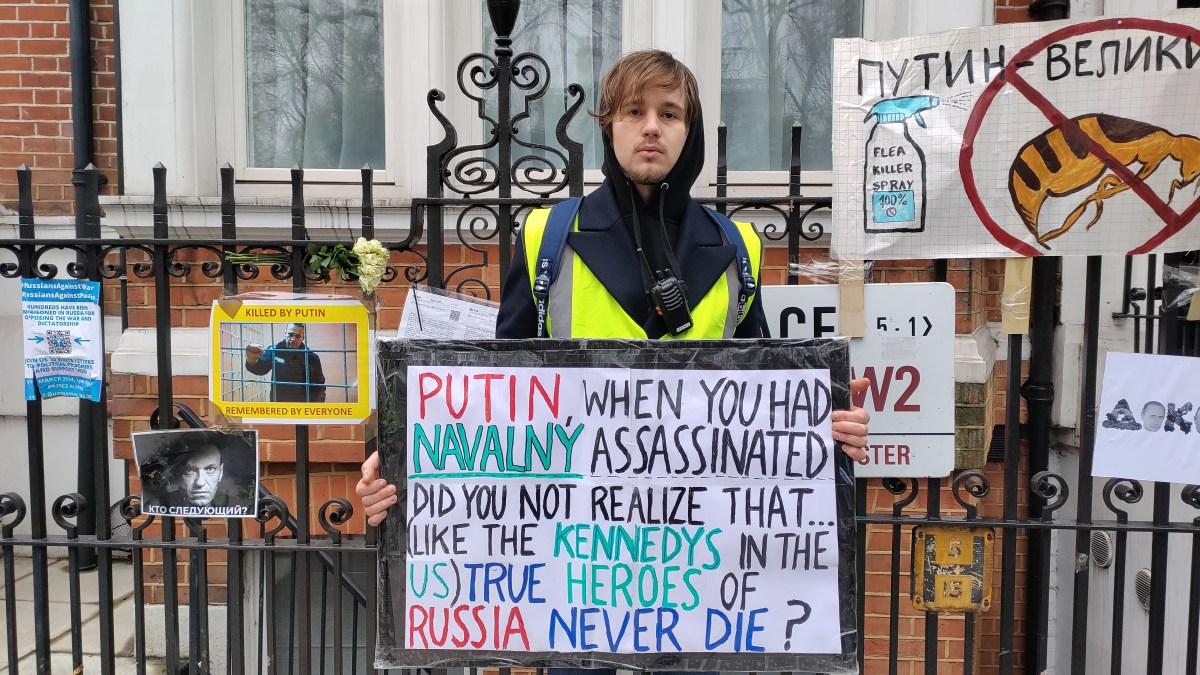
A Russian dissident who protested against the war in Ukraine has been found dead, after his attempt to claim asylum in Britain was rejected.
Alexander Frolov died in July after his asylum claim was rejected and he was told he would have to wait more than a year to appeal, despite fearing imprisonment if he returned to Russia.
Friends of Frolov, 26, who was an active participant in anti-war protests and raised money for aid to Ukraine, believe he killed himself after becoming depressed about his asylum case.
Frolov left Russia before the full-scale invasion of Ukraine and came to the UK on a seasonal worker’s visa. After the invasion he refused to take part in the war and would not return to Russia, instead dedicating his efforts to political activism in the UK.
The Russian Democratic Society, a London-based group for Russians in the UK who oppose President Putin’s regime and the war in Ukraine, said Frolov had volunteered for charity in London, handing out “not only food but also warmth, attention and human sympathy” to those in need.
The society said: “Alexander was a dedicated opponent of Putin’s regime, a volunteer who gave his time to help others and a constant presence at anti-war protests. Alexander believed in the possibility of a free and democratic Russia and hoped to one day return to it.
“He knew how to enjoy every day, found a reason to joke even in difficult moments, was not afraid to laugh at himself and infected those around him with this ease.”
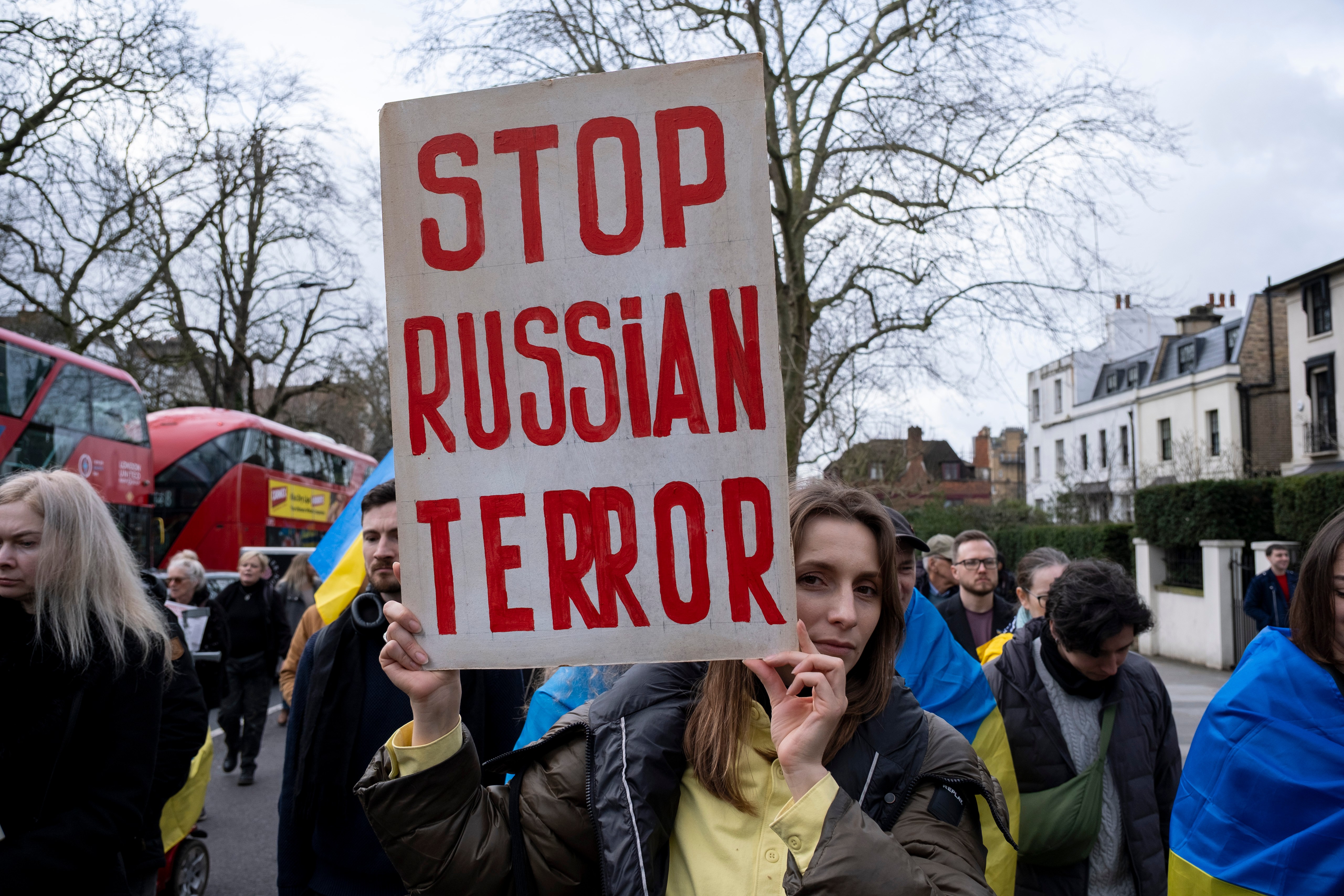
Russian dissidents in the UK have joined protests against the war in Ukraine
MIKE KEMP/IN PICTURES/GETTY IMAGES
Galina Shakirova, a friend and fellow anti-war activist, said on Instagram that Frolov was a “very bright, kind and cheerful person”.
Mikhail Khodorkovsky, the exiled former oligarch whose organisation the Russian Anti-War Committee has helped to pay for a funeral and for Frolov’s body to be returned to Russia, said he had not met Frolov but heard about his case through the Russian diaspora in London.
Khodorkovsky, who was put on Russia’s wanted list over his comments opposing the war in Ukraine, said Frolov had become “very depressed” after he was denied the right to stay in the UK.
He called for the rules on political asylum to be changed and said the application system was too narrow, telling Times Radio: “I think to write off this situation as concerning only political asylum — on visas which are presented on the basis of political asylum — is not entirely correct.
“Because you have to apply for political asylum in the first country you arrive in, sometimes it’s either a country that sympathises with Putin or doesn’t sympathise with Russians in general, regardless of whether they are democratic or anti-war.
“Therefore, humanitarian visas issued on the basis of threat for those people whom the Russian democratic organisations verify as being democratic, anti-war activists are an important consideration.”
Russian dissidents living in the UK fear both attacks within Britain and imprisonment if they return home. One member of the Russian Democratic Society revealed last year that she had to explain to her children what nerve agents were after discovering she was on a list of possible targets for attack or poisoning.
The list, which she said could have been created as a form of “psychological warfare”, contained high-profile opposition figures as well as activists. Describing herself as “lower down the food-chain”, she added: “‘I speak at rallies and I am quite recognisable but I am surprised that I am on there.”
The Home Office said: “It is our longstanding policy not to comment on individual cases.”