
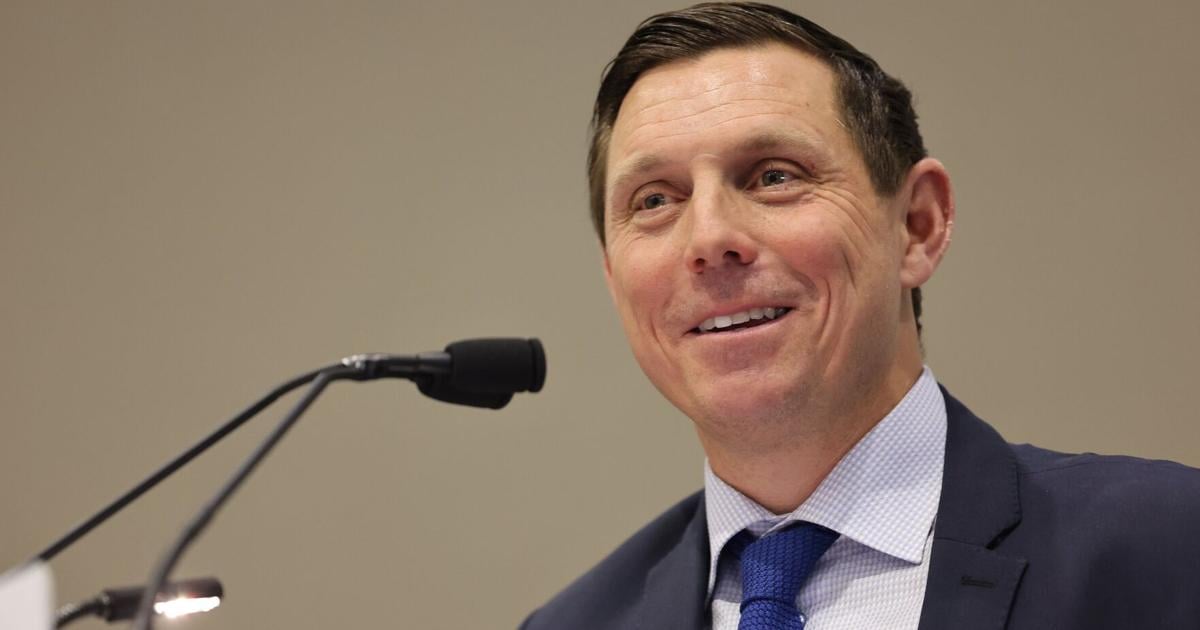
The City of Brampton has refused to release 455 pages of building records related to extensive renovations at Mayor Patrick Brown’s home in a decision that experts in freedom of information law say is out of step with transparency legislation.
Brampton officials say that releasing information on Brown’s building permits would endanger the “life and physical safety” of an unnamed individual, but have offered no further details to explain that decision.
It has been nearly one year since the Star made its request for the city documents while investigating complaints from Brown’s neighbours about building and renovations on his property. Among the documents sealed from public view are: an archaeological report, city inspection reports related to his building permits, “deficiency letters” from city inspections on his home, and plumbing data — information that is routinely released under freedom of information laws, experts say.
“What the City of Brampton has done seems to me to be an egregious violation of the spirit of the legislation, if not the letter,” said professor James Turk, director of the Centre for Free Expression at Toronto Metropolitan University.
“If you have nothing to hide, it just leaves the impression that there’s an overly secretive atmosphere within City Hall,” added Zachary Spicer, a York University professor in the School of Public Policy and Administration.
The safety exemption to the general rule that the public is entitled to government information is normally used for members of law enforcement, most often undercover police officers. It’s not clear how the clause applies in Brown’s case; however, the Star’s sources, which are not being named because they’re not authorized to speak on the matter, say Brampton is concerned that releasing building permit information would endanger Brown himself.
The Star has appealed the decision to Ontario’s Information and Privacy Commission.
Why the Star requested the documents
The Star routinely files freedom of information requests for property records, but this denial was unusual. Most property records are released upon request, freedom of information experts say.
“How can there be political accountability if that information isn’t made available publicly?” said Turk, whose group advocates for “enhanced transparency and the public’s right to know.”
The Star made its request after hearing complaints from Brown’s neighbours. They expressed concerns over a two-storey “garden suite” built abutting one neighbour’s property line, and the construction of a hockey rink with boards and a refrigeration system.
Neighbours have complained that in the spring thaw, there is drainage onto their properties and damage to foliage and trees.
The neighbours the Star spoke to have requested anonymity, saying they fear retribution by city officials.
Brampton Mayor Patrick Brown’s backyard ice rink.
Kevin Donovan/Toronto Star
Brown’s red brick, two-storey house is a “late 19th-century Gothic Revival” structure, built in 1871. It was originally the home of Peel Region’s first Crown attorney
Brown and his wife purchased the house on the 1.46-acre parcel of land in downtown Brampton in July 2022, paying $3 million. Before Brown purchased it, the previous owner had been denied a request to sever the lot into two parcels.
Online city records show that soon after taking possession, Brown applied for six building permits. A seventh permit, for a swimming pool, had recently been opened by the previous owner. Brown’s six permits were for several projects, described in scant detail as an “accessory building,” “change of use — two unit dwelling”; and “renovation — single family detached.”
The electronic registry provides the date the permit was taken out, and a brief description of the type of work, including: underground plumbing, above-ground plumbing, HVAC, addition, footing, backfill, structural framing and accessory building.
As with all online city permit information, nothing else is listed. To get more information, people seeking information have to ask city staff for the documents.
Patrick Brown’s renovations
The requested building permits related to work that required variances to municipal rules.
Brampton’s committee of adjustment held a hearing in 2023 on Brown’s application for a “minor variance” to allow a two-storey building and garden suite to be built closer to a neighbour’s property line than city rules usually allow.
Neighbour Betty Lee, who has a bungalow to the north of Brown’s property, objected. She wrote a letter to the city in 2023 saying that she feared she would see a “towering monolithic wall that blocks light and creates a feeling of being boxed in.” She was concerned about destruction of trees, runoff (Brown’s property is at a higher grade than hers), and that the plan was not in line with the “park-like character” in the city’s “heritage plan”. She noted the mayor’s property is situated in a Brampton heritage district.
Lee also said that since Brown purchased the property, there has been a lot of traffic, with cars coming and going to the house, disrupting the formerly quiet neighbourhood.
Brown is not referred to as mayor in any city documents, nor at a public hearing to discuss his plans. On his side, Brown retained well-known planner Maurizio Rogato, who often represents big companies applying for variances.
In a letter to the city, Rogato argued that Brown’s two-storey structure (a carport and garage with a garden suite on top) is “representative of good land-use planning.” Rogato said the garage, garden suite and a pool cabana for the newly constructed pool (the previous owner had applied for that permit) “will ensure the continued enjoyment of a residential dwelling within the City’s Downtown.” He noted that there would be a three-metre setback from Lee’s property, and he said that is allowed by city rules.
City staff produced a report, which is available on Brampton’s website. It notes that city rules require a 25-foot setback from the property line for the second storey of the proposed structure. They expressed support for Brown’s plan, which would mean the new setback would be just under 10 feet.
City planner Rajvi Patel, in the report, called the variances “minor in nature.”
A meeting of the committee of adjustment was held on May 30, 2023. Lee spoke about her concerns, saying she had lived in her house for 20 years. She said Brown’s plan, which included removal of some trees close to her property, meant she would lose “privacy” because the addition would “tower” over her property.
“I would see this thing 24/7 all year around. I would lose all privacy.”
Another neighbour said they want to ensure that a “heritage impact assessment” is obtained.
Committee chair Ron Chatha said he was “personally satisfied” with Brown’s plan; the committee voted unanimously to allow the variances.
The Star could not find any city records online dealing with the hockey rink issue. Brown, an avid beer league hockey player, builds a hockey rink in his backyard every year. One neighbour has told the Star they have had “serious” damage to their property due to runoff every spring.
“We call the city, but never get anywhere.”
In a statement released by Brampton, Brown said: “Every winter, our family puts up a small backyard three-on-three rink — less than half the size of a regular rink in our backyard, like so many other Canadian families. My son and daughter are out there with their neighbourhood friends, and that’s exactly what it’s for.”
“These aren’t large hockey games, rather shinny on a small rink after school and on weekends. There is no chemical runoff, and when it melts, no water leaves the rink as it is fully enclosed.”
Brown said that “one neighbour raised a concern about water on their property. City staff came out and found it was a drainage issue on their property, unrelated to the rink. Most families in the area have been supportive, and their kids play too.
“Backyard hockey rinks are as Canadian as Canada itself. I’m happy to have a small rink for my kids and neighbourhood kids, and I plan to do it again this winter,” Brown said.
The timeline of the city’s denials
Hearing the neighbours’ complaints, the Star made its freedom of information request on Oct. 20, 2025.
The city issued a denial on Dec. 2, 2025, saying the voluminous file “contains information that could reasonably be expected to endanger the life or physical safety of a person and could reasonably be expected to seriously threaten the safety of individuals.”
No names of those at risk were provided.
As reported by the Star and other media, Brown was the subject of threats in the summer of 2025. A 29-year-old Brampton man was arrested.
Brampton provided an index of the records it was denying. They include: reports by city building inspectors; “deficiency letters”; two documents described as an “intention to revoke letter”; “plumbing data”; “HVAC calculations”; and an “archaeological report and letter” related to the historic site.
The Star has made it clear that it is not interested in any personal information on the file.
It is routine for freedom of information requests to be granted with sensitive information redacted on a line-by-line or even word-by-word basis.
In its request to Brown a year ago, the Star wrote: “I am seeking the normally public information on a permit. Who did the work? What was the work? What, if any, inspections were done and did they pass?”
Brown’s lawyer, James Bunting, wrote to the Star on Dec. 5, 2025, calling the Star’s requests “invasive, speculative, and laced with insinuation.”
Bunting said Brown is “entitled to a modicum of personal privacy. Public office does not extinguish the fundamental right to be free from unwarranted intrusion into private life.” Bunting added that Brown had “no involvement” in the city clerk’s decision regarding the Star’s freedom of information request.
Bunting’s response did not deal with specific questions raised by the Star, including questions about the hockey rink and the complaints relating to its drainage.
Bunting said if the Star is dissatisfied, it can appeal the decision.
The Star did, appealing to the Information and Privacy Commission. Mediation was held last spring, but the city has maintained its position. An adjudicator was assigned to the file in the spring.
An IPC official said there is a “backlog” in cases and could not estimate when the Star’s appeal would be reviewed.
Why it matters to deny a ‘mundane’ request
Spicer, the York University professor, said he is surprised the city is denying the Star’s request. “Perception is important” in government, he said.
“I don’t see why they would deny something like this; it seems fairly mundane.”
The denial letter from Brampton provides few details on the information being kept from public view.
Turk, of the Centre for Free Expression, said the exemption being used by the city is normally used for “security officials, undercover cops … where the disclosure of information about them would put them at risk.”
He said he would be surprised if the provincial commission upholds the appeal.
“Governments like secrecy because it’s harder to hold them accountable if you can’t have access to information about what they’re doing,” Turk said.
His centre partners with the Canadian Association of Journalists to give out annual anti-awards for the governments with the most “outstanding achievement in secrecy.”
Brampton, Turk said, would be a contender.