
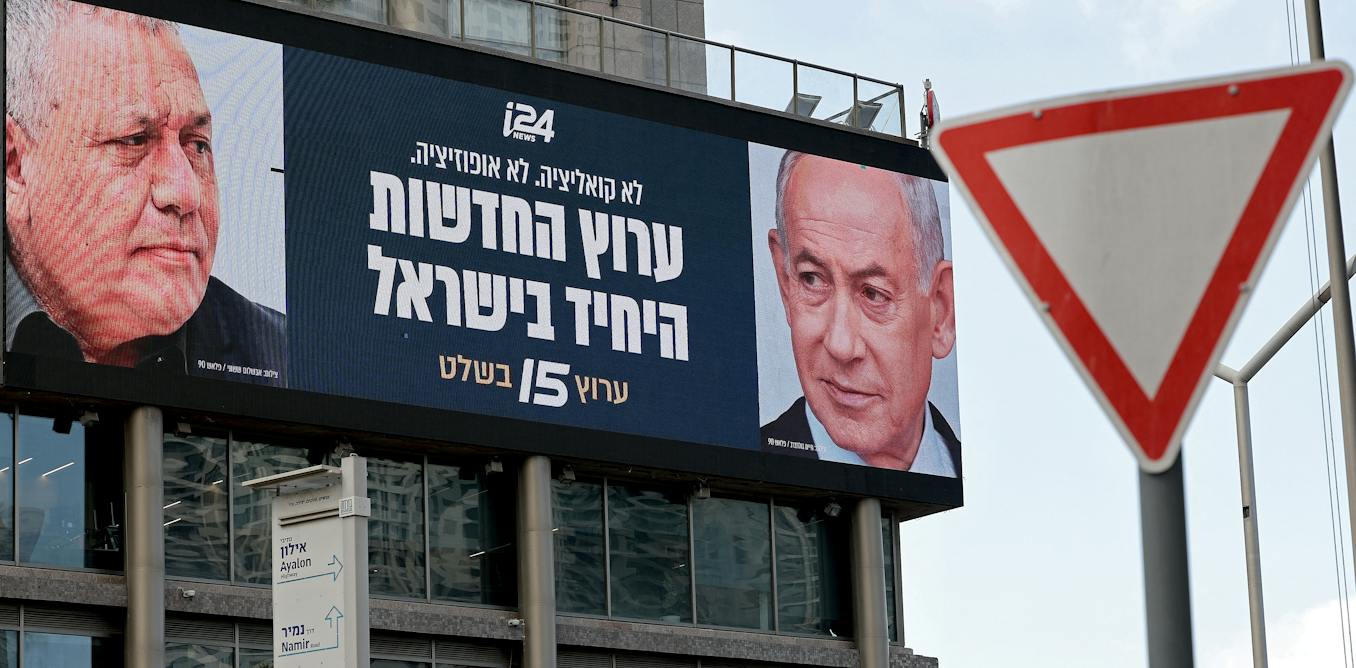
Israel is heading to the polls on October 27 and Prime Minister Benjamin Netanyahu is facing perhaps the toughest political battle of his career.
He’s facing fresh allegations that he was warned of a major Hamas plot ahead of the October 7 attacks.
Professor of Israel Studies Dov Waxman tells The Conversation Weekly although Netanyahu denies it, many hold him personally responsible for the attacks because he didn’t take those warnings seriously.
Netanyahu has consistently deflected any kind of blame and has basically pointed the finger at the Israeli army, at the Israeli military. This is something that I think many Israelis are really appalled by: his refusal to take any sort of personal responsibility.
He’s also facing a new challenger: former chief of the Israel Defense Forces (IDF) and leader of the newly formed Yashar party, Gadi Eisenkot.
Waxman says part of Eisenkot’s appeal is his authenticity. Eisenkot’s own son and two of his nephews died during the war in Gaza.
Clearly his own personal loss is part of the narrative he’s presented to the Israeli public about why there needs to be a change of government in Israel.
So who is Gadi Eisenkot, the career military man who could unseat Israel’s long-time leader?
Waxman says Eisenkot is considered to be on the centre right politically, but isn’t considered an ideologue.
[Eisenkot has] pledged that a government that he would lead would not establish or recognise the Palestinian state. When it comes to Israeli settlements in the West Bank, he is supportive of Israel’s settlement. At the same time, he has condemned settler violence in describing it as terrorism.
So he doesn’t share the same views as Netanyahu, but he’s certainly hawkish and on the right.
Regardless of whoever leads Israel over the next four years, Waxman says we shouldn’t expect a radical change in policy or its relationship with neighbouring states.
I don’t think this election is likely to result in any sort of really dramatic changes in Israel’s policies on the most important questions facing the country — namely the Palestinian question.
If Israel remains on its present course, that I think points to a direction of even greater international isolation and further kinds of extreme policies.
It’s not so much that things would change dramatically for the better if the opposition comes to power [but] things could get even worse if the current government remains.
Disclosure statement & credits
Dov Waxman is currently the scholar in residence at the Nexus Project, a non-profit organisation focused on combating antisemitism.
Newsclips in this episode from AP, BBC News, ABC News, CBS News and 9News.
This episode of The Conversation Weekly was written and produced by Isabella Podwinski and Justin Bergman. Mixing by Dan Semo and theme music by Neeta Sarl.