
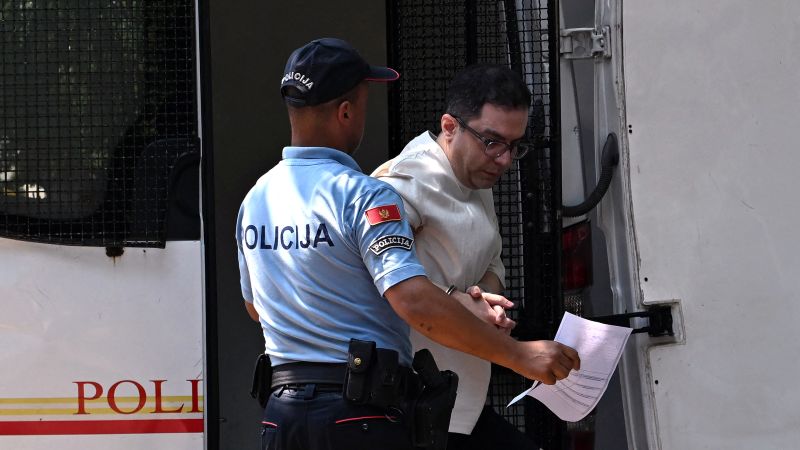
An Iranian man accused of being part of a hacking scheme that breached more than 150 US universities and companies while targeting data worth over $3 billion has been extradited from Montenegro to the US to face criminal charges, police in the European country and a person familiar with the case said Thursday.
Amir Barati, 40, is expected to face wire and computer fraud charges in the US Southern District of New York, where he and 16 other Iranian nationals were charged in a superseding indictment in August. Montenegrin police arrested Barati, who is also a Turkish citizen, in June at the request of the FBI.
Barati’s extradition is welcome news for US law enforcement as it tries to blunt Iran’s cyber capabilities during the US’ ongoing war with the country Accused Iranian hackers rarely see a US courtroom.
Barati and his co-defendants are accused of participating in a yearslong campaign that began in 2013 to steal data from universities and companies around the world, breaching about 8,000 email accounts belonging to professors in the US, Europe and elsewhere. The academic data and intellectual property the hackers targeted cost the US universities about $3.4 billion to “procure and access,” according to the indictment.
CNN was unable to reach a lawyer for Barati.
One of the companies allegedly victimized included the network HBO, a subsidiary of CNN’s parent company Warner Brothers Discovery.
Barati allegedly helped track the progress of the hacks of universities and helped create “targeting lists” for the private sector, according to US court documents. Among the breached private US companies were 11 tech firms and two defense contractors, according to the Justice Department.
Other members of the conspiracy aside from Barati allegedly hacked the Department of Labor, the Federal Energy Regulatory Commission and the United Nations.
Many of the intrusions were conducted on behalf of Iran’s Islamic Revolutionary Guard Corps, according to prosecutors.
A spokesperson for the US Southern District of New York declined to comment on Thursday about Barati’s extradition.
Iran’s sizable hacking capabilities have offered Tehran a way to threaten US critical infrastructure during seven months of war with the US and Israel. Over that time, Iran has been a key suspect in cyberattacks on US water systems, tank readers at gas stations, a major medical device maker and FBI Director Kash Patel’s private email account.
CNN’s Kara Scannell contributed reporting.