
 Play Brightcove video
ITV News Political Reporter Jasmine Cameron-Chileshie explains how the latest early release scheme will work and why some people are sceptical of protections in place. Meanwhile criminal barrister Maryam Syed KC breaks down the figures on pressure on the prison system and court backlogs
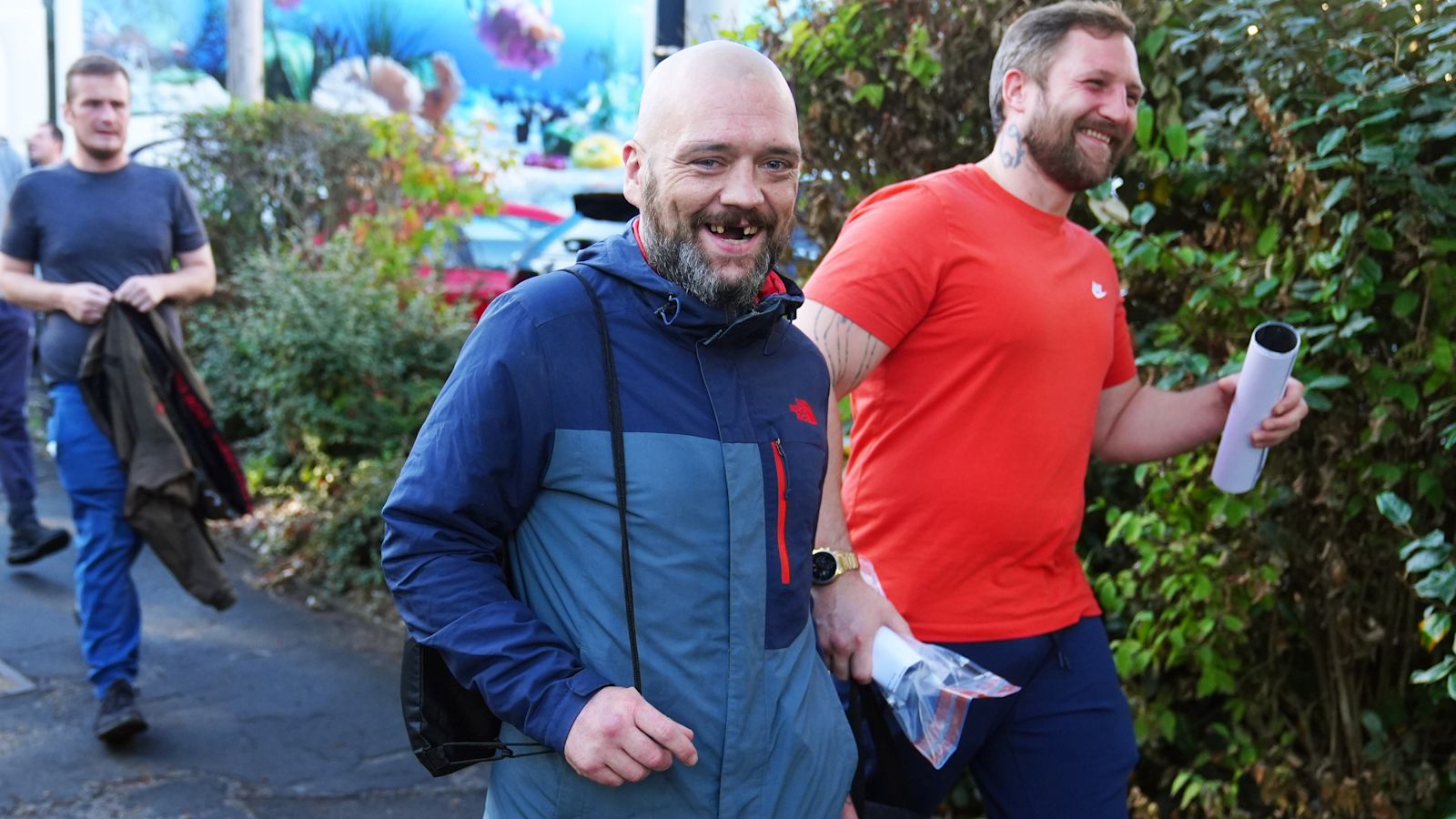
Prisoners freed under the first wave of the new early release scheme have thanked Prime Minister Andy Burnham – while others have expressed concerns over how they will cope on the outside.
Around 700 prisoners across England and Wales are expected to walk free on Thursday under the controversially expanded programme to free up spaces in prisons.
Holding his belongings in a bin bag as he left HMP Durham in North East England, one prisoner told the press: “Justice system, what justice system? Thank-you Andy Burnham.”
Another prisoner gave a thumbs-up to cameras as he walked away.
A man leaving HMP Cardiff, who was asked if he had a message for the prime minister said: “Thank-you very much and don’t get me back here again, bro.”
Tim Edwards, whose 26-year-old daughter Elle Edwards was shot dead outside a pub on the Wirral, said changes to the prison system are ‘like a kick in the teeth’
Some of those released early will have served just a third of their sentence, for crimes including domestic abuse and some sex offences.
However, rape, “serious” child sex and grooming offences and any form of unlawful killing, have been excluded from the scheme.
The Conservative Party said the government is putting the public at risk as it prepares to release hundreds of prisoners on Thursday with shadow justice secretary Nick Timothy saying the public would “pay the price”.
Timothy, a former adviser to Theresa May during her time as prime minister said the policy was an “insult to victims”.
However, ministers have said the early release scheme is necessary to create capacity in England and Wales’ overcrowded jails.
One man released from HMP Wandsworth early, who said he was released two months into a six-month sentence for a “minor” conviction said he was “very” happy to be out and said he would “have a beer and get a fry up” to celebrate his freedom.
James Ashford, 21, who was serving a 12-month sentence at HMP Bristol for carrying an offensive weapon, said “thanks mate, thanks,” when asked if he had a message for Burnham.
“It eases the overcrowding, it’s crowded as anything in there. There’s not a cell free, a lot of doubling up of high-risk cells,” he told reporters.
People celebrate outside HMP Bristol. Credit: PA
Mr Ashford was asked whether he was concerned that offenders were being released that might pose a danger to the public.“There are people out on the streets that haven’t been arrested that are a danger to the public,” he replied, insisting that he was “100% rehabilitated”.“I think it helps get people back out into the community, rather than spending a long time inside and its harder to come out the longer you have spent in there,” he added.
Leaving HMP Leeds, 35-year-old Matthew Johnson said he was “buzzing” to be out, calling the early release scheme a “good idea”.
“They need to free up some places anyway. It’s a bit cramped. The staff are overwhelmed anyway with what they’ve got to cope with at the minute.”
The father-of-five from Wakefield, said he was going to “go home and see my kids” after he was released after six months from an 18 month sentence for actual bodily harm.Asked what he would say to opponents of the early release scheme, he said: “You want to see what’s inside these rooms, then you’ll know. It’s hectic. It’s crowded. It’s overcrowded – cells for one person with two people in them.”
A prisoner leaving HMP Wormwood Scrubs, in White City, London. Credit: PA
Also leaving the Yorkshire jail was Jordan Laverack, 26, who said the first thing on his list post-release was to “go to KFC”.
“I think early release is good for myself,” he said. “I can see why there’s a lot of attention behind it, because there might be people doing heinous crime who are getting released early.
“But for the average person, who’s missed probation like myself, I think it suits somebody like me.”Mr Laverack, from Leeds, said he served just under four weeks for missing probation appointments, but would not say why he was on probation, adding: “nothing too bad”.
“They’ve actually released me with nowhere to stay but I’ve got a few friends I can stay at. The people who don’t will be back doing what they’re doing,” he added.
Jordan Laverack, 26, leaving HMP Leeds in West Yorkshire. Credit: PA
Tom, 32, who was released from HMP Cardiff early after being jailed for burglary, appeared to doubt that he was ready for life outside of prison.
“I’d happily spend my time in there, I mean, I’ve been doing it for 17 years. I’ll probably be back in the next month or two,” he said.
“It’s like a reset for me, this is. I get out, I take beer, drugs… Go back in, put a bit of weight of on, do it all again.
“I got nothing better to do with myself, I’m homeless, so what else am I going to do? You can’t be homeless and sober at the same time.”
Michael Bogle, a 38-year-old serial shoplifter from Brent, North West London, told reporters outside HMP Wandsworth that he served 78 days in prison after breaching a 32-week suspended for theft. The former bus driver said he had been jailed five separate times for 100 convictions.
“Keep the early release going. It’s good,” he said in a message to the prime minister. Asked if he would vote Labour, he said he did not vote but if he did he would vote for the Labour Party.
He said there is a risk he would shoplift again “but hopefully not”, telling reporters he had an approved premises to live and plans to go to the job centre.
People leaving HMP Durham. Credit: PA
This month’s release the latest in a series of early release schemes, including under the Conservative government and under Sir Keir Starmer.
The Ministry of Justice (MoJ) said offenders would be monitored under the “toughest supervision in British history”.
This includes “restriction zones” which will confine the movements of high-risk sexual and violent offenders within a set area.
It comes alongside the “biggest-ever” expansion of electronic monitoring, and a ban for offenders from pubs, clubs and public events.
However, the shadow justice secretary has said Thursday’s releases are an “insult to victims, a danger to the public”, warning that it will “only encourage more lawbreaking from criminals who know they have a ticket out of prison”.
Meanwhile Victims Commissioner Claire Waxman has warned the early release scheme may not be workable as it comes into force, adding that the government’s confidence “is not yet matched by the reality on the ground”.
Ukrainian national Vladimir Hudzyk, 38, celebrates leaving HMP Wormwood Scrubs, in White City, London. Credit: PA
“Victims and the public have been repeatedly assured that robust safeguards are in place and that those released will face the toughest supervision ever imposed on offenders in the community. Those are significant claims,” she said.
“Bold assertions in press releases are no substitute for effective planning, robust preparation and consistent delivery. All three have been in short supply.”
The plan to free up capacity in the overcrowded male prison estate comes as figures show the number of people behind bars has jumped by more than 1,700 in the past three months.
Some 5,000 prisoners are scheduled to be released in stages over the next year, down from 6,000, after ministers intervened to exempt rapists and the most serious child sex offenders.
Under a separate process introduced by the previous Conservative government, 13,325 prisoners in England and Wales were freed early between October 17 2023 and September 9 2024.
Prisoners guilty of manslaughter will be excluded, meaning the killers of PC Andrew Harper will not be eligible. Credit: PA
The prison population of England and Wales stood at 87,499 on Monday, according to weekly data published by the Ministry of Justice (MoJ) – up from 85,761 on June 29 – a rise of 1,738, or 2%.
Ministers say the expanded early release scheme is needed to prevent the justice system from collapsing, after a summer when the issue dominated news headlines.
Criminals will be excluded from the scheme if they have been jailed for a range of offences, including members of child grooming gangs convicted of indecent assault.
Prisoners guilty of manslaughter will also be excluded, meaning the killers of PC Andrew Harper, who died in the line of duty in 2019, will not be eligible.
Natalie Queiroz, who along with her then-unborn child, survived an nine-minute knife attack by her former partner in 2016, said victims were still unclear on how successful restriction zones would be.
Her attacker, Babur Raja, who was jailed for 18 years for attempted murder, is due to come up for parole in 2028.
Ms Queiroz, who is now victims’ advocate for the West Midlands Police and Crime Commissioner, said: “We must not give victims a false sense of security.
“We need restriction zones to be a substantial distance from the victim, to be in place for guaranteed extended periods of time to allow victims to live with the freedom they deserve, and real-time monitoring and obligatory tagging of offenders.”
Ben Cockburn, national chairman of Napo (National Association of Probation Officers) said his membership was already under strain, with workers balloting for industrial action in October.
“There seems to be absolute denial in the leadership of (His Majesty’s Prison and Probation Service) as to just how bad a state the probation service is in,” he said.
“We have massive staff shortages, unsustainable and dangerously high workloads and this week we will hear again that electronic monitoring is failing to deliver.
Some 5,000 prisoners are scheduled to be released in stages over the next year. Credit: PA
Ms Waxman said: “Electronic monitoring, restriction zones and licence conditions can only protect victims if they are properly implemented, monitored and enforced.
“Unless the probation service is properly resourced and set up to succeed, those safeguards risk becoming little more than window dressing in a press release.”
Lord Chancellor and Secretary of State for Justice Alex Norris said: “Today we are introducing the toughest-ever range of tools to control prison leavers and better protect the public.
“We understand the anxiety victims face ahead of offenders’ release dates, but the greatest danger to victims would be prisons running out of cells for dangerous criminals which was the crisis this government inherited.
“Our plan will make sure this never happens again by building 14,000 prison places while subjecting offenders to the toughest-ever controls – leaving them nowhere to hide and under no doubt that we are watching them.”
Subscribe free to our weekly newsletter for exclusive and original coverage from ITV News. Direct to your inbox every Friday morning.
Want a quick and expert briefing on the biggest news stories? Listen to our latest podcasts to find out What You Need To Know….