
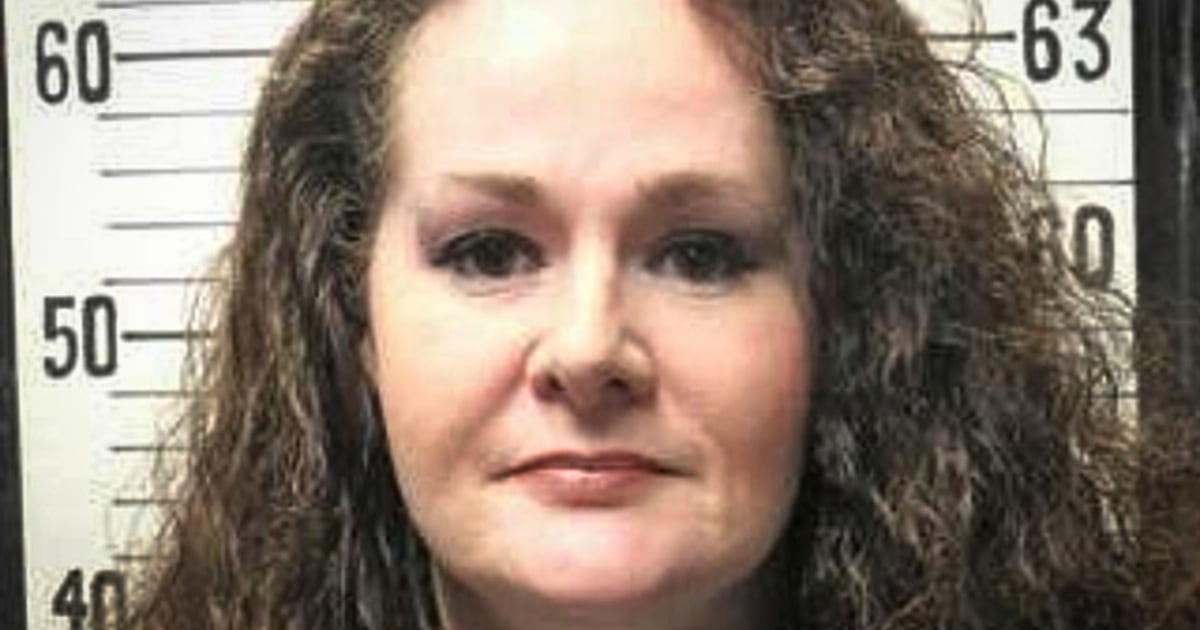
Christa Pike shouldn’t still be breathing. She survived two injections of lethal drugs in a harrowing failed execution by the state of Tennessee, raising questions about how the procedure was carried out and how it went wrong.
Nearly 24 hours after Pike was set to be put to death for a murder she committed when she was 18, she remains in critical condition and is receiving care, her lawyers said Thursday afternoon. Her prognosis is unclear, said Randall Spivey, one of her lawyers. Neither he nor another lawyer, Stephen Ferrell, who spoke with reporters, said he had seen her in the hospital.
“I’m haunted by last night,” said Spivey, who was there during the execution attempt.
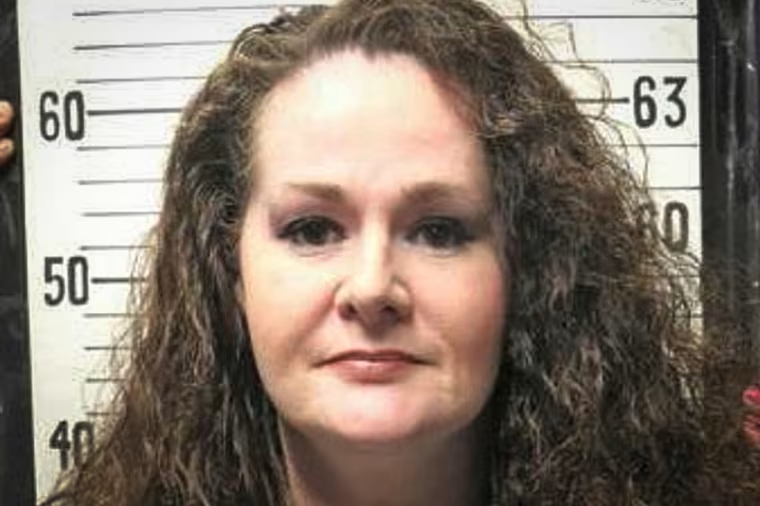 At least seven needles were used to try to administer the lethal injection doses, Pike’s lawyer said, adding that at least one of the needles looked bent when it was pulled from her arm. Tennessee Dept. of Correction via AP
Spivey said he counted at least seven needles used in Pike’s left arm alone, “one of which appeared to be bent when it was pulled from her arm after an unsuccessful attempt.”
He added that Pike’s right arm had turned purple after the second round of the drug pentobarbital, a sedative used in Tennessee’s execution protocol, was dispensed. Pike’s lawyers said they also learned of “blistering and burning around the sites of the injection.”
The description sheds additional light on what occurred inside the execution chamber as the execution team tried to put Pike, 50, to death. After the curtain to the chamber was opened at 7:26 p.m., a media witness said, Pike complained that “my arm feels like it’s about to burst open.”
Other media witnesses said that Pike moaned that one spot was “really throbbing” and that she was kicking so often that she knocked a sheet that was laid on her.
She continued to make snoring sounds, groan and move after the drugs were presumed to have taken effect, the witnesses said.
Five minutes after the second dose, “it was clear that Miss Pike was still breathing,” Spivey said.
00:48
Where is Christa Pike now?
00:0000:00
He said that he didn’t see any lifesaving care being provided to Pike when he was able to witness the events but that there was a time before the witnesses were led out when no one could see what was happening. Medical care was administered in an ambulance that was called at 8:50 p.m. to the prison in Nashville where executions are held.
“Last night was not just inefficient; it was cruel and it was torturous,” Spivey said.
Medical experts told NBC News that Pike’s injuries could be consistent with the drug’s failing to go directly into her bloodstream but ending up in surrounding tissue because of incorrect insertion or leaking.
If that happened, it would mean less of the drug got into her circulatory system, keeping her breathing and moving rather than becoming deeply comatose before death, said Dr. Jonathan Groner, an emeritus professor of clinical surgery at the Ohio State University College of Medicine.
Burning around the injection site could also be evidence of the drug’s not getting properly injected into a vein, he added.
“I’ve seen partial-thickness burns look red or purple,” Groner said.
Ferrell said he thinks a “number of factors” could explain the execution failure, but he said that based on what medical experts told their team about Pike’s difficult veins, it seems the intravenous line may have infiltrated.
That occurs when a misplaced needle deposits medication into the arm instead of the bloodstream. That, he said, would be consistent with Pike’s complaints that her arm was hurting during the process and that it felt like it was “about to explode.”
Spivey described venous issues that Pike has had throughout her life, noting problems with typical blood draws. It’s part of the reason she feared this method of execution and why she requested a different method, the lawyers said.
“I do know that that really was her biggest fear,” Ferrell said. “It was not a fear of dying. It was a fear of a prolonged, painful, traumatic death, and that’s what happened minus the death.”
Spivey said that he was given an emergency number for the Tennessee Supreme Court to call if something went wrong with the execution but that when he called it, it went to voicemail.
Pike’s attorneys have since appealed her execution. Tennessee Gov. Bill Lee has stayed her execution until a third-party investigation uncovers what happened Wednesday.
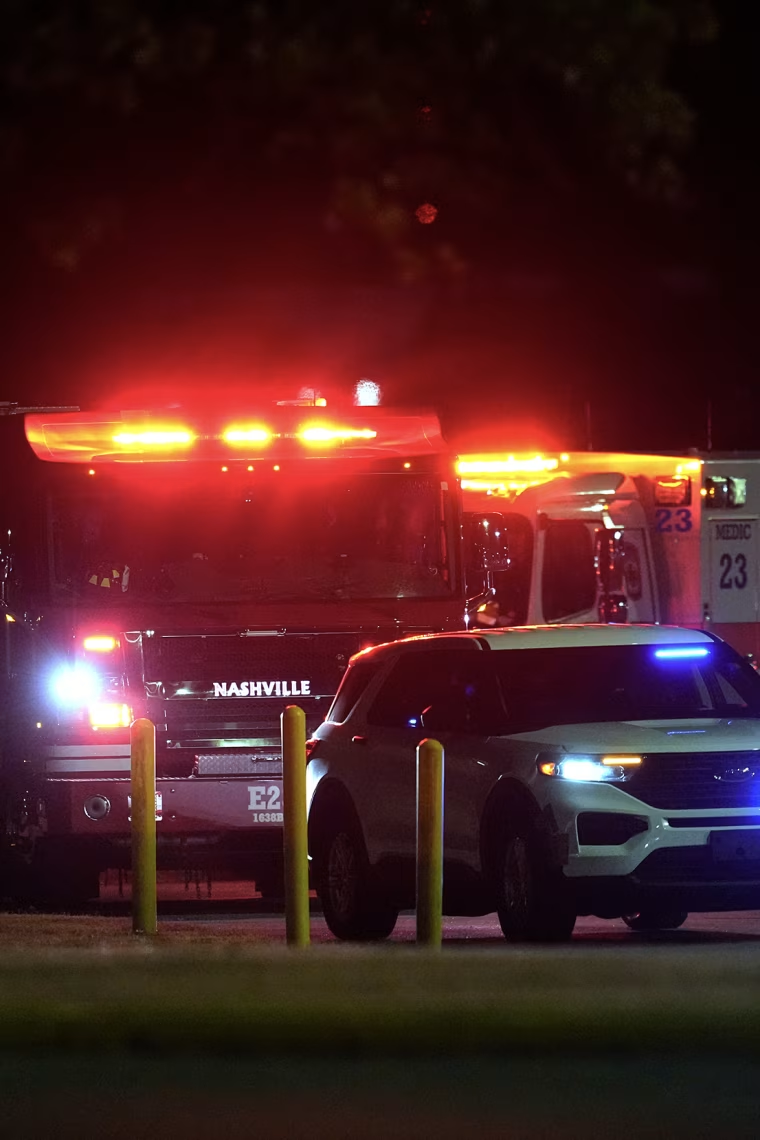 Emergency vehicles at Riverbend Maximum Security Institution in Nashville, Tenn., after Pike’s execution was halted Wednesday night.George Walker IV / AP
“This is a tragedy. There is no one that wanted what happened last night to happen. It shouldn’t have happened,” Lee said at a news conference Thursday morning.
He declined to give details of Pike’s condition and said he would be hiring a team to look into the circumstances surrounding the failure.
Spivey said of Lee: “I do hope he cares, because this is as a citizen of Tennessee. This is something that was done in all of our names.”
It’s the second time an execution didn’t go as planned in Tennessee this year. Tony Carruthers, convicted in three 1994 killings, was granted a one-year reprieve after executioners in May couldn’t find a vein for a backup IV.
Many questions remain in Pike’s case: Was she in pain when it was occurring? Will she remember what happened? Will there be long-term damage? Ferrell said he doesn’t have the answers.
“We may never know what all she was suffering through, either because she can’t remember it, she can’t tell it, or it overwhelms her in such a way that, you know, sometimes pain and suffering affects people that way,” he added.
Pike’s conviction stems from a 1995 murder case. Pike and two other teenage accomplices worked together to torture, slash and fatally beat Colleen Slemmer, Knoxville police said at the time. Pike was convicted in Slemmer’s death and sentenced to death; she was on death row for decades.
A number of last-minute efforts to stop the execution were unsuccessful. Pike was set to be the first woman Tennessee has executed in more than 200 years.