
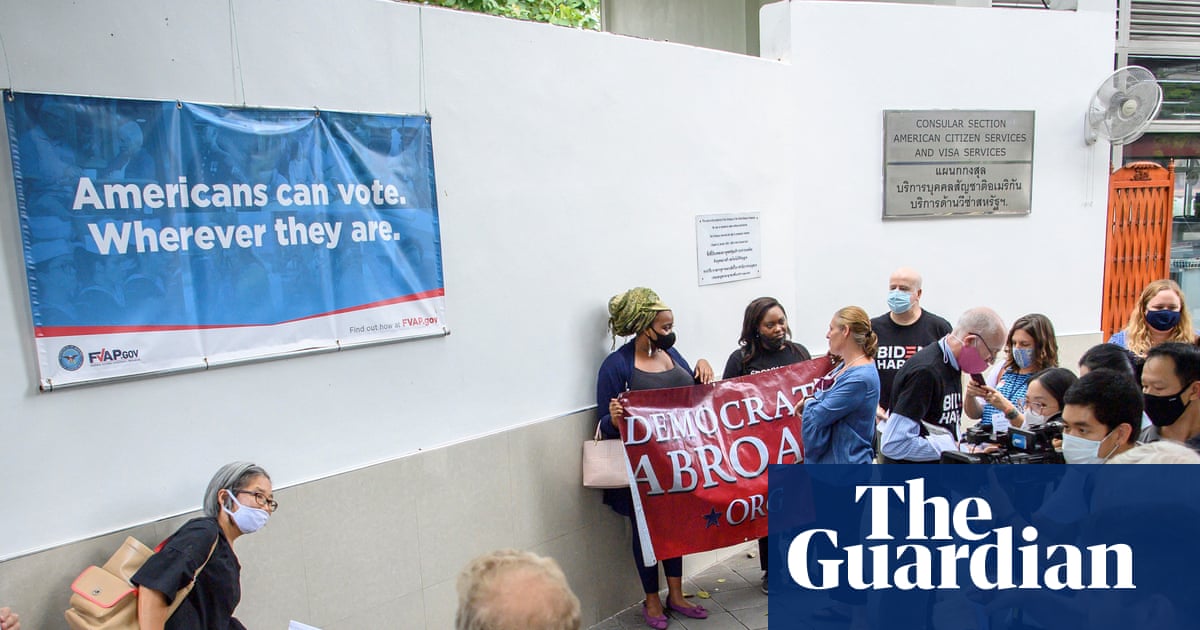
The Trump administration broke the law when it pushed through a last-minute change to the form overseas citizens use to register and request absentee ballots, the Democratic National Committee (DNC) said in a lawsuit filed on Thursday.
Until recently, the form, the Federal Post Card Application (FPCA), gave overseas voters four options to choose from when describing their geographic location. Voters could say they needed an overseas ballot because they were on active military service, living outside the US with an intent to return, or living outside the US and uncertain about their return.
The form also allowed voters to check a box if they were a US citizen who had never lived in the country (38 states and the District of Columbia allow citizens born abroad to vote in at least some elections even if they have never lived in the country).
In August, as the deadline to send out overseas ballots approached, the Pentagon – the agency that oversees the form – submitted two emergency requests to modify the form. Among the changes, the Pentagon sought to eliminate the option allowing voters to say they were citizens who never lived in the US. The requests were quickly approved by the office of management and budget (OMB). NPR first reported the changes earlier this week.
“Trump and Republicans are so desperate to hang on to power that they are trying to eliminate the way some American citizens abroad register to vote and request mail ballots. They know that Americans, both at home and abroad, are going to reject their destructive agenda, and they are scrambling to disenfranchise as much of the electorate as possible by any means necessary,” said Ken Martin, the chair of the DNC.
The Pentagon did not return a request for comment.
The changes could confuse and discourage US citizens who have never lived in the country from registering and casting a ballot, experts said.
“The Uniformed and Overseas Citizens Absentee Voting Act guarantees US citizens abroad, along with service members and their families, the right to vote, and nothing in it requires a plan to return. Changing the form does not change that right. It changes whether a voter recognizes themselves on it,” said Susan Dzieduszycka-Suinat, president and CEO of the US Vote Foundation, which works on helping overseas Americans vote.
“If an overseas voter goes on to the FPCA website, goes to get their Federal Postcard Application to request their ballot, they’re going to see this form and they have to sign it under penalty of perjury,” said a DNC official, who spoke on condition of anonymity to candidly discuss the lawsuit. “They’re going to see that there is no longer the checkbox they’re used to checking. And the other options may not fit them accurately and they may not be able to comfortably or confidently sign that form and request their mail ballot.”
In an August letter to the OMB, Sean O’Keefe, the deputy under-secretary of war for personnel and readiness, said the department had recently become aware of the option on the form for citizens who had never lived in the US. The changes were necessary, he said, because the existing versions “may confuse voters about the information they are required to provide under federal law”. He added that the changes could not go through a normal process because the election was less than 90 days away, and therefore had to be rushed.
Lawyers for the DNC said in its lawsuit that justification was pretextual and implausible.
The government “has at least 15 years of experience issuing guidance to US citizens born and remaining abroad, reviewing public comments concerning use of the FPCA by these applicants, and modifying the FPCA to best serve these eligible voters”, they wrote.
By rushing through the changes, the government violated the Administrative Procedure Act, a federal law that requires government agencies to carefully weigh the impact of rules changes before implementing them. The OMB also did not follow proper procedure by not allowing for public comment in the federal register.
The lawsuit, filed in federal court in Washington DC, asks a judge to declare the government violated the APA and to set aside the government’s changes to the form.
There are an estimated 2.2 million US citizens living abroad who are eligible to vote, according to the Federal Voting Assistance Program (the highest number of eligible citizens are living in Canada and the UK). About 11% of eligible US citizens living abroad voted in 2024.
It’s not immediately clear how many US citizens live abroad but have never lived in the country. A 2016 government report estimated there were about 11,590, though lawyers for the DNC believe the number has increased since then.
The Pentagon changed the form as the Republican National Committee (RNC) has pushed to prevent US citizens who have never lived in the country from having their votes counted. Republicans have sued in nine states challenging the policy of counting ballots for these types of voters. While one North Carolina court agreed with Republicans, several other courts have rejected their arguments while other lawsuits remain pending.
In August, around the time the Trump administration rushed through the change, the RNC put out a statement saying it was “leading the fight to shut down a loophole that allows certain people who have never lived in a state to vote in its elections. As the case heads to the Nebraska supreme court, the RNC is pushing to protect residency requirements and stop the spread of ‘never-resident’ voting nationwide”.
“Regardless of the number of people at issue, as the DNC, we want to defend the rights of Americans to vote – of eligible US citizens to vote at home and abroad,” the DNC official said. “It is simply offensive that the RNC is trying to outright disenfranchise eligible US citizens. And it is offensive that [the Pentagon] would be joining that campaign just before the election.”