

Listen to this article
Estimated 3 minutes
The audio version of this article is generated by AI-based technology. Mispronunciations can occur. We are working with our partners to continually review and improve the results.
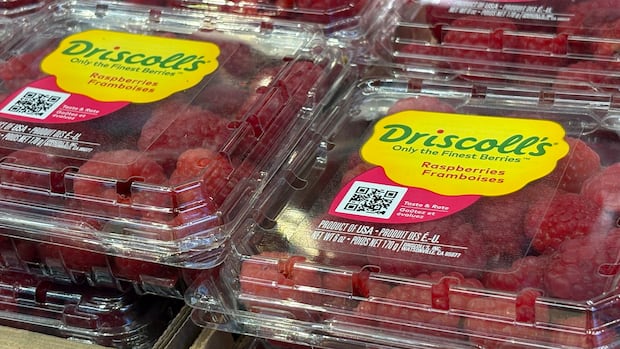
Lawyers are asking a Quebec Superior Court judge to authorize a class-action lawsuit against American fruit giant Driscoll’s.
It comes after CBC News reported on allegations that the company had sent millions of pounds of berries to Canada with non-compliant levels of chemical residues between 2022 and 2024.
The lawsuit was lodged on behalf of a Quebec woman who consumes Driscoll’s berries.
The filing alleges the American multinational fails to inform consumers who purchase its berries of the presence of pesticide residues or other chemical substances exceeding the maximum limits permitted in Canada.
“The failure to disclose this crucial information regarding berries marketed in Quebec is compounded by misleading representations concerning these products,” lawyers wrote.
The suit seeks to cover any individual who purchased Driscoll’s brand berries — including strawberries, raspberries, blackberries or blueberries — since Jan. 1, 2022.
“Through these proceedings, the plaintiff seeks to represent all class members in order to obtain a reduction in their obligations and punitive damages aimed at denouncing and penalizing the company’s highly reprehensible practices.”
In Quebec, it could take at least a year for a judge to determine if a lawsuit meets the legal criteria for authorization.
Driscoll’s denies allegations
The allegations made by former Driscoll’s employee David Harada sparked concern about food safety among Canadians.
The Canadian Food Inspection Agency (CFIA) confirmed to CBC News it conducted several inspections on Driscoll’s berries sold in grocery stores across the country between 2022-24 and found chemical levels above the legal limit in Canada.
The chemicals include bifenthrin, iprodione and captan: fungicides and insecticides.
However, the CFIA says the inspections did not lead to recalls, or a corrective action was implemented and the investigations were closed.
Harada sued the company in California for unlawful retaliation after he alleges he was retaliated against for speaking up about his findings.
Driscoll’s denies the allegations in Harada’s lawsuit, saying, “at all times, Driscoll’s took any concerns David raised seriously. We investigated the allegations he raised, followed the facts, and addressed any issues that needed to be addressed.”
Driscoll’s has said that it amended its controls to comply with Canadian standards, adding the company has never knowingly shipped products it believed to be unsafe.
In response to the proposed class action, Driscoll’s says it’s aware of its filing in Quebec and disputes the allegations.
“[Driscoll’s] welcomes the opportunity to address these claims through the legal process, where the underlying facts, data, and expert analysis can be fully examined,” the company wrote in an email to CBC.
“We are confident that Canadians will see that Driscoll’s maintains compressive food safety and compliance programs and that the allegations do not reflect the reality of how our business operates.”
The company adds it invests significant resources to ensure the safety and quality of its berries.
“For more than 100 years, we have worked to earn the trust of consumers by communicating responsibly about our products and growing practices, and we remain committed to earning the trust of Canadian consumers every day through safe, high-quality products and compliance with Canadian laws and regulations.”