
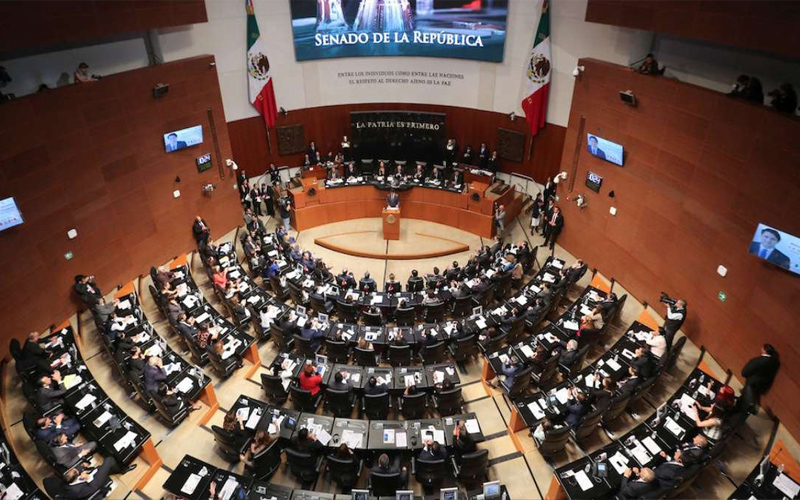
The Mexican Senate has approved a law that has sparked intense debate regarding digital freedom and political satire. Lawmakers voted Wednesday for what opposition senators are calling a major breach of the right to free speech.
The ruling coalition led by Morena passed the bill 72 – 34. Publicly dubbed the Anti-Meme Law, this legislation has become a major point of contention between the governing party and its critics.
Although the official text does not use the word meme, the popular nickname reflects widespread public anxiety about how the government might police internet content. The dispute centers on whether the state is establishing necessary safeguards against digital fraud or creating a legal mechanism to silence dissent and punish political mockery.

Analyzing the Legal Framework and Penalties
The most heavily scrutinized component of the reform is the introduction of a new legal statute known as Article 403 Bis. This section specifically addresses the unauthorized use of elements that officially identify public institutions. The protected elements include institutional graphic identities, official electronic domains, government logos, and related administrative documents.
SUBSCRIBE TO OUR NEWSLETTER
Delivered to your inbox every Monday, completely free.
But constitutional scholars, including Raúl Lopez Ojeda, insist the legal maneuver is nothing more than another instrument to silence the opposition.
“With each of these draconian laws, Mexico becomes less free and less democratic. The question now is how far the government is willing to push its political capital when it comes to prosecutions, as many people are ready to test the limits of the law, and public opinion, said Lopez Ojeda.
Chavo del Toro, an editorial cartoonist for the national newspaper El Economista, has been a vocal critic of the Anti-Meme law, publicly stating: “Si quieren que estemos en la cárcel los caricaturistas, pues vamos a la cárcel” (If they want us cartoonists in jail, well, let’s go to jail.)

After debates in legislative commissions, the final approved text reduced the penalty to a range of one to five years in prison. Additionally, violators could face financial penalties ranging from 1,000 to 10.000 Units of Measure and Update, a standard economic metric Mexico uses to calculate fines. The law also includes provisions targeting the unauthorized use of artificial intelligence to replicate faces, voices, or trademarked material without explicit permission.
Ambiguity and the Fear of Censorship
Opposition legislators and digital rights advocates have loudly condemned the reform, labeling it a direct threat to freedom of expression. Members of opposition parties, including the National Action Party and the Institutional Revolutionary Party, argue that the legal text is dangerously vague.
The primary concern is the ambiguity surrounding the concepts of deception and intent. Critics warn that a citizen could create a satirical image to mock a government failure, and authorities could arbitrarily classify that political critique as an attempt to deceive the public. In such a scenario, the creator of a simple political parody could face a criminal investigation before any judicial body determines their true intent. Prominent political cartoonists and digital commentators have echoed these fears.

They argue that even if a judge eventually dismisses a case, the mere threat of a five-year prison sentence will chill speech. Critics maintain that the administration is more focused on punishing internet mockery than addressing substantial governance issues, resulting in a severe setback for free speech.
The Burden on Internet Service Providers
Beyond individual users, the legislation places significant new responsibilities on internet service providers and digital platforms. The new rules require these companies to implement internal policies to terminate the accounts of users who repeatedly infringe copyright or use protected material without authorization. Furthermore, the law holds service providers directly liable if they fail to remove flagged content promptly. If a platform ignores a request to take down an offending image, video, or AI replication, the company itself can face exorbitant fines.
These corporate penalties can range from 80,000 pesos to over 4 million pesos. Digital rights groups argue that this framework will force internet providers to act as private censors. To avoid massive financial liabilities, platforms will likely adopt overly aggressive moderation policies, automatically deleting user content at the first sign of a complaint rather than waiting for a formal legal review.
Representatives of the ruling party, MORENA, firmly reject the accusations of censorship. Government spokespeople have said the administration has no intention of prohibiting humor, parodies, or political memes.
The opposition has already signaled its intent to challenge the law’s constitutionality once it takes effect, seeking intervention from higher courts to review the ambiguous language. Digital rights organizations are simultaneously preparing campaigns to inform the public about their rights and liabilities under the new digital framework.
The coming weeks will be crucial in determining how federal authorities interpret the new rules and whether the anticipated wave of digital censorship materializes or the law remains strictly a tool against financial fraud.


Senior Editor Carlos Rosado van der Gracht, PhD, is a journalist, photographer, and expedition leader. Born in Mérida, Carlos holds degrees from universities in Mexico, Canada, and Norway. Most recently, he earned a doctorate in Heritage Studies in 2026.