
Mark Sutcliffe is promising to catch up on a backlog of crumbling roads, pipes and other infrastructure in Ottawa, and he’s hoping other levels of government will step in to help pay the bill.
Otherwise, he said he’s willing to see the city take on more debt to get the job done.
Last year, the city released a wide-ranging review of the state of its infrastructure that found much of it in poor condition, with some deemed unfit for service. It calculated a $10.8-billion gap between the cost of repairing it and the funding available over the next decade.
Council passed financial plans to close part of that gap for only the highest priority projects, though the money isn’t absolutely committed until annual budgets actually get passed.
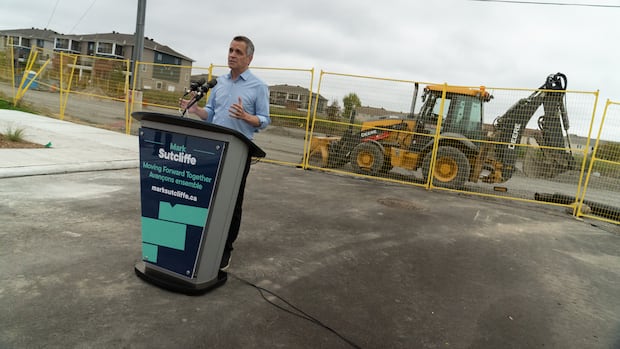
At a campaign announcement in Barrhaven on Thursday, Sutcliffe pitched what he’s calling a $10-billion infrastructure plan to fully close the gap over 10 years, including $500 million devoted to flood-prone communities.
The total includes the funding council already voted for in those financial plans, meaning that only $3.8 billion would be entirely new money.
WATCH | Sutcliffe pledges billions to fix crumbling roads, pipes and city buildings, but funding mix unclear:
Mark Sutcliffe says he’ll fix city infrastructure. Where will the money come from?
Mark Sutcliffe is the latest of Ottawa’s mayoral candidates promising to fix the city’s crumbling roads, water pipes and public buildings, though he stopped short of specifying where the money would come from. The CBC’s Arthur White-Crummey reports.How will he pay for it?
Sutcliffe said his plan would be funded through water rates, development charges on new homes, tax revenues, borrowing and savings he’s promising to find if re-elected, plus contributions from higher levels of government that are in no way guaranteed.
He couldn’t provide details on exactly how much would come from each source.
“I don’t have the specifics on that. I know that there is enough money from each of those sources to fill the gap,” he said.
But he said the first place he goes knocking will be at the federal and provincial treasuries.
“I will never go to our residents as a first resort,” he said. “Not when the federal and provincial governments are still not giving us our fair share, not when we have other sources of revenue that can support our infrastructure investments.”
Sutcliffe has already promised to hold tax increases to at most 2.5 per cent tax hike for the first two years of a new mandate, a figure that’s below the rate of inflation. Council’s financial plan sets out water rate increases of about five per cent per year over the next decade.
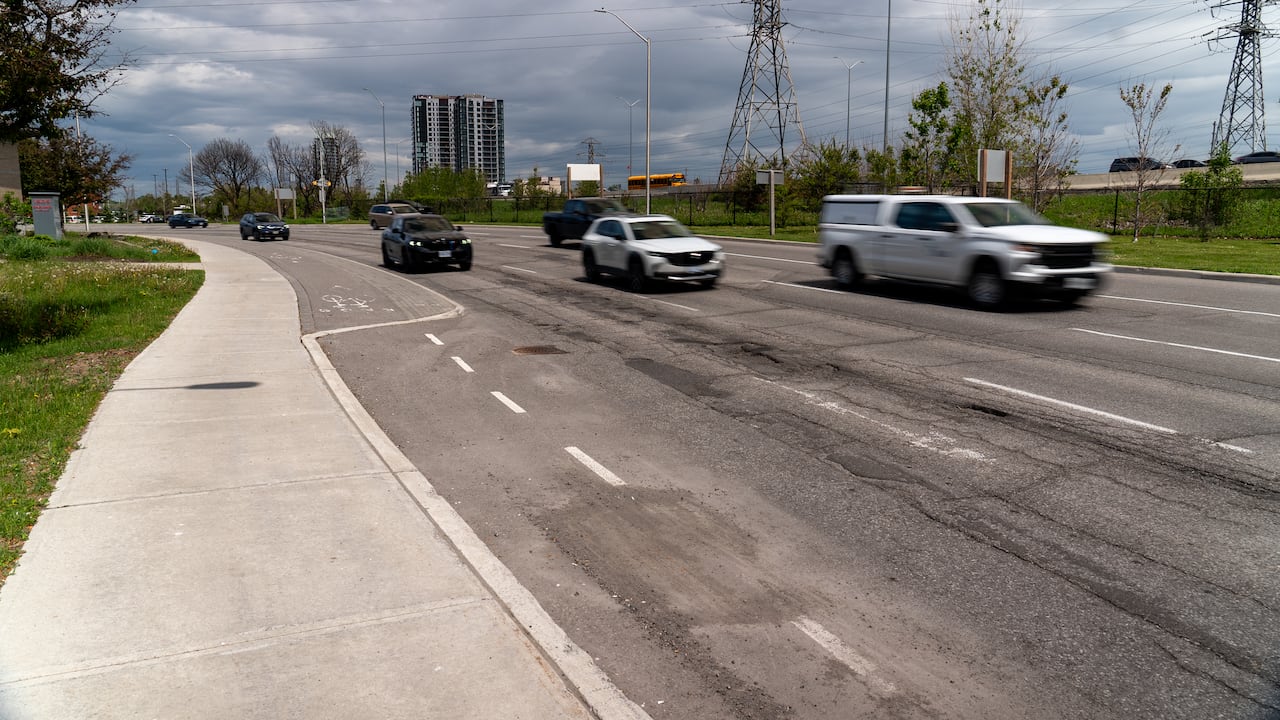 Motorists navigate potholes and cracks on Carling Avenue. Voters tell CBC Ottawa that the state of the city’s infrastructure is a top priority this election campaign. (Francis Ferland/CBC)
He said he expects to stick close to that rate hike schedule, meaning that most of the new money would have to come from the other sources he mentioned, preferably through the province, the feds and $250 million in savings he hopes to find at city hall — but also through debt if necessary.
As of the end of last year, the city’s long-term debt stood at $3.8 billion. Council has set a self-imposed debt limit to keep principal and interest payments below 7.5 per cent of total revenues for most city services and 15 per cent for water infrastructure, for a combined total of about 8.5 per cent. The province allows cities to go as high as 25 per cent.
“I don’t foresee at this point having a big discussion about going further, but we’ll cross that bridge when we come to it,” he said when asked if he’s willing to blow past council’s limit.
Sutcliffe said the city remains well below that target at about five per cent, though city financial plans already forecast future debt increases and the ratio is expected to reach 7.8 per cent by 2036.
Asked if he’s just kicking higher tax increases down the road to future taxpayers who will have to cover higher interest payments, Sutcliffe said the people who benefit from infrastructure should help pay for it.
“It is the responsible and right thing to do to spread the cost of those infrastructure investments over multiple generations,” he said, “because multiple generations of people will be using them.”
Promising quick action on roads
Sutcliffe said he’s hoping to have all the money in place to fill the infrastructure deficit within 10 years, though he isn’t promising that all of it will actually get built within that timeline.
On Thursday, he used the Greenbank Road realignment project as a backdrop to his announcement. That long-awaited corridor is supposed to serve thousands of new homes in Barrhaven’s Half Moon Bay neighbourhood.
That project spent more than a decade languishing in city transportation plans before construction finally started. Sutcliffe is promising to move quickly to build out or widen several other key corridors including Brian Coburn Boulevard in Orléans, Terry Fox Drive in Kanata and Earl Armstrong Road near Riverside South, as well as the Airport Parkway widening.
Those projects are already in the city’s plans, though not all have a realistic chance of securing funding under current timelines.
Sutcliffe said he would also work with developers to make sure infrastructure is in place before new suburbs boom, not after.
“I don’t think it’s in the developers’ best interests to build a community and then have a bunch of frustrated residents afterwards because there aren’t the right sized roads and roundabouts and community centres in their neighbourhoods,” he said.
All told, Sutcliffe said $500 million will go to build or resurface 1,000 kilometres of traffic lanes by 2030. He also promised to identify and fix Ottawa’s “50 worst intersections.”
He’s also promising to devote more than $400 million to renew or replace recreation facilities. The city’s financial plan currently only foresees replacing 40, even though 130 are expected to reach the end of their useful lives in the next 10 years. Sutcliffe’s campaign team said there will be no net loss of facilities under his plan.
Finally, he said the city would open 150 new parks, parkettes and dog parks across Ottawa in 10 years should he be re-elected.
Rivals critique ‘hodgepodge of projects’
Sutcliffe’s rivals reacted to his announcement in part by asking why he hasn’t already fixed Ottawa’s crumbling infrastructure during the four years he’s spent in office.
“Instead he let it rot in the ground while he spent our money on things we didn’t need,” said Alex Lawson, who said his own fiscal plan is coming out soon. “Now he’s asking us to believe he’ll fix the problems he let linger, using debt instead of the money he already wasted.”
Sutcliffe responded that council has already made progress, with infrastructure spending rising 44 per cent during his term.
“If you were to believe what the other candidates are saying, when I got elected in 2022, within a year or 18 months I should have fixed absolutely everything about Ottawa and then we’d never need a mayor again,” he said. “It’s not realistic.”
Neil Saravanamuttoo has made infrastructure a key part of his messaging even before running for mayor, saying the city hasn’t done a good job explaining how bad the situation has become. He criticized Sutcliffe’s announcement as “light on details” about funding.
“More importantly, it does nothing to address the underlying problems of city hall: lacking transparency, overspending and misplaced priorities,” he said.
He said his own plan calls for opening the books, fighting waste and prioritizing infrastructure people depend on, instead of big developer-led projects like Lansdowne 2.0.
Jeff Leiper has also focused on infrastructure, saying he would raise $25.5 million per year through an infrastructure levy added to residents’ property tax bills.
On Thursday, he called Sutcliffe’s announcement, “a wish list, not a budget.”
“Sutcliffe’s infrastructure plan is a hodgepodge of projects already approved by council, projects council has already rejected, and projects that depend on funds not yet (and maybe never) secured,” Leiper said.
“Revenues available to build infrastructure will be reduced under his reckless tax cap promise and fulfilling his promises will require massive cuts to other city spending.”
When CBC asked Sutcliffe how he can be held accountable for a 10-year infrastructure plan when he’s only seeking election for four more years, he floated the possibility of another mandate.
“I intend to be in a position in 2030 that if I choose to seek re-election at that time I’ll be in a strong position to do so,” he said. “There are no term limits in Ottawa.”