
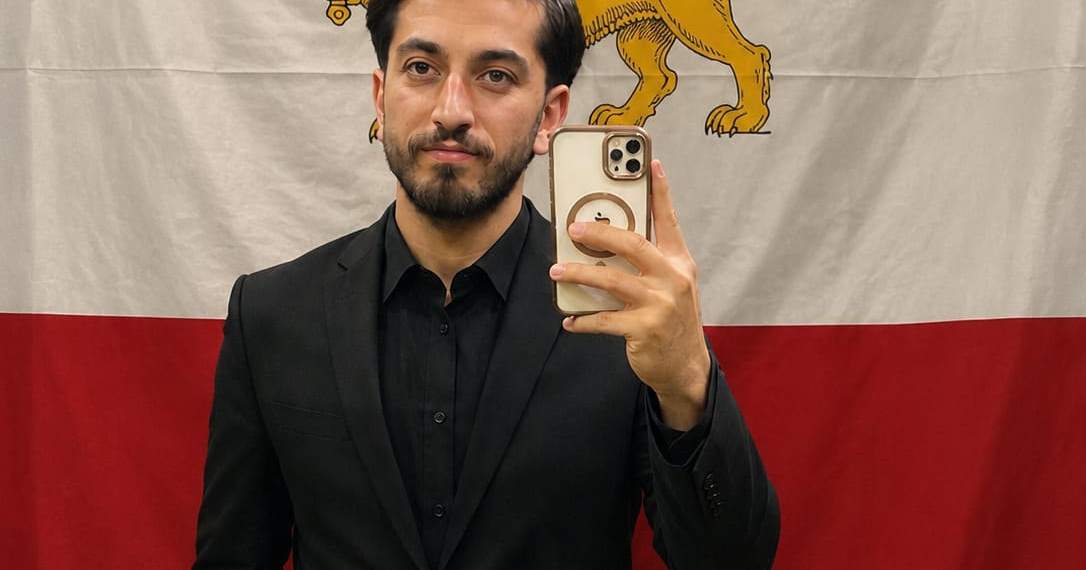
Kouhsari, 31, told Iran International that during the January 2026 uprising he saw security forces use violence unlike anything he had witnessed before in Gorgan, the capital of Golestan province in northern Iran, including the shooting of a toddler in the face. He spoke from a location that is being withheld because he fears reprisals from the Iranian authorities.
Security forces opened fire directly on crowds on January 8 as demonstrations swelled across the city, he said.
“You couldn’t believe what you were seeing,” he said. “They pointed their weapons directly at the crowd and opened fire. People were falling like sparrows.”
Kouhsari had taken part in the November 2019 protests and in the 2022 protests that followed the death in morality police custody of Mahsa Amini, who had been detained for allegedly violating Iran’s hijab rules. Nothing he saw then, he said, compared with January.
“It was unimaginable,” he said. “They were firing bursts into the middle of the crowd.”
‘The hardest part’
The scene that affected him most, Kouhsari said, involved a couple carrying a child he thought was about two years old.
“The hardest part for me was when there was a husband and wife with a child, about two years old, in their arms,” he said.
All three were caught in the gunfire, he said. The father was hit below the waist, and the mother in her face, neck and abdomen. Kouhsari and others moved the parents toward people helping the wounded.
In the chaos, his attention turned to their child.
“I was thinking about the child in all that fear and panic,” he said.
He realized he could no longer hear the toddler crying, he said, and then saw the child lying near the curb.
“I was just praying the child wasn’t dead, that they were unconscious,” he said.
When he picked the child up, he saw a severe gunshot wound to the face.
“Half of the child’s face was gone from the bullet,” he said.
Kouhsari said he screamed and began crying, then carried the child to a woman helping the wounded.
“I told her, ‘This is their child too. Wherever you sent the mother and father, send the child there as well.'”
He never learned what happened to the family.
Shot while carrying a wounded woman
Later that night, another wounded woman begged him for help.
“Help me. Don’t let them kill me,” he recalled her saying.
Kouhsari lifted her onto his back and began carrying her toward the crowd.
“I told her, even if I die myself, I won’t let you die here,” he said.
As he neared the other protesters, security forces shot him from behind in the right leg.
He managed a few more steps before collapsing. Protesters pulled him into the crowd and used scarves and shoelaces to stem the bleeding.
Video reviewed by Iran International shows Kouhsari lying in a house where he was hiding, his wounded leg bleeding into a container, visibly in pain.
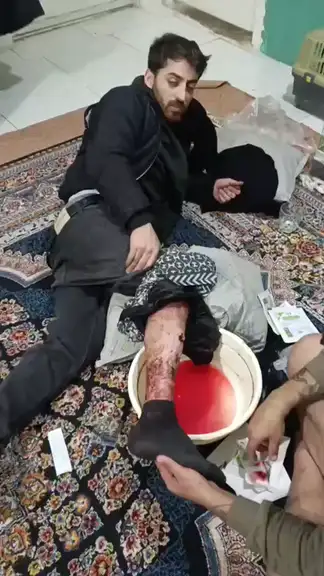 A screengrab of footage showing Hamid Kouhsari receiving makeshift treatment for a gunshot wound to his right leg while in hiding after the January 8 protests in Gorgan.
He could not risk going to a hospital, he said, and was afraid even to try to get medicine from a pharmacy, because wounded protesters were being identified and detained.
“I wasn’t afraid of being shot,” he said. “I was terrified they would come and take me away.”
That fear came from what happened after the November 2019 protests. Kouhsari said he was detained and later summoned to a Revolutionary Guards facility in Gorgan, where over several hours he was pressured into recording a confession.
His father, he said, was a veteran of the 1980-88 Iran-Iraq war and was wounded in it. Decades later, the son was shot by his own country’s security forces in the street.
A doctor who later examined his leg privately told him it needed surgery because of damage to the bone and nerves, Kouhsari said.
The operation never happened.
Kalashnikovs, pellet guns and lasers
Kouhsari said he saw security forces use Kalashnikov-type rifles and pellet guns on January 8, as well as a weapon he could not identify.
He also described gunmen positioned above the streets, and protesters being marked with lasers before they were shot from those elevated positions.
“They would keep the laser on them even when they went into the crowd,” he said. “The sniper from above would shoot the people they had marked with the laser.”
Separate CCTV footage from Gorgan on January 9, obtained and verified by Iran International, shows security forces using lasers during the crackdown.
Kouhsari said Reza Asadi, a protester killed by live fire in Gorgan on January 8, was among those he saw marked with a laser before being shot.
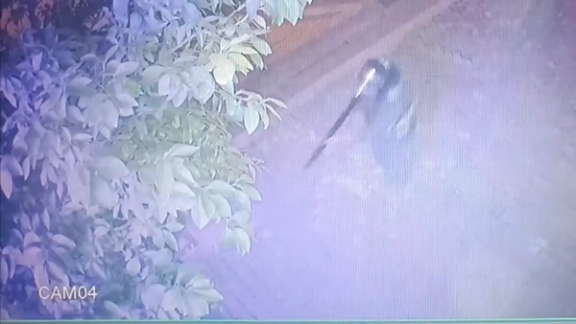 CCTV footage obtained and verified by Iran International shows security forces using lasers in Gorgan on January 9, a day after Hamid Kouhsari said protesters were targeted with similar tactics.
A body taken, a family kept searching
Among those killed that night was Kouhsari’s relative Mostafa Kouhsari, a father of two from Azadshahr, about 75 kilometers east of Gorgan.
Mostafa was shot at around 9 p.m., Kouhsari said, and died on the way to the hospital as protesters tried to save him.
Revolutionary Guards forces took his body, Kouhsari said, and for four days the family had no word of where he was. After days of searching, they found him at a morgue in Gonbad-e Kavus, a city in the north of the province.
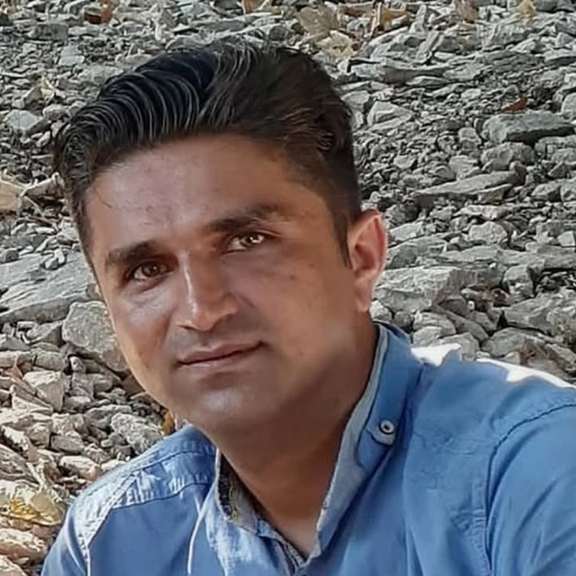 Mostafa Kouhsari was shot by security forces during the January 8 protests and died on the way to hospital, according to his relative Hamid Kouhsari.
Intelligence agents then escorted the body back to Viro, a village east of Gorgan, and pressed the family not to hold a public funeral, Kouhsari said. Mostafa was buried there at around 6 a.m.
The pressure continued after the burial. The family held no memorial at the village mosque and instead marked the third, seventh and 40th days after his death, the customary points of mourning in Iran, privately at Mostafa’s home.
Others close to him were also killed, Kouhsari said, but some of their families had asked him not to name them for fear of reprisals.
Eight months in hiding
With his leg still badly injured, Kouhsari went into hiding.
For about eight months, he said, he moved between car washes, cattle sheds, abandoned houses and remote villas belonging to friends.
“When I heard the sound of police, the hair on my body would stand up,” he said.
Friends brought him food and medicine. The surgery the doctor had said he needed never took place.
His fear of being found grew after a friend was detained. The man revealed information under torture, Kouhsari said, and he became increasingly afraid the authorities could identify him.
In the end, he decided he could not stay in Iran.
A final goodbye
Before leaving, Kouhsari photographed his home after emptying it of his belongings.
He could not properly say goodbye to much of his family, he said, and does not know when he will see them again.
“Saying goodbye to my mother was very hard,” he said.
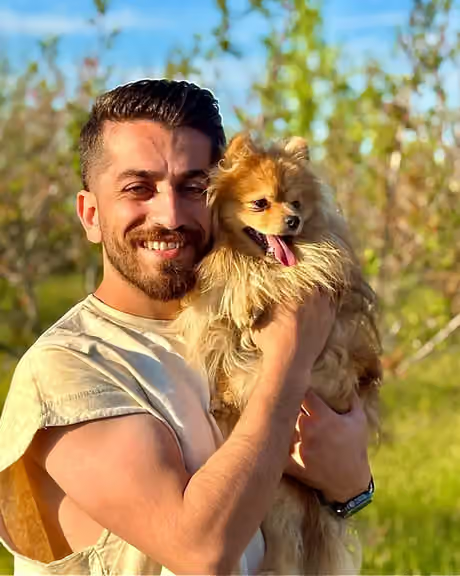 Hamid Kouhsari
One of his last memories is of saying goodbye to his dog, whom he left with a friend.
“When I was saying goodbye to my dog, I saw my whole family in that animal,” he said.
“The night I left Iran, for the first time in eight months I was able to sleep peacefully.”