
Little is expected to change before Israel’s election and the formation of its next government. What follows, according to sources familiar with Israel’s relations with Washington, could depend heavily on the composition of that government.
If the current coalition returns to power, they say, the U.S. approach toward Israel could harden further, potentially including sanctions. They also warn that after the U.S. midterm elections, declining public support for Israel could increasingly translate into concrete congressional action.
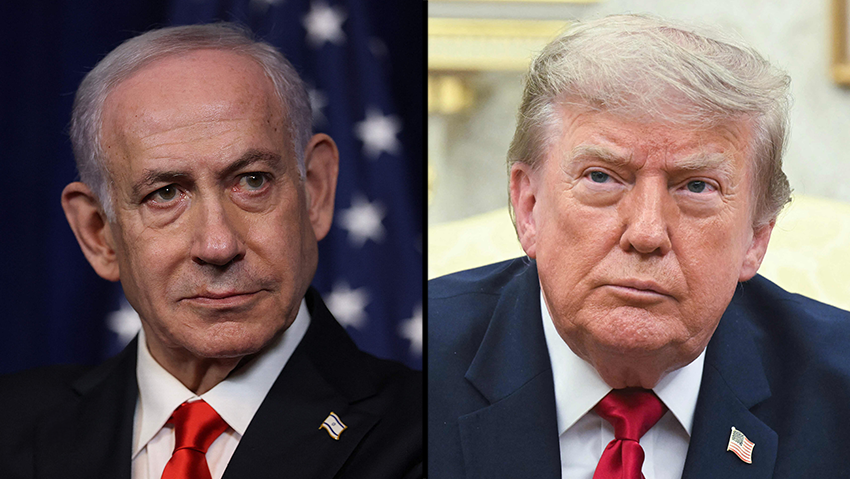
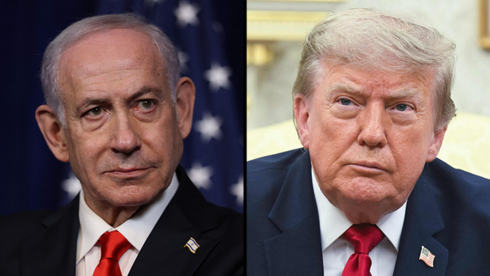
Benjamin Netanyahu, Donald Trump
(Photo: SAUL LOEB/JOE RAEDLE /GETTY IMAGES NORTH AMERICA/AFP)
“The West Bank is Israel’s weak point in Washington today,” one source familiar with the issue said, citing anger in the United States over settler violence and a growing number of congressional initiatives targeting settlements and individuals involved in them.
Two such initiatives came close to advancing this week.
Six Democratic members of the House of Representatives introduced the Stop the Settlements Act: Joaquin Castro, Madeleine Dean, Don Beyer, Greg Casar, Sara Jacobs and Veronica Escobar.
The legislation would impose sanctions on foreign individuals and entities involved in establishing or expanding settlements and outposts in the West Bank and Gaza, while also banning imports of goods produced there.
According to information provided to Ynet, the initiative has support from nearly 40 Democratic lawmakers, including figures associated with the party’s mainstream rather than only its progressive wing.
Other supporters include Stephen Lynch, Bennie Thompson, Rosa DeLauro, Ro Khanna and Pramila Jayapal.
The bill would require sanctions against foreign actors involved in establishing new settlements or outposts, developing infrastructure for their expansion, construction in the E1 area or facilitating the transfer of civilians into settlements.
Potential penalties include asset freezes, visa restrictions and bans on entry into the United States.
The bill could also apply to individuals involved in maintaining or expanding existing settlements, including through financial and banking sanctions. Under the language described, people who attempt to facilitate such activity or are indirectly involved could also fall within its scope, potentially including officials responsible for planning approvals.
Ministers in the Israeli government, and potentially even the prime minister, could be affected. Provisions concerning infrastructure and E1 construction contain no stated starting date, raising the possibility that they could apply to earlier activity.
U.S. citizens, including settlers with dual citizenship, are exempt. The legislation does not explicitly define the term “settlement,” does not specifically mention East Jerusalem and leaves the final sanctions list to the president.
The proposal is not expected to pass the current Congress, where Republicans hold the majority and President Donald Trump remains in office. Its sponsors, however, are already looking toward the next Congress.
A senior Democratic source told Ynet that the ability of party leaders to prevent such measures from advancing would depend heavily on Israel’s election.
“If the same coalition returns, these proposals will pass Congress,” the source said, presenting that as the source’s assessment of the political trajectory in Washington.
At the same time, a separate resolution led by Democratic Sen. Chris Van Hollen was narrowly defeated in the Senate this week, 51-47.
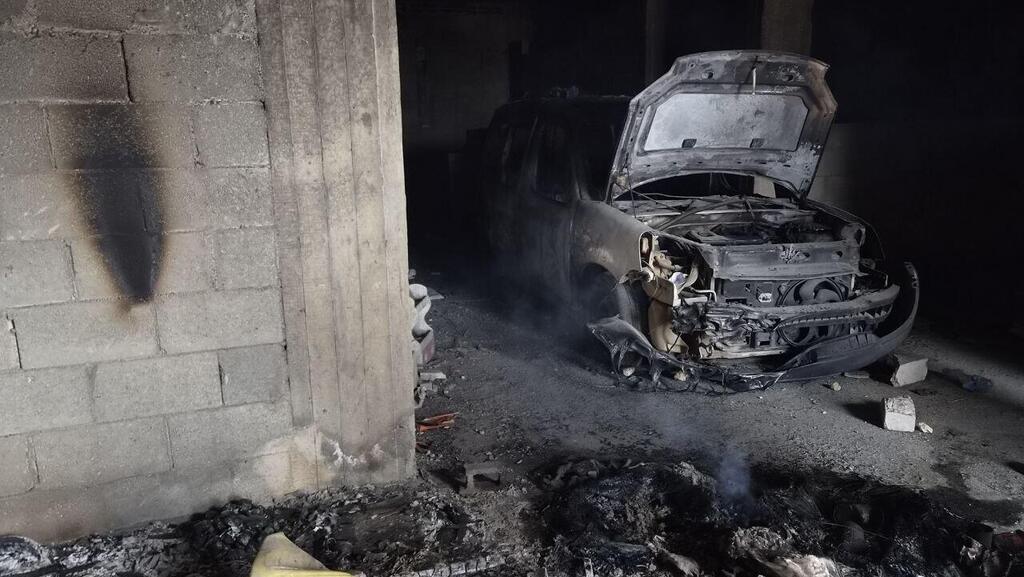
Damage caused by settlers in the Palestinian village of Jalud
(Photo: Alex Gemburg)
The measure invoked Section 502B of the Foreign Assistance Act and would have required the State Department to submit a report within 30 days on the deaths of nine U.S. citizens in incidents involving Israeli settlers or security forces since 2022, as well as on the detention of Palestinian children.
Had the resolution passed and the administration failed to provide the required report, most covered U.S. security assistance to Israel could have been suspended until the report was submitted.
All Senate Democrats except John Fetterman supported the measure, along with Republican Sen. Rand Paul. Two senators did not vote.
Dr. Kobi Barda, an expert on U.S. politics, reacted to the developments on X: “I don’t even want to think about the blood bath waiting for us after the midterms. I don’t believe we’ve reached the bottom yet.”
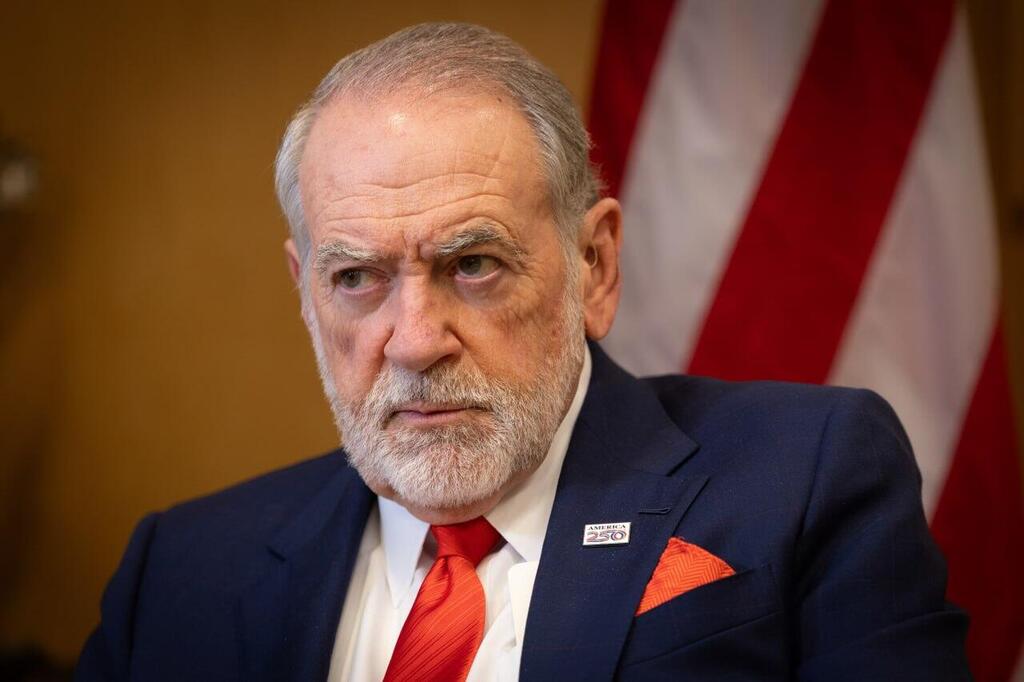
Mike Huckabee, US ambassador to Israel
(Photo: Alex Kolomoisky)
Another source of tension is Lt. Gen. Sean M. Salene, the U.S. security coordinator responsible for strengthening security cooperation between Israel and the Palestinian Authority.
According to sources familiar with the matter, Salene has been sending Washington troubling reports about what he views as lawlessness in the West Bank and failures by the IDF and police to address it. Israeli officials dispute that characterization, arguing that information reaching Washington is one-sided and reflects the Palestinian narrative.
The same sources said there is anger within the current U.S. administration over the Israeli government’s handling of the West Bank. They added that U.S. Ambassador to Israel Mike Huckabee should not necessarily be viewed as the best indicator of broader administration policy, arguing that his positions are particularly close to those of the settlement movement.
Another indication cited by the sources is Washington’s muted official response to settlement-related sanctions announced by Britain and other Western governments, as well as British Foreign Secretary Ed Miliband’s accusations of “ethnic cleansing” in parts of the West Bank.
U.S. officials had drafted a statement sharply criticizing the measures, but it was never issued after failing to win support from senior White House and State Department officials. Secretary of State Marco Rubio said Washington would not join the sanctions but stopped short of condemning the countries that imposed them.
For Israeli officials watching Washington, that silence was viewed as a troubling signal.
According to the sources, possible U.S. measures against Israeli military units accused of serious violence against Palestinian civilians also remain under discussion.
The Biden administration previously considered action against the Netzah Yehuda battalion but ultimately declined to impose sanctions after sustained Israeli pressure.
A more severe option described by the sources would restrict the use of U.S.-supplied weapons by particular units or in certain areas.
Another possibility would be placing IDF or police officers on lists of officials with whom the United States would cut contact over alleged involvement, or possible involvement, in settler violence.
“That does not necessarily mean it will happen,” one source said. “But it is on the table.”
The source added that the political situation in Congress surrounding Israel is now “far more serious” than in the past.