
The TWZ Newsletter
Weekly insights and analysis on the latest developments in military technology, strategy, and foreign policy.
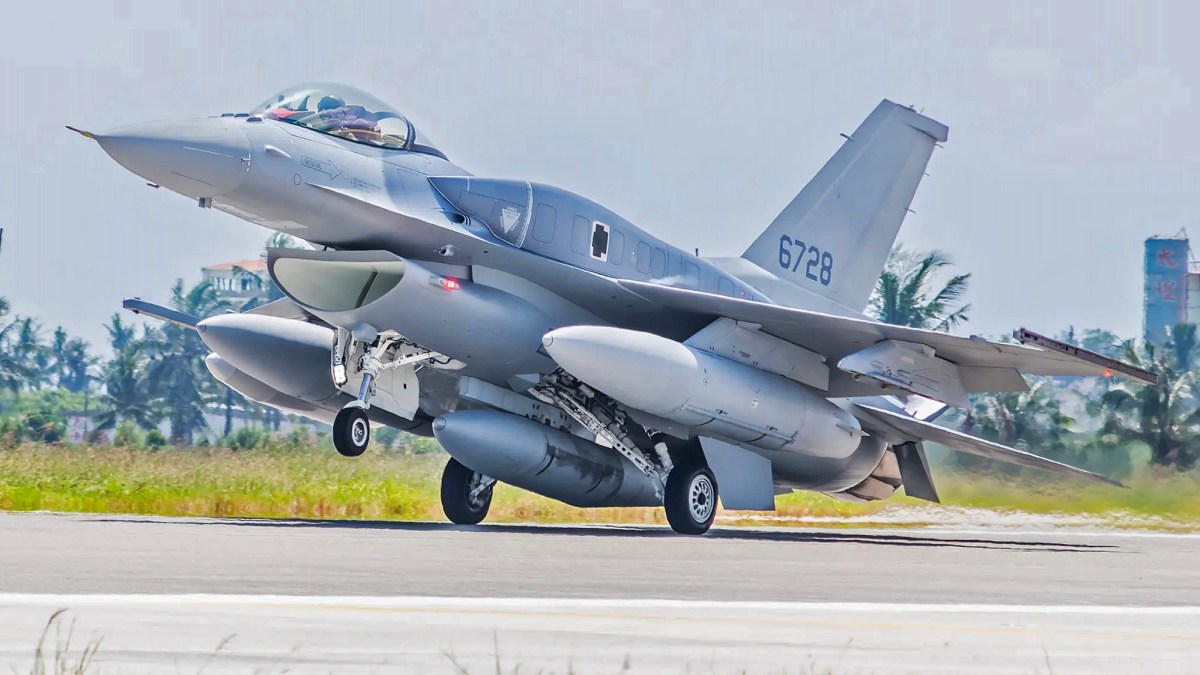
After nearly seven years of waiting, Taiwan has received the first two aircraft from its long-delayed purchase of 66 new-build F-16C/D Block 70 fighters from the United States.
The two single-seat F-16Cs, serials 6727 and 6728, touched down at Chihhang Air Base near Taitung on October 2. They are the first factory-new fighter aircraft delivered to Taiwan in 25 years and mark the beginning of the aircraft acceptance and integration phase of the Republic of China Air Force’s (ROCAF) so-called Peace Phoenix Soaring project.
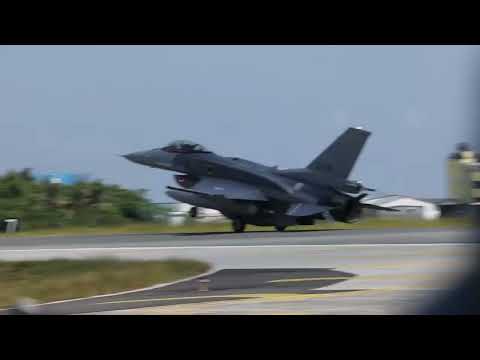
2架F-16V戰機飛抵台東|中央社即時影音
The two jets have also had an unusually eventful trip to Taiwan.
They began their journey to the island on August 17, flying from Lockheed Martin’s production facility in Greenville, South Carolina, to Hawaii. The aircraft were subsequently forced to remain there for more than a month after an unexpected issue prevented them from continuing across the Pacific as planned. The reasons for the delay have been the subject of considerable speculation, including weather and tanker availability.
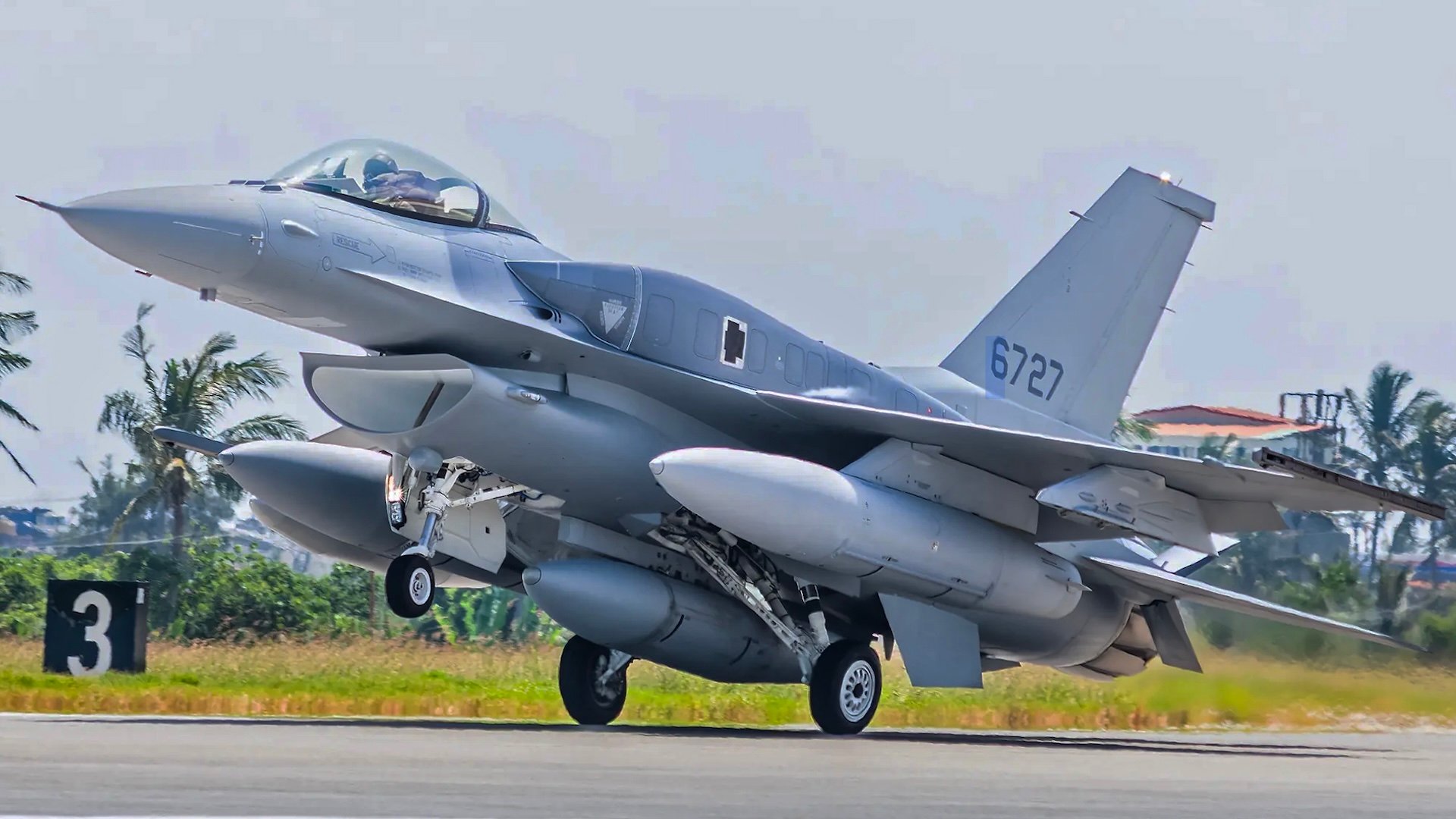 ROCAF F-16C Block 70 serial 6727 arrive in Taitung. Peter Ho, Formosa Aviation & Military Image Press
The two jets finally departed Hawaii again on October 1, stopping in Guam before making the final leg to Taitung today.
Taiwanese Defense Minister Wellington Koo said today that more of the aircraft will arrive before the end of the year, although he did not provide a specific number.
Taiwan receives first 2 F-16V Block 70 fighter jets
Taiwan took delivery Friday of the first two of 66 F-16V Block 70 fighter jets purchased from the United States, with the aircraft landing at Chihhang Air Base in the eastern county of Taitung at around noon. pic.twitter.com/hbqdV6io26
— Focus Taiwan (CNA English News) (@Focus_Taiwan) October 2, 2026
The 66-aircraft purchase is worth approximately $8 billion. Taiwan originally expected deliveries to begin much sooner, but production-line adjustments, supply-chain problems, and software issues contributed to delays. COVID, too, had an impact on the production line.
The program’s delivery schedule has slipped repeatedly. Defense Minister Koo said in March, May, and again through his deputy in June that the first aircraft were expected to arrive by the end of September. That deadline passed without an F-16 reaching Taiwan.
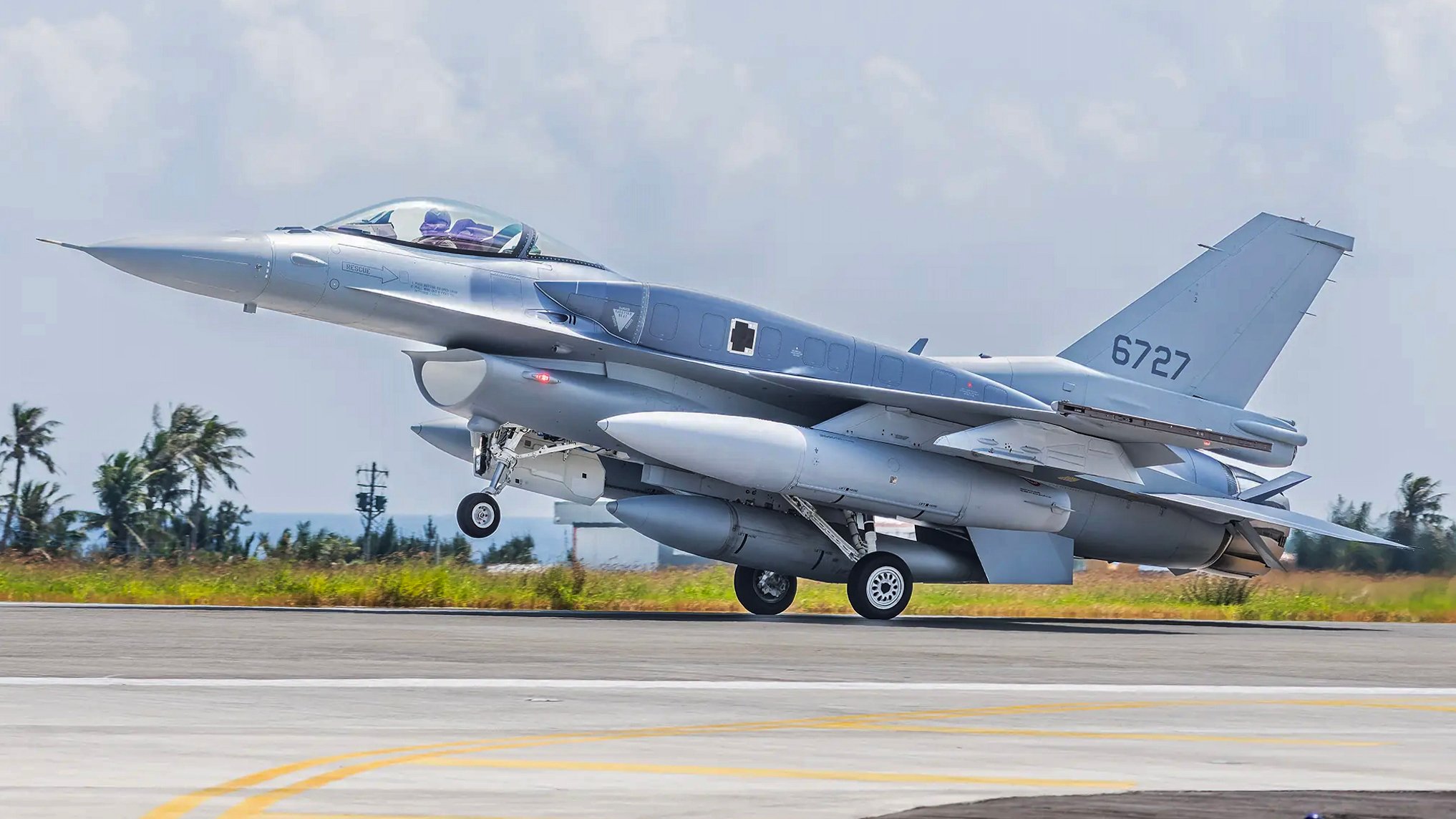 ROCAF F-16C Block 70 serial 6727 touches down earlier today. Peter Ho, Formosa Aviation & Military Image Press
Taiwan’s Ministry of National Defense acknowledged in late September that development and production of the aircraft’s new electronic warfare self-protection system had also been a factor.
The Block 70s are being equipped with L3Harris’ AN/ALQ-254(V)1 Viper Shield electronic warfare suite, and the system was not yet fully through its development and production process when the first aircraft were otherwise ready for delivery. L3Harris announced on September 3 that it had completed production of the first 35 Viper Shield systems, underscoring that the electronic warfare equipment was itself still moving into production as Taiwan’s fighters were approaching delivery.
Viper Shield Electronic Warfare System
Taiwan chose to acquire the AN/ALQ-254 rather than the AN/ALQ-257 electronic warfare system used on U.S. Air Force F-16s.
Lawmakers have questioned whether the system meets requirements associated with earlier work to modernize earlier F-16A/B Block 20 fighters to the F-16V standard. Meanwhile, Defense Minister Koo argued that those requirements applied to the earlier Block 20 upgrade rather than the new Block 70 purchase. Other international F-16 Block 70 operators are also using Viper Shield.
Taiwanese officials have defended the decision, citing the specific requirements of Taiwan’s F-16 fleet and associated procurement considerations. The system is intended to provide the new fighters with a modern electronic warfare and self-protection capability against increasingly sophisticated radar and missile threats.
There are also still questions about when the Viper Shield system itself will be fully ready.
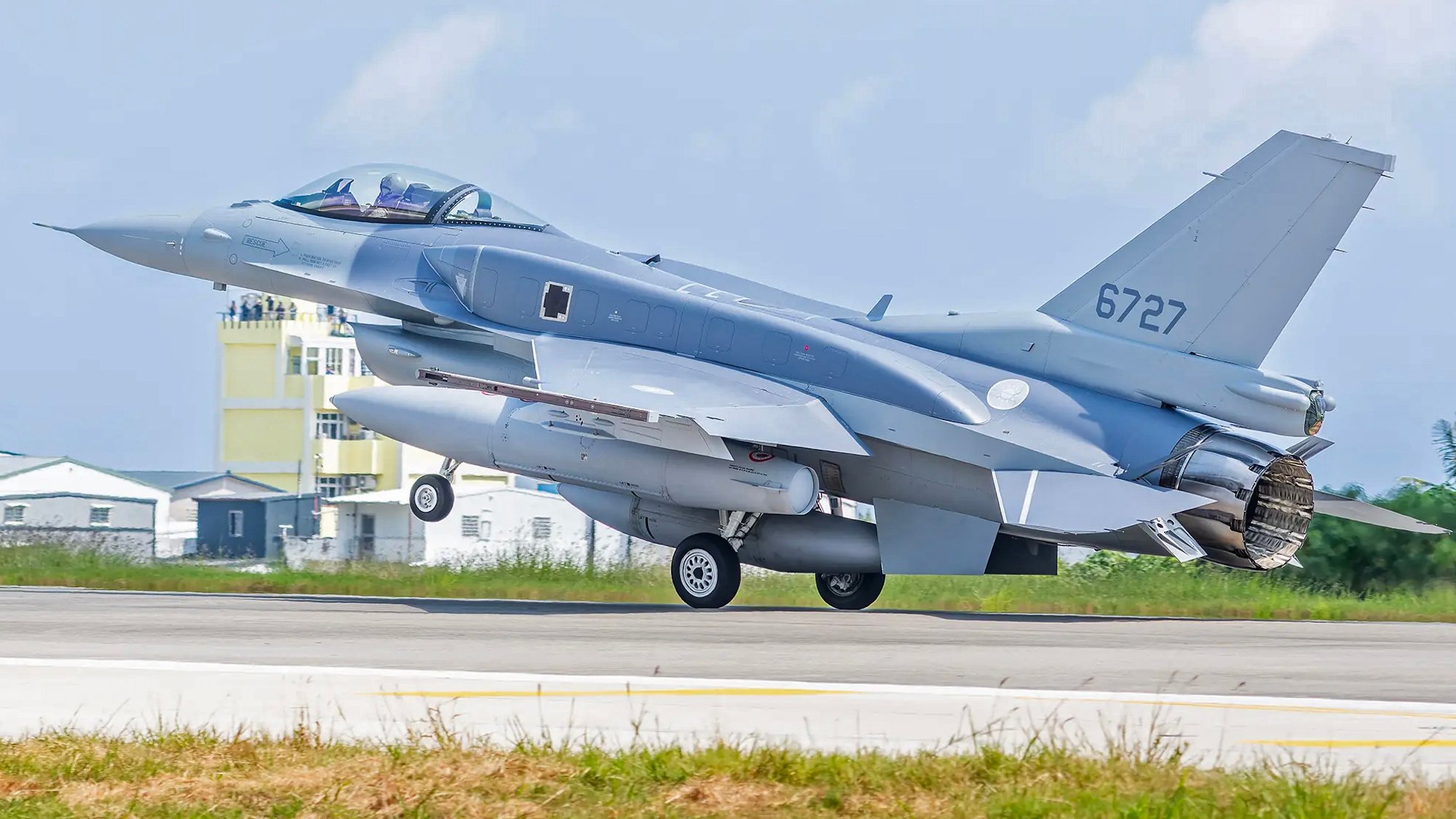 ROCAF F-16C Block 70 serial 6727. Peter Ho, Formosa Aviation & Military Image Press
Weapons deliveries have also not kept pace with the aircraft themselves.
Taiwan is receiving AIM-120C-8 AMRAAM air-to-air missiles as part of the F-16 package, with 200 ordered. The C-8 version incorporates upgrades from the U.S. Air Force’s Form, Fit, Function Refresh (F3R) effort, including new electronics and improved electronic-counter-countermeasures intended to make the missile more capable in a heavily contested electromagnetic environment. For Taiwan, the missile will provide the new F-16s with a modern beyond-visual-range air-to-air weapon that can be cued by the aircraft’s AN/APG-83 Scalable Agile Beam Radar (SABR), as well as other sources of targeting information through the F-16’s networked systems.
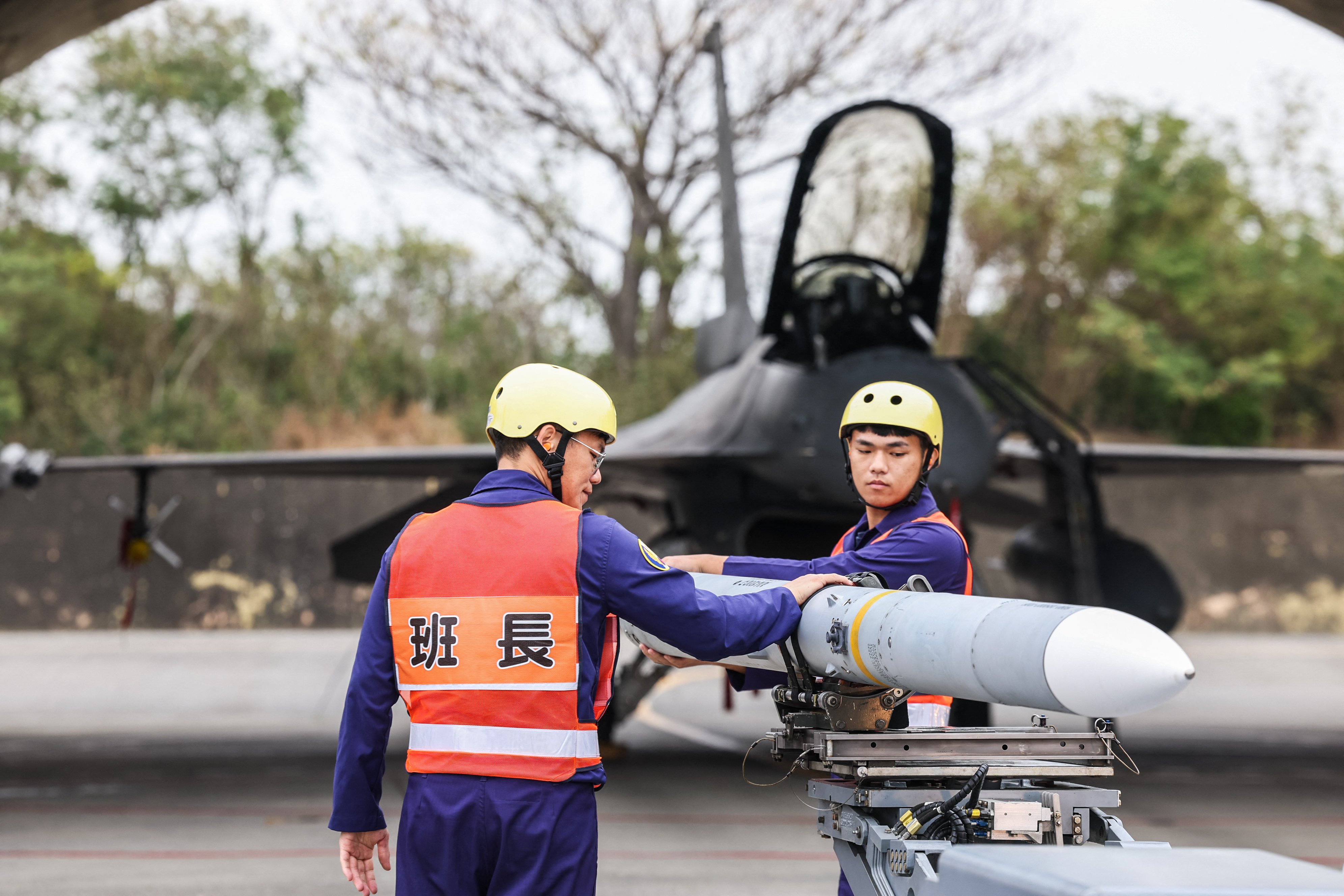 An AIM-120 AMRAAM is prepared to be loaded onto an F-16V at Chiayi Air Base, in Chiayi on January 28, 2026. Photo by I-Hwa Cheng / AFP
The AIM-120C-8 is particularly relevant as Taiwan fields more F-16s against China’s increasingly capable fighter fleet, which includes aircraft equipped with long-range air-to-air missiles such as the PL-15.
Taiwan’s F-16 Block 70 package also includes the AGM-88 High-speed Anti-Radiation Missile (HARM), intended for attacks against enemy air defense systems. According to Roy Choo, a defense journalist and TWZ contributor, the first of the new AGM-88F missiles arrived in Taiwan back in 2022.
The major gap is the AGM-154C Joint Standoff Weapon (JSOW). The precision glide weapon is intended to give Taiwan a longer-range strike capability against ground targets without requiring the launching aircraft to fly directly over heavily defended areas. According to the latest reporting from Taiwan, deliveries of the AGM-154C have been held up by delays on the U.S. production line and may not begin until 2027 or 2028 at the earliest. Existing stocks of these weapons were also heavily used in Operation Epic Fury.
The two aircraft now sitting at Chihhang are significant for another reason. Unlike Taiwan’s existing F-16V fleet, they are new-production aircraft rather than older fighters that have been upgraded.
Taiwan received 141 F-16A/B Block 20s that were upgraded to the F-16V configuration under a separate modernization program completed in 2023. The new Block 70s incorporate many of the same technologies — including the APG-83 — but are built from the ground up as new aircraft.
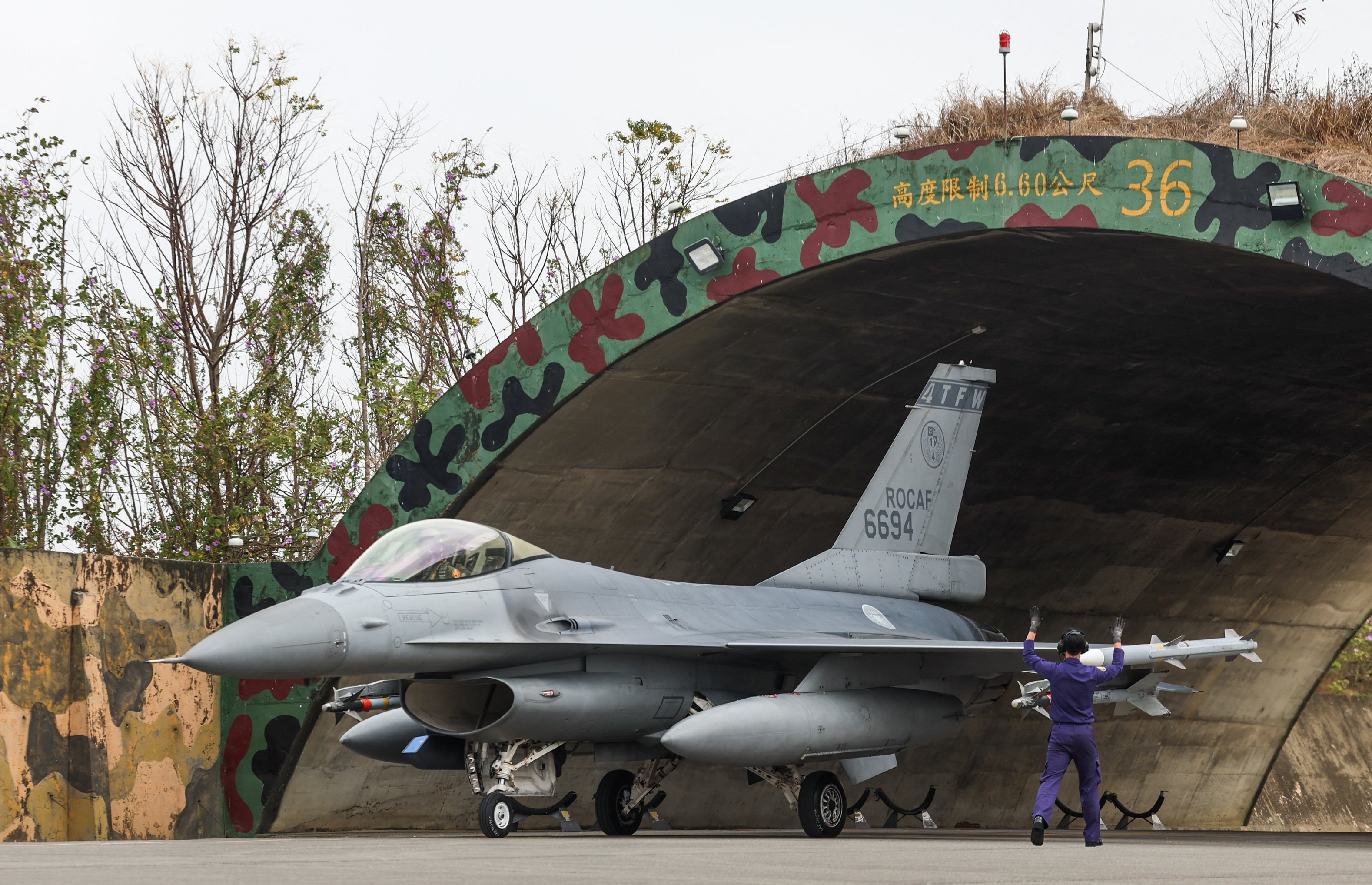 A Taiwan Air Force F-16V taxis out during a spring military exercise at Chiayi Air Base, in Chiayi on January 28, 2026. Photo by I-Hwa Cheng / AFP
The Block 70s will also bring a significant new passive-sensing capability to Taiwan’s F-16 fleet. Under a $328.5-million U.S. Foreign Military Sales contract awarded to Lockheed Martin in February, Taiwan is receiving the company’s IRST21 Legion-ES infrared search and track system. Designed specifically for the F-16, the long-wave infrared sensor can passively detect and track airborne targets without emitting radar energy. That gives the aircraft another way to search for and track threats while reducing its own electromagnetic signature. The IRST21 also gives the F-16s a passive way to detect and track low-observable targets, potentially providing another means of finding Chinese stealth aircraft without relying solely on radar.
In 2019, Lockheed Martin displayed a model of a Block 70 F-16 with what appeared to be a podded IRST system on one of its chin stations at the biennial Taipei Aerospace & Defense Technology Exhibition in Taiwan:
The new fighters will therefore complement Taiwan’s upgraded F-16A/Bs while expanding the overall number of modern F-16s available to the ROCAF.
The timing matters.
People’s Liberation Army (PLA) aircraft operate around Taiwan on an increasingly routine basis, forcing the ROCAF to maintain a persistent air-defense posture. The additional F-16s will provide more aircraft for missions ranging from air defense and counter-air operations to maritime strike.
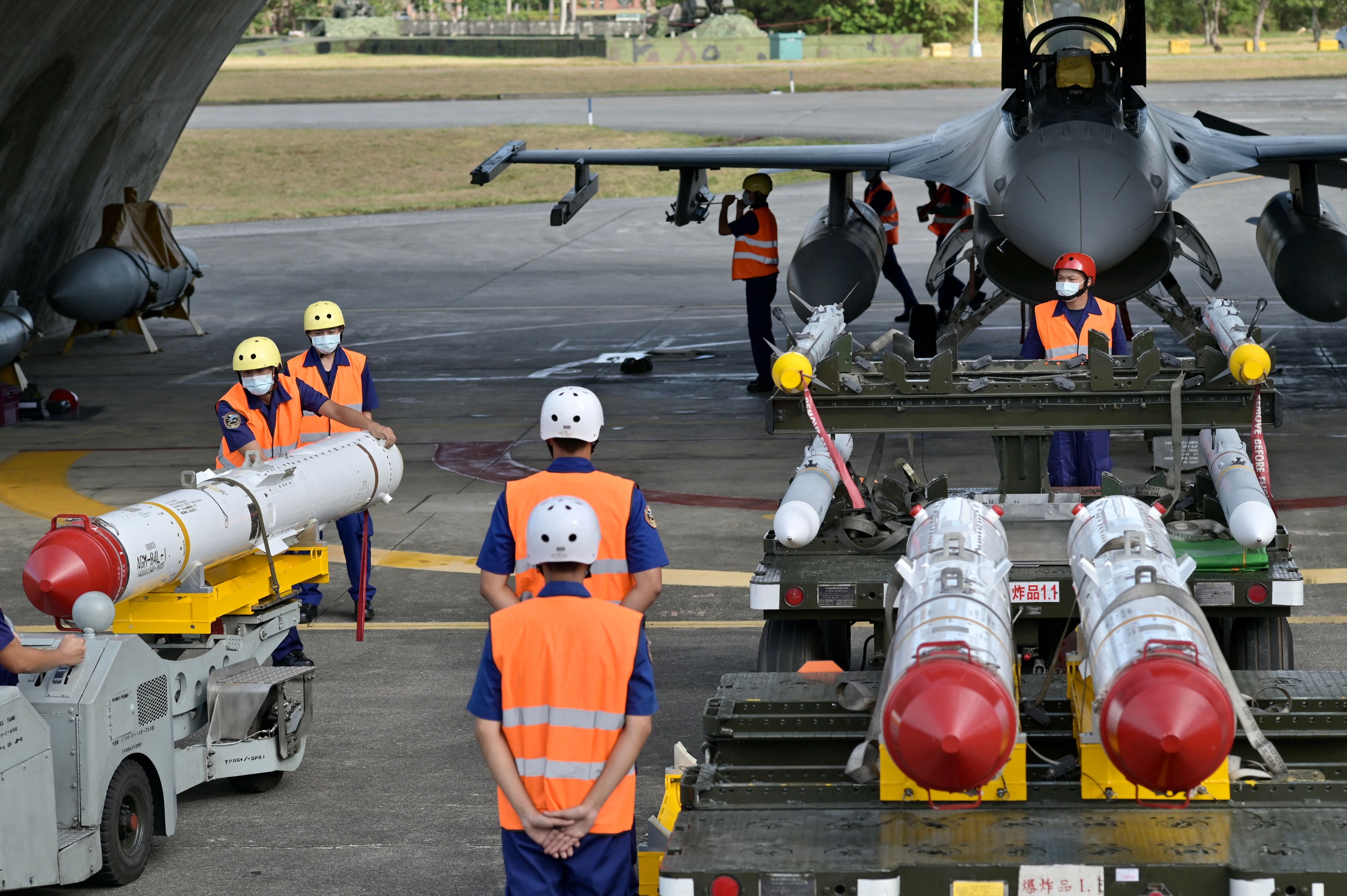 Ground crew prepare to load AGM-84 Harpoon anti-ship missiles in front of an F-16V during a drill at Hualien Air Force base on August 17, 2022. Photo by SAM YEH/AFP via Getty Images
The F-16V fleet is also being tested for a more specialized intelligence, surveillance, and reconnaissance role. The ROCAF has recently been conducting flight and systems integration testing of the MS-110 advanced reconnaissance pod, part of its Phoenix Scout project. The service plans to acquire six pods to replace older reconnaissance equipment. Based on the DB-110 digital sensor architecture, the system combines visible-light and infrared imaging with long-range, day-and-night reconnaissance, and real-time image transmission, allowing imagery to be passed more rapidly to ground command and intelligence elements. Integrating the pod with the F-16 and associated ground systems will give Taiwan another means of monitoring activity around the island and its surrounding waters.
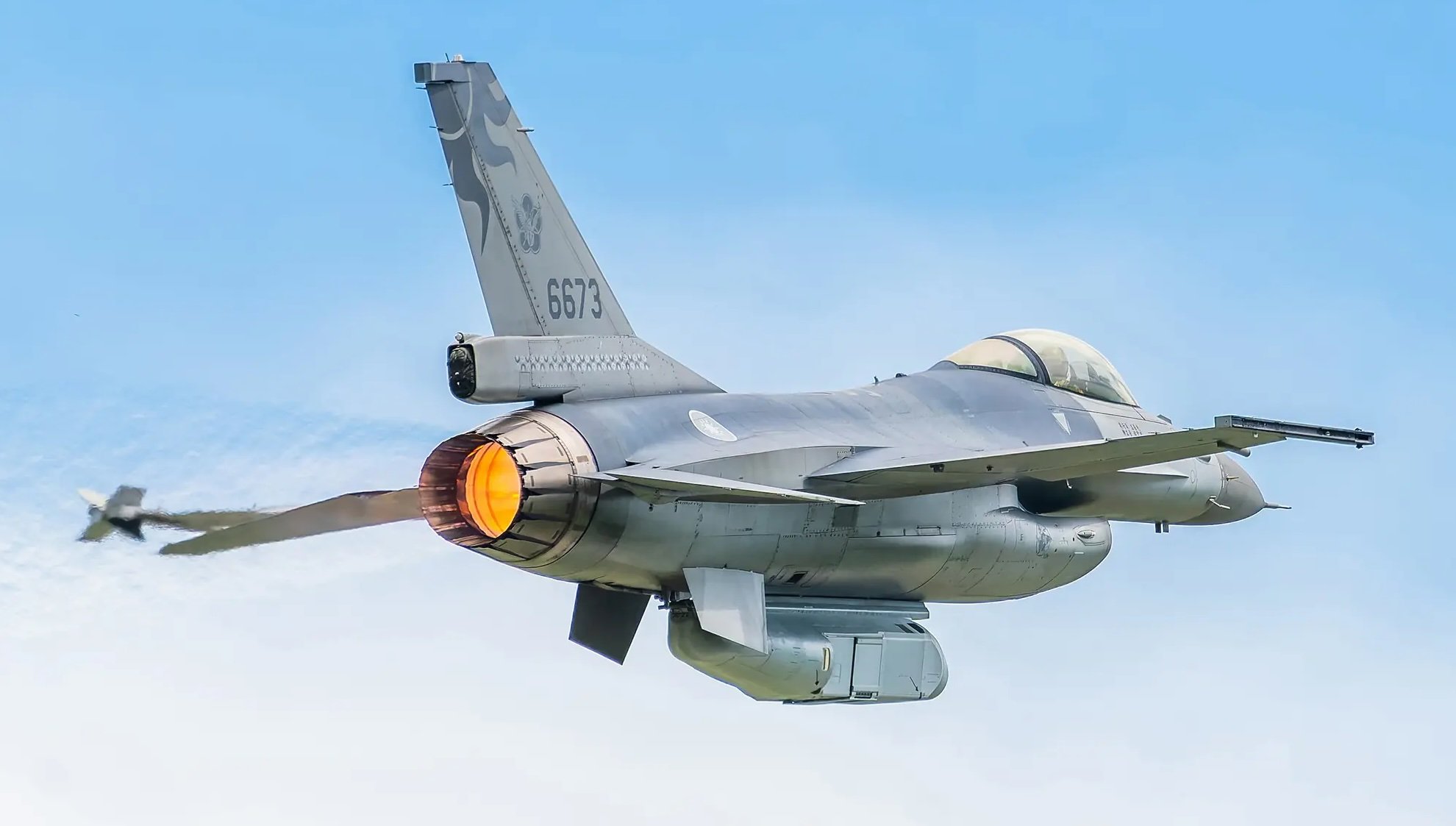 A ROCAF F-16V carrying an MS-110 reconnaissance pod. Peter Ho, Formosa Aviation & Military Image Press
But Taiwan remains heavily outnumbered across the Taiwan Strait.
China is fielding an increasingly sophisticated combat aircraft fleet that includes the J-20 and J-35 stealth fighter, large numbers of advanced fourth-generation fighters, airborne early warning and other force-multiplier aircraft, and a growing variety of uncrewed systems.
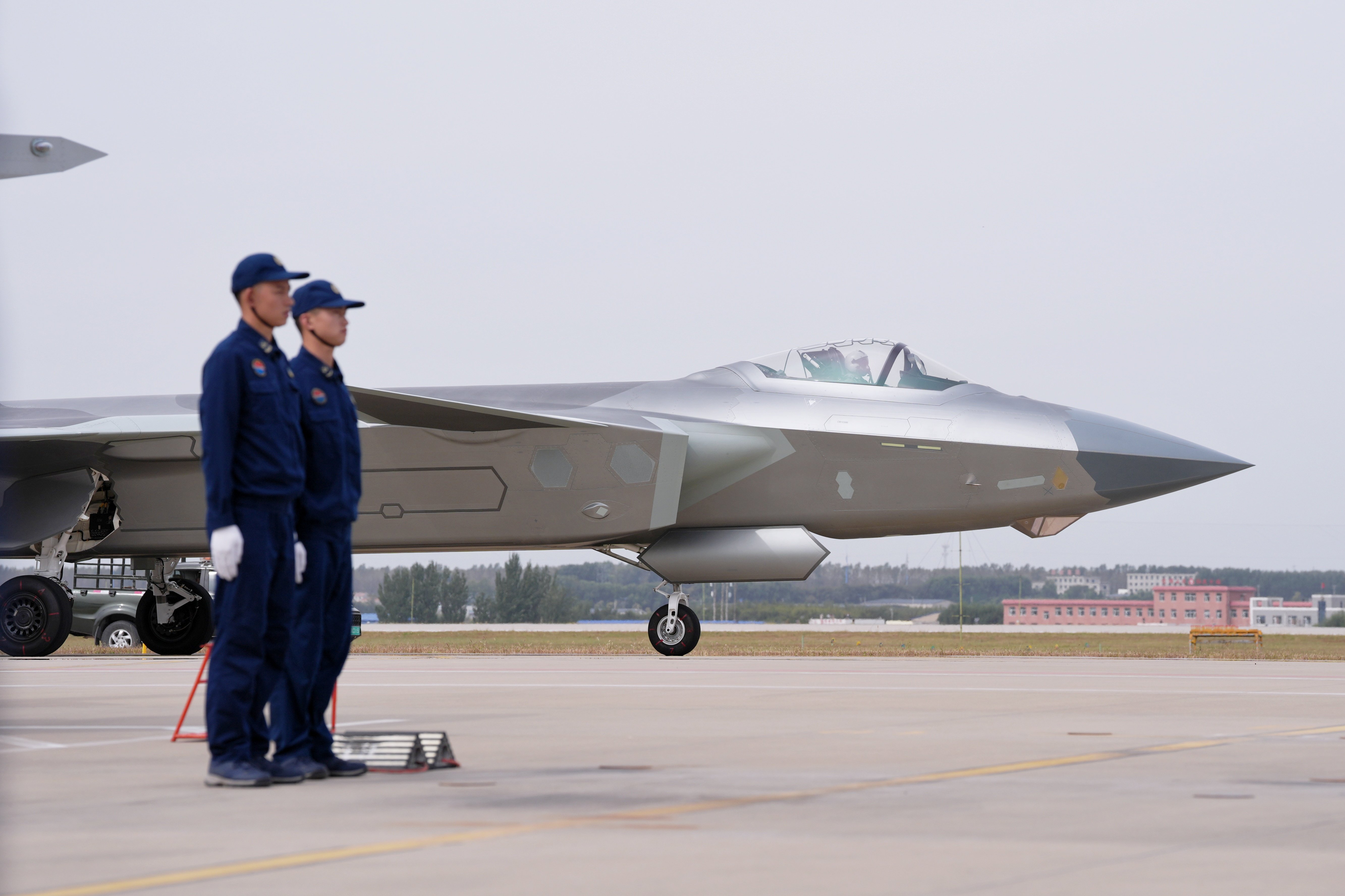 A J-20 fighter during the Changchun Air Show on September 22, 2025 in Changchun, Jilin Province of China. Photo by Zhang Xiangyi/China News Service/VCG via Getty Images
And the F-16s will face the same fundamental problem as Taiwan’s other combat aircraft in a major conflict: staying operational.
China possesses extensive missile and air capabilities that could threaten Taiwan’s airbases, aircraft shelters, fuel supplies, command-and-control infrastructure, and other elements needed to keep fighters flying. You can read more about how the ROCAF would likely go to war with China in this previous in-depth feature.
Basing the new F-16s at Chihhang Air Base, operated by the 7th Tactical Fighter Wing, is significant, Choo told us.
“The basing of the aircraft at Chihhang allows the ROCAF to readily project air power south and eastwards, especially over the Bashi Channel, which is one avenue PLA can gain access to the Philippine Sea and beyond.” He explained. “Previously, ROCAF fighters from other bases maintain QRA detachments there”
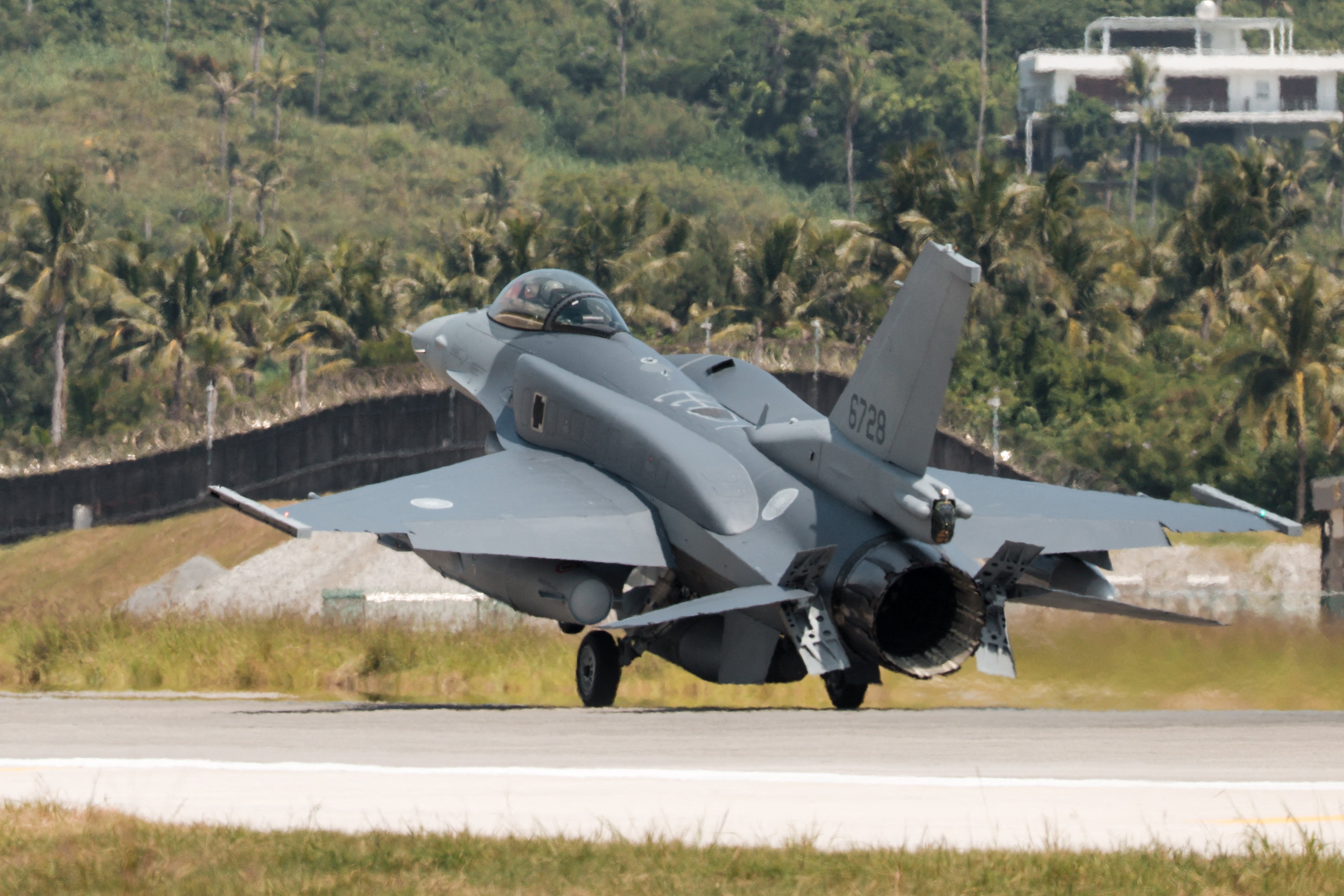 A new F-16C Block 70 lands at Chihhang Air Base in Taitung on October 2, 2026. Photo by CHENG Yu-chen / AFP
The F-16 delivery today is only the beginning of a much larger effort to get all 66 aircraft into Taiwanese service.
According to the latest information from the ROCAF, 63 F-16C/D Block 70s remain in various stages of production and delivery in the United States, with some already moving through the handover process. The remaining aircraft will be delivered according to production, flight-test, and acceptance milestones before being ferried to Taiwan.
Once the full order is delivered, Taiwan will operate more than 200 F-16s when the new Block 70s are combined with its existing fleet.
That will give the ROCAF a considerably larger force of modern F-16s, with substantial commonality between the upgraded F-16V fleet and the new-production Block 70s.
The aircraft will still need to go through Taiwan’s acceptance procedures, while pilots and maintenance personnel complete the necessary conversion and training work. The new jets will then be progressively incorporated into the ROCAF’s operational units.
Remarkably, the arrival of the first Block 70 fighters today marks the first delivery of new fighters to Taiwan since 2001, when the last of the 150 F-16A/B Block 20s were delivered.
“The ROCAF’s surviving fleet of 139 F-16s, 53 Mirage 2000s, and 129 F-CK-1s was largely inducted in the 1990s, when Taiwan held the upper hand in the cross-Strait air-power balance,” Choo explined. “Even then, there remained a requirement for additional fighters, prompting the island’s first formal request to purchase 66 F-16C/Ds during the 2006 Monterey Talks.”
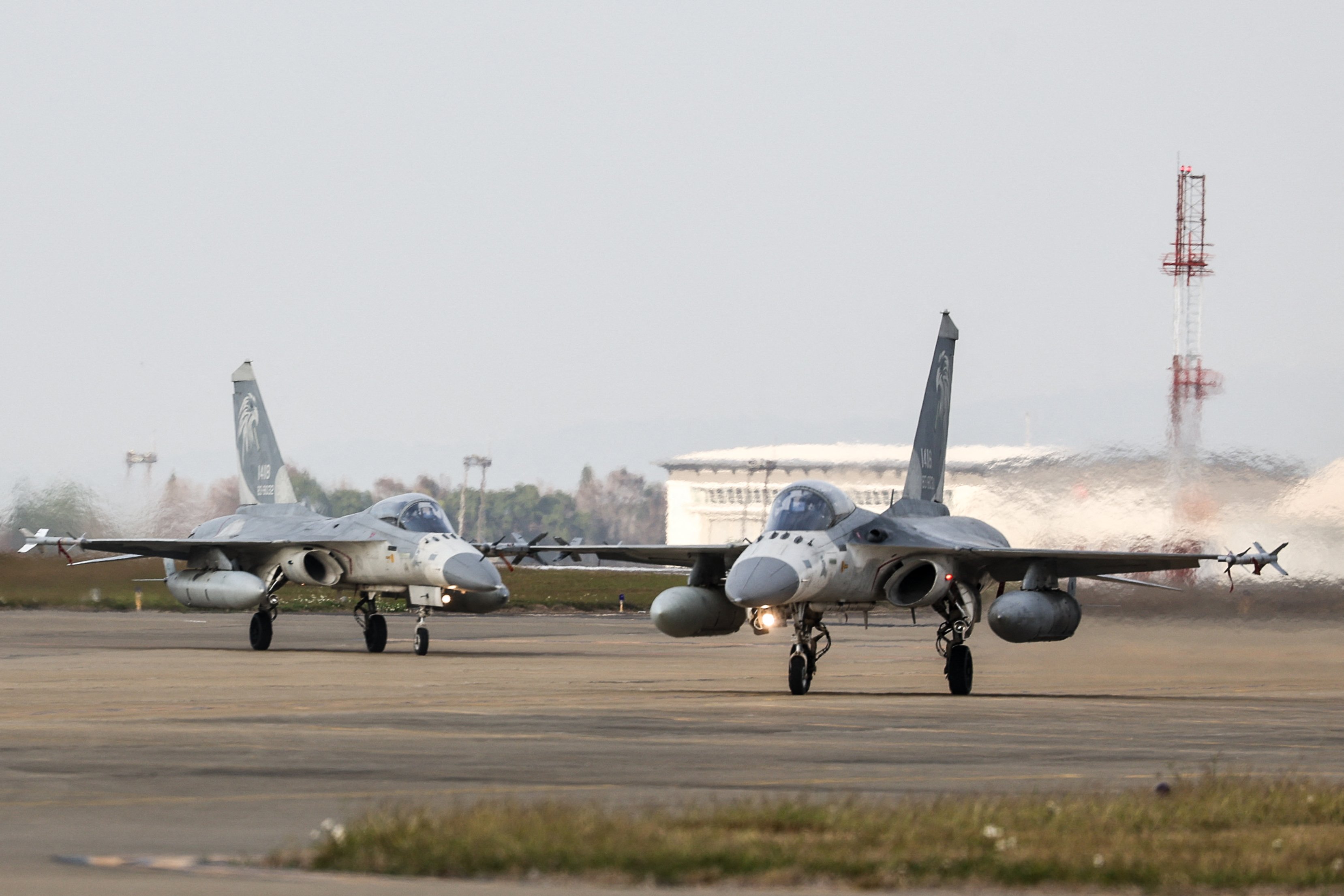 F-CK-1s taxi for takeoff during a scramble as part of a combat readiness exercise at Ching Chuan Kang Air Base in Taichung on January 7, 2025. Photo by I-HWA CHENG / AFP
“By the late 2000s, these fighters were approaching the limits of their combat effectiveness as the PLA air fleet expanded in both size and capability. Fortunately, substantial upgrades began to be rolled out to the F-CK-1s and F-16s from the 2010s.”
In the wake of the 2019 acquisition of the F-16C/D Block 70s, questions arose over the aircraft’s asymmetric value as the Taiwan military increasingly focused on developing a plan for asymmetric capabilities in response to the PLA’s growing combat power.
“However, developments in recent years have underscored the continued importance of a capable fighter fleet not least for policing Taiwan’s airspace amid the PLA’s sustained gray-zone air operations around the island,” Choo added.
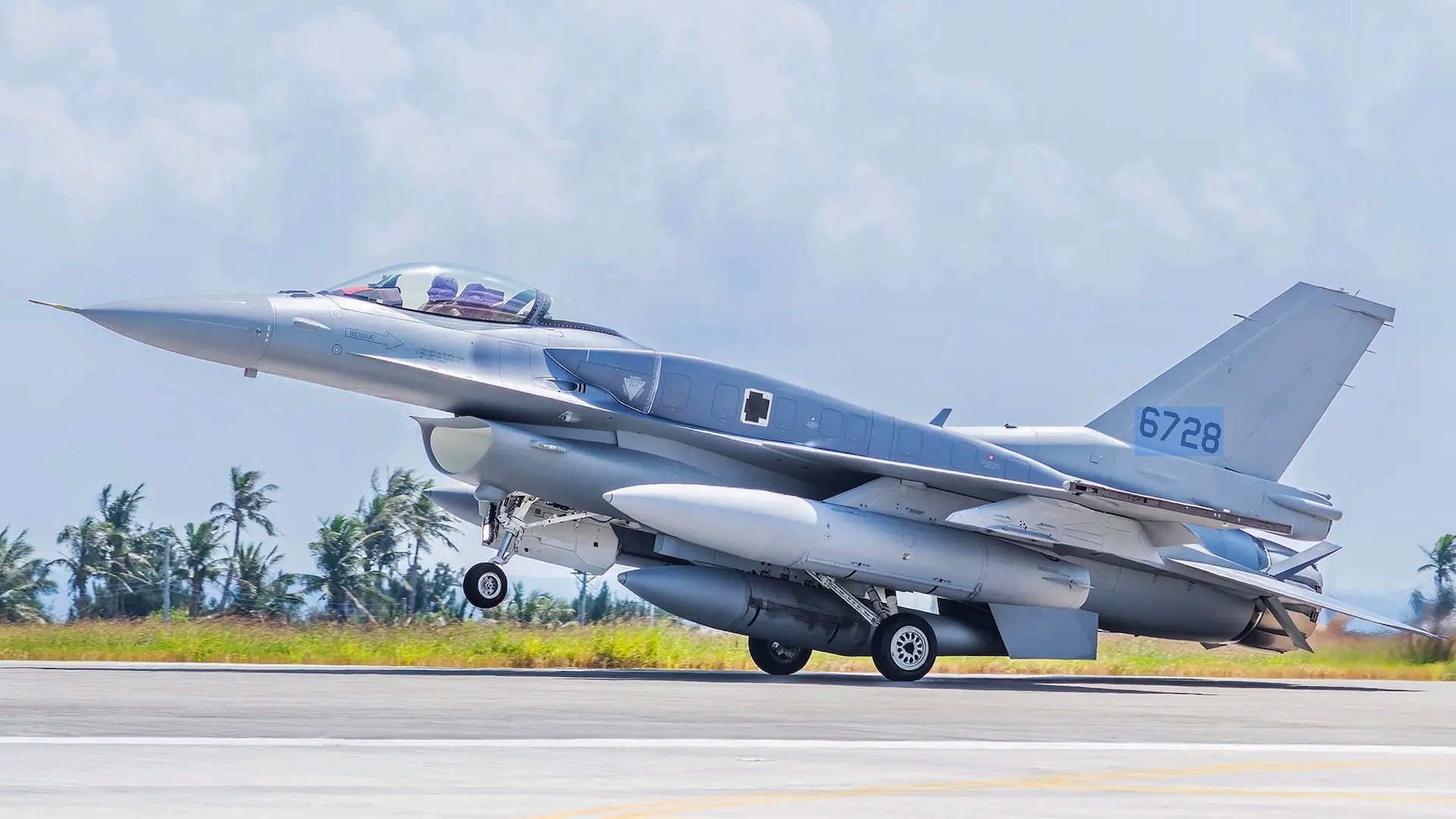 ROCAF F-16C Block 70 serial 6728. Peter Ho, Formosa Aviation & Military Image Press
The timing of today’s arrival is also notable.
The aircraft reached Taiwan just days after U.S. President Donald Trump met Chinese President Xi Jinping in Washington. The delivery comes amid questions in Taipei about the future pace of U.S. arms transfers, after Trump said in May that a proposed $14-billion Taiwan arms package was being held in abeyance. He had approved an $11-billion package in December 2025.
Washington continues to say that its policy toward Taiwan has not changed.
Beijing, for its part, continues to oppose U.S. arms sales to Taiwan and regards the island as part of Chinese territory.
It has taken nearly seven years to get the first two F-16C/D Block 70s, to Taiwan. But their arrival marks the first step in a major modernization of the ROCAF’s F-16 fleet, adding new-production fighters with improved radar, electronic warfare, sensors, and weapons to a force that is already operating upgraded F-16Vs.
Contact the author: thomas@thewarzone.com
Thomas Newdick is a staff writer at TWZ, where he covers military aviation, defense technology, weapons systems, and international security. Based in Berlin, Germany, he reports on conflicts, military modernization efforts, and emerging aerospace technologies around the world, with a particular interest in airpower and its role in contemporary warfare. His reporting is informed by deep expertise in modern and historical airpower, particularly in Europe, with a focus on military aviation, air campaigns, and aerospace developments across the continent and beyond.