
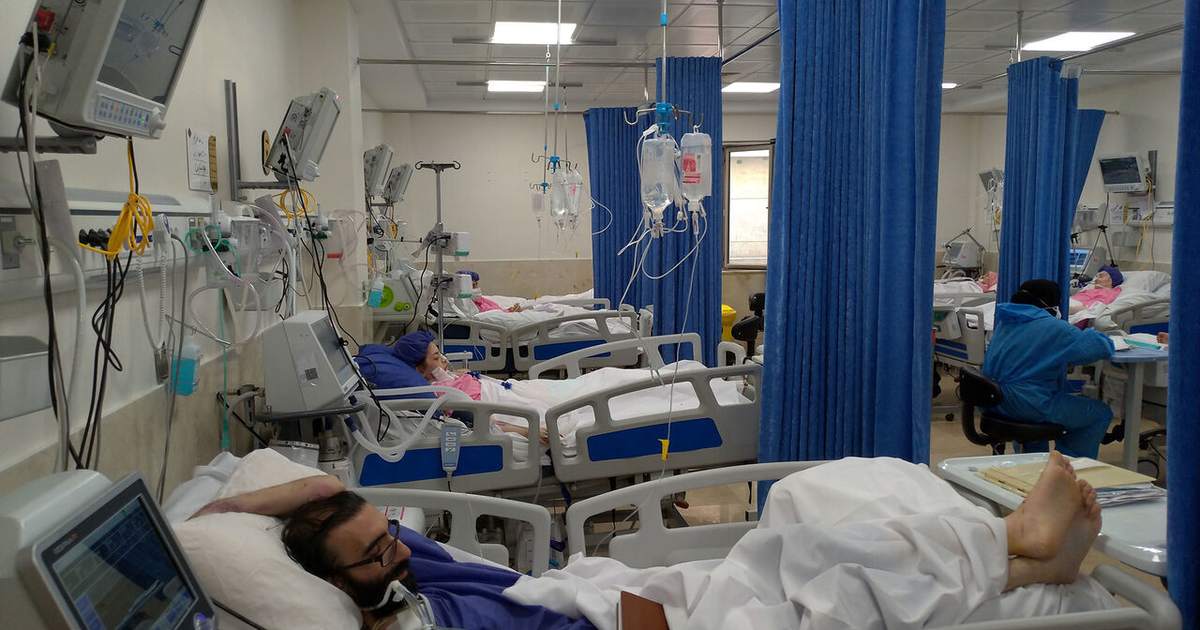
“We have reached a point where we hope people don’t get sick, because if they do, the end of that illness is not treatment. It is death,” Salman Es’haghi, spokesman for parliament’s Health and Treatment Committee, told the labor-affiliated news agency ILNA.
The pressure cannot simply be blamed on war and sanctions, Es’haghi said, accusing the authorities of failing to tackle corruption and poor decision-making as households struggle to pay for medicines, equipment and diagnostic tests.
A separate ILNA report from clinics in Tehran found the same thing from the other side: insured patients waiting weeks or months for diagnostic services, or paying privately for tests they could not get through the Social Security Organization, the state insurer that covers most of Iran’s workers and retirees.
A couple sells their sheep and their car
Es’haghi described a rural couple who had sold their livestock and their Pride, the cheap Iranian-built car that was for decades the country’s most common, after being told the wife needed a heart valve.
“A man and a woman from one of the villages came to see me,” he said. “They said they had several sheep and a Pride, and they had sold them because they were told they needed to buy a heart valve for his wife.”
The couple paid 13 billion rials for the valve, about $5,000 at Saturday’s open-market rate, or six and a half years of the minimum wage, Eshaghi said. They were then told it was unsuitable and that they would need another.
“A suitable, high-quality valve costs close to 42 billion rials,” he said, about $16,000, or 21 years of the minimum wage. “Which patient can pay 42 billion rials?”
Many farming families were selling animals, vehicles and other assets to cover both the equipment and the surgery, he said.
“We have unfortunately closed our eyes to our people dying because of a lack of medicine and the high cost of treatment,” Es’haghi said.
Insurance leaves patients exposed
Iran’s health insurance funds have stopped protecting patients from the cost of care, Es’haghi said.
“Our insurance funds have effectively declared bankruptcy, but they don’t say it out loud,” he said. “Because they don’t acknowledge their own bankruptcy, they have shifted that bankruptcy onto the people.”
More than 80 percent of treatment costs are now paid directly by patients, he said, without giving a source for the figure.
ILNA’s reporting on the Social Security Organization points the same way. Nearly 9.9 million people insured by the organization in Tehran province have access to just 36 medical facilities it owns, including 16 polyclinics, according to official figures the agency cited. That is roughly one polyclinic for every 620,000 insured people.
Seeing a doctor is only the beginning
For many patients, getting an appointment does not mean they can complete the treatment prescribed.
At the Abureihan Social Security clinic in Tehran, one woman told ILNA that the ultrasound service the clinic once offered had disappeared.
“This place used to have ultrasound, but it hasn’t had it for some time, and now I have to pay a huge amount outside,” she said.
Another patient said the clinic had no mammography.
A middle-aged woman in severe abdominal pain said she could not afford the imaging and examinations she had been prescribed.
“I am in severe pain, but further imaging, tests and doctors are beyond what I can afford,” she said.
She was the household’s breadwinner, she said, earning money from weaving carpets while her husband was out of work. When she was referred to another hospital, she learned the care there would not be free either.
“I have to wait until the carpet is sold and I get the money,” she said.
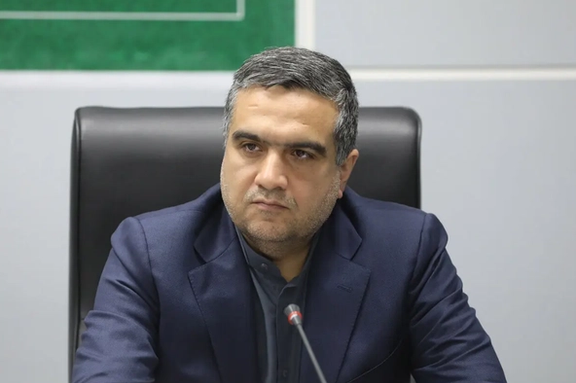 Spokesman for parliament’s Health and Treatment Committee Salman Es’haghi
Weeks or months of waiting
Patients who stay inside the Social Security system face long queues instead.
Those referred to larger centers such as Milad Hospital, the organization’s flagship hospital in Tehran, must often start over, ILNA reported, because diagnostic departments may accept orders only from the hospital’s own doctors. That means another appointment, another consultation, and another wait for imaging or tests.
“These appointments are really useful for someone with a chronic illness who needs constant monitoring, not for someone who has an acute problem right now, today,” one patient said.
The squeeze is hardest on retirees and lower-income households who cannot turn to private care.
An elderly woman said she kept making the long trip to a Social Security clinic because private doctors were too expensive, even though she still had to get some medicines and tests elsewhere.
“It’s crowded, it’s far away and getting here is difficult for me, but because the doctors here are good and my treatment costs less, I still come,” she said.
‘Why don’t we import medicine?’
Es’haghi rejected the argument that Iran’s medicine shortages can be explained by sanctions and the war.
“Whenever something happens, we say there is a war, there is no medicine, there are sanctions,” he said.
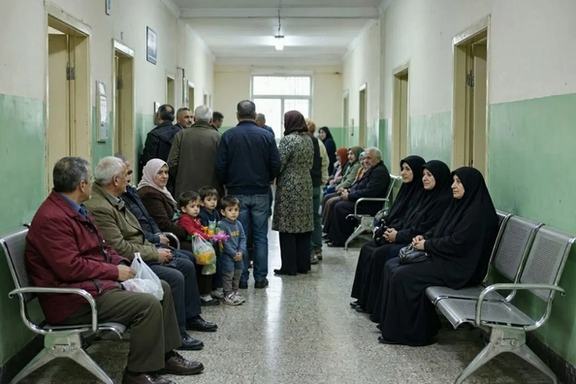 Patients wait for care at the Abureihan Social Security clinic in Tehran.
Iran should be able to use its relationships with Russia and China to obtain medicines and pharmaceutical ingredients, he said.
“We can import medicine and pharmaceutical raw materials from Russia and China. Why don’t we?” he said. “If we are vigilant, if there is the will and if we fight corruption, I can tell you seriously that supplying medicine and pharmaceutical raw materials has nothing to do with the war.”
Figures presented at official meetings showed some pharmaceutical and medical equipment companies had sharply increased their profits during the war, he said.
“Why don’t they tell these companies that during wartime they should at least accept a minimum profit margin so that people don’t face such hardship?”
Inflation deepens the squeeze
The health crisis is unfolding as household purchasing power collapses.
Consumer prices in September were 89.8 percent higher than a year earlier, according to the Statistical Center of Iran, and average inflation over the preceding twelve months reached 73.6 percent. Food and drink prices had already risen 127.5 percent year on year in August.
The rial’s fall to record lows has raised the local cost of imported medicines, equipment and pharmaceutical ingredients.
The strain is visible in the volume of demand on a system that cannot meet it. Social Security facilities in Tehran recorded more than 18.1 million outpatient visits in the Iranian year that ended in March, including about 8.5 million doctor consultations and 9.6 million visits for diagnostic and other services.
For poorer patients, each extra appointment means transport costs, lost wages and another delay. The result, ILNA said, is that some workers and retirees are forced to choose between paying privately, waiting, or abandoning part of their treatment.