
Over the past two years, Israel has faced one of the most complex and challenging periods in its history: a prolonged, intensive war on seven fronts, geopolitical uncertainty and global economic pressures. Yet from the turmoil has emerged one of the most impressive stories of resilience and strength in our national history. Israel’s high-tech industry, supported by determined, focused government policy, has not only weathered the upheaval but broken unprecedented records, returned to rapid growth and strengthened its position as a technological engine and strategic scientific hub for the Western world.
High-tech rehabilitation helps seniors recoverAs missiles fly toward Israel, the world expresses its confidence with billions of dollars
An examination of official figures from the Israel Innovation Authority and government ministries turns economic statistics into a story of national triumph. In 2025, Israeli high-tech exports reached an all-time high of approximately $85 billion, accounting for around 58% of the country’s total exports. High-tech output soared to 352 billion shekels, or 18.3% of GDP, and the sector contributed roughly half of Israel’s overall economic growth.
Israeli companies raised approximately $15 billion, an impressive increase of around 30% over 2024, while the total value of exit deals surged to about $84 billion. Nearly 400,000 workers and technology leaders now stand at the forefront of the Israeli economy. The message from these figures is unequivocal: war and security threats have not broken Israel’s engine of innovation, and they will not do so.
Millions Need Clean Water. Israel’s Climate Tech Is Stepping In 💧An international vote of confidence: Mega-deals and record fundraising
The story goes beyond the figures themselves. It is also about the technology giants and international investors choosing to invest in Israel at this particular moment.
The Google-Wiz deal: In March 2025, Google announced its acquisition of Israel’s Wiz for $32 billion, the largest deal in the history of Israeli high-tech.
The Palo Alto Networks-CyberArk deal: Another major achievement, worth approximately $25 billion, reinforces Israel’s standing as the capital of cybersecurity and identity security in the AI era.
Leadership in the industries of the future: Alongside these deals, approximately 1,500 deep-tech companies now operate in Israel in fields including AI, semiconductors, quantum technology, robotics, life sciences and defense technology. These companies raised more than $28 billion between 2019 and 2025, making Israel the world’s leading deep-tech hub outside the US.
The new model: From Startup Nation to R&D Nation
For years, the “Startup Nation” brand rested on a model of founding companies, raising capital and selling them. Today, a shared vision across industry, academia and government is driving a historic shift in thinking. Success is measured by what remains in Israel after a deal: the talent, intellectual property, engineers, laboratories and research and development centers.
RealSense offers a striking example. Just 14 months after its separation from Intel, the company agreed in 2026 to be acquired by US-based Cognex in a deal worth more than $600 million including employee compensation. RealSense expects revenue of $80 million to $90 million in 2026, representing growth of more than 50% over the previous year.
The deal will retain the development center in Haifa, which employs most of the company’s workforce, and turn it into Cognex’s global R&D center for computer vision and robotics. This is the successful new model: the company is sold, but its talent, expertise and capital remain in Israel and put down deeper roots.
Elon Musk is reportedly in talks to buy Israeli AI startup ‘Decart’ for upwards of $7 billion
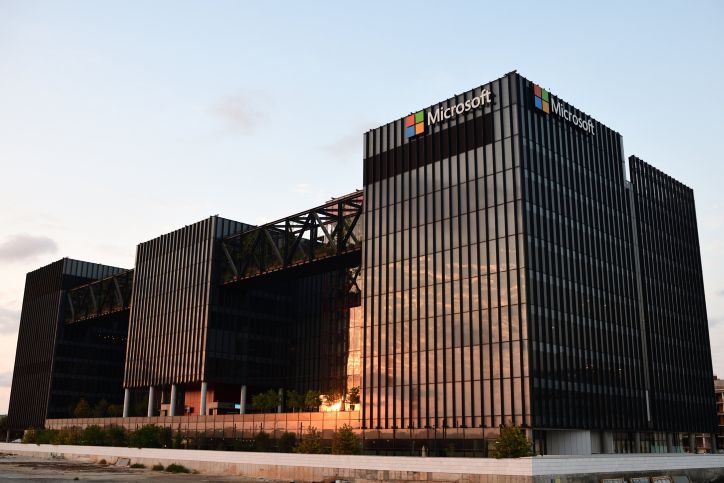
Israel now hosts more than 400 multinational R&D centers belonging to some of the world’s leading companies, including Intel, Google, Microsoft, Nvidia, Apple and Amazon. They demonstrate every day that Israel is an indispensable part of the global technology industry’s research and development infrastructure.
Turning a challenge into an opportunity: A warning sign to guide national policy
Alongside these phenomenal achievements, a sober and responsible assessment shows that continued, active government involvement is necessary. The figures indicate that in March 2026, only around 62% of employees at privately held Israeli companies were based in Israel, compared with 69% in 2019. There has also been some decline in the number of locally based R&D employees.
These figures are no reason to lose heart. They are a call to action. The government must continue to lead a proactive national policy that shapes and supports the sector, ensuring that the technology created here remains a strategic national asset.
Vision and national policy: How Israel’s government can turn technological advantage into national strength
To secure Israel’s rise as a global R&D powerhouse over the coming decade, the country must continue to strengthen an active national policy that brings together government, industry and academia:
1. Set a strategic national goal: Establish Israel as a global R&D powerhouse in deep tech, AI, semiconductors, quantum technology, biotechnology and defense technology.
2. Create incentives to retain expertise and intellectual property: Develop tax and investment mechanisms that require and reward international companies’ expansion of development centers and intellectual property holdings in Israel.
3. Make transformative investments in research infrastructure: Accelerate the development of national supercomputing facilities, data and AI infrastructure, advanced laboratories and testing facilities that connect government, academia and industry.
4. Expand geographically and bring talent home: Extend innovation and R&D activity to the north, the south and the Negev, alongside attractive national programs to bring Israeli scientists and engineers back from abroad and draw international researchers to Israel.
5. Establish a national R&D coordinating body: Create a flexible government mechanism connecting the Ministry of Innovation, Science and Technology, the Israel Innovation Authority, the defense establishment, academia and industry. This would support forward-looking regulation, rapid experimentation and regulatory sandboxes for breakthrough technologies.
Beyond survival: Leading and setting the rules of the game
Israel’s story under fire is about more than a small country that knows how to build successful startups. It is the story of a country developing the technological, scientific and defense capabilities that will shape the future.
Under fire on seven fronts, Israel has demonstrated national resilience, an enterprising spirit, operational capability and technological strength. Through the combined efforts of pioneering industry and forward-looking government policy, the transition from Startup Nation to R&D Nation is no longer merely a vision. It is a reality taking shape before our eyes.
Perhaps there is no better time to say this than during Sukkot and Simchat Torah. The sukkah symbolizes the ability to build, live and grow even in uncertainty. It reminds us that strength is measured not only in walls and material resilience, but also in a people’s ability to endure, unite and continue building its future even as storms rage around it.
Then comes Simchat Torah, the day when, after a period of soul-searching and reflection, we return to the Torah with song, dance and joy. “You shall rejoice in your festival … and you shall be altogether joyful.” This commandment does not ask us to disregard reality. It asks us to choose life, hope, creativity and faith in the future.
Perhaps this is the most powerful Israeli message of our time: not merely to survive the storm, but to grow through it. Not merely to defend what exists, but to build tomorrow. Not merely to respond to threats, but to develop the capabilities that will set the rules of the game.
From the simple sukkah to AI laboratories, from the joy of Torah to research laboratories, from the spirit of our people to the spirit of enterprise, the same age-old Israeli strength is at work: the ability to believe in the future and build it with our own hands.
Israeli startup helps semi-verbal people speak | Innov’Nation
Israel can and should be more than Startup Nation. It should be R&D Nation: a global powerhouse of knowledge, research, innovation and technology, generating economic, scientific and defense strength for generations to come.
This Sukkot, after years of war and challenges, the message is simple: we are here to build, create and lead.
Not merely to survive, but to flourish. Not merely to cope, but to overcome challenges through spirit and action. Not merely to dream of the future, but to develop it.
In the words of the Torah: “You shall rejoice in your festival … and you shall be altogether joyful.”
Happy Sukkot and Simchat Torah, and may the year ahead bring security, unity, innovation, growth and hope.
Dr. Eitan Lasri is an expert in governance, public policy and strategy. He previously served as an adviser to prime ministers and as chief of staff to the minister of science and technology. He is a senior media commentator.