
Daughter’s call, discarded coffee cup help identify man in 35-year-old Cincinnati rape case
 CINCINNATI —
For 35 years, Dana Beatty waited to learn the identity of the masked man who attacked her inside her Cincinnati condominium.
Editor’s note: This story discusses sexual violence and may be difficult for some readers.
The answer would ultimately come through advances in DNA technology, a phone call from Beatty’s daughter and a discarded Starbucks cup marked with one name: “Fred.”
On Aug. 1, 1989, Beatty—then 29 and working for IBM—returned to her condominium in Cincinnati’s Columbia-Tusculum neighborhood. She noticed that her door was unlocked and a bathroom light was on.
A masked man dressed head to toe in black then emerged from her kitchen.
“He had a butcher knife, and he immediately grabbed me, put the knife to my neck, and I screamed,” Beatty recalled. “He put it closer and said, ‘Shhh,’ which was the only word he ever spoke the entire time.”
According to federal court documents, the attacker covered Beatty’s eyes with surgical tape and used her stockings to bind her hands and feet to her brass bed. Over the next five and a half hours, he repeatedly raped her.
“I thought, he’s killing me. This is it,” Beatty said.
After her attacker left, Beatty freed herself and ran to a neighbor for help.
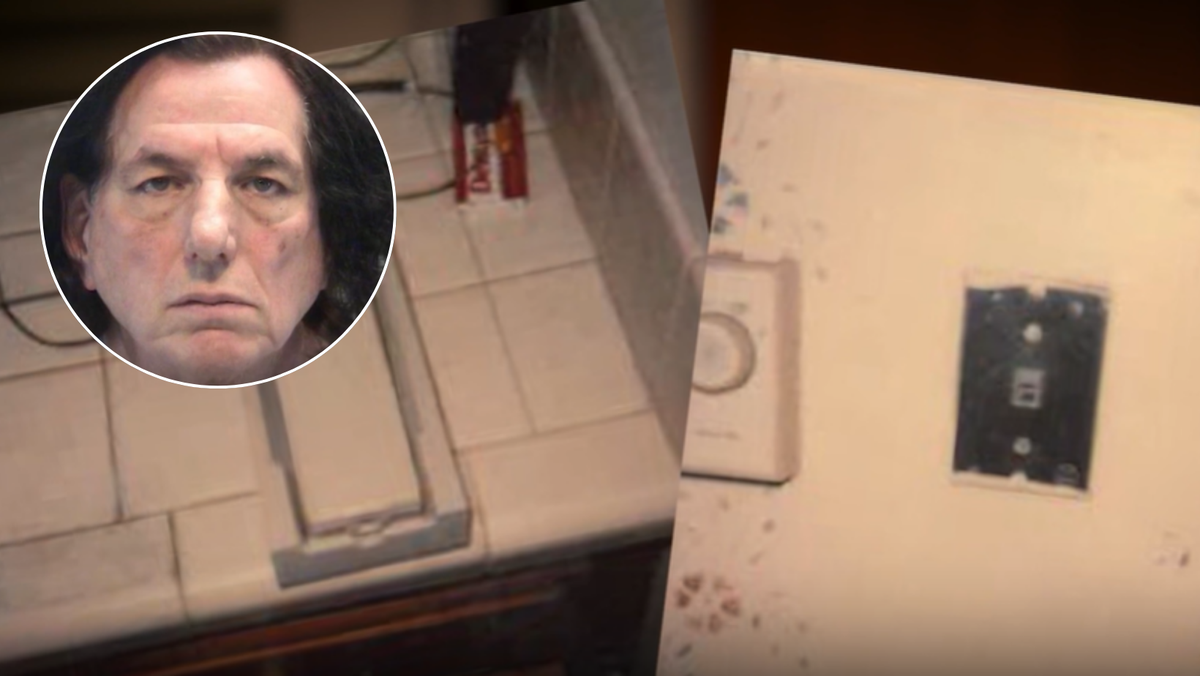
Police found the telephones disconnected and a threatening note taped to the bedroom phone. Beatty remembered it reading, “No police. I will be back. Miss IBM.”
A hospital examination preserved DNA left by the attacker. Investigators also recovered two unidentified fingerprints, but the case remained unsolved.
Beatty eventually married, became a mother and rebuilt her life, though she continued to live with post-traumatic stress.
“I was determined to not let this monster keep me from living my life,” she said.
A daughter’s call reopens the case
In 2023, Beatty’s daughter, Andra, heard a true-crime podcast about investigators using new DNA technology to solve decades-old crimes.
“Andra’s antenna went right up, and she’s like, ‘This is exactly what we need for my mom,’” Beatty said.
Without first telling her parents, Andra contacted the Ohio Attorney General’s Office and asked who could help with her mother’s case. The inquiry eventually reached Cincinnati cold-case Detective Jeffrey Smallwood.
Beatty said investigators’ DNA research revealed that her attacker had Jewish ancestry. When asked whether she knew anyone in Cincinnati with that background, one person eventually came to mind: the former husband of her best friend.
“I said, ‘There’s no way it could have been him,’” Beatty recalled. “He’s a doctor. He didn’t fit the description.”
That man was Frederick Louis Tanzer, a Cincinnati-area physician. Beatty had been in Tanzer’s wedding and knew him through his former wife, but said she never considered him a suspect.
Investigators still needed a direct sample of Tanzer’s DNA to confirm the genetic lead.
The cup marked “Fred”
On April 9, 2024, FBI surveillance specialists followed Tanzer from his townhome to a Bureau of Motor Vehicles office in Milford, according to the federal complaint.
Tanzer entered carrying a Starbucks cup. After he threw it into a nearly empty trash bag, an FBI specialist retrieved it. The cup was marked “FRED.”
Testing by the Hamilton County Coroner’s Office found that DNA recovered from the cup matched the DNA profile of semen preserved from Beatty’s dress after the 1989 attack, court documents state.
Investigators then told Beatty what they had discovered.
“At the end of the conversation, he said, ‘Dana, Fred Tanzer is who did this to you,’” she recalled.
But the answer she had waited decades to receive came with a devastating legal obstacle: The statute of limitations for prosecuting the 1989 crimes had expired around 1995.
Tanzer could not be charged for the attack.
An FBI ruse and a signed lie
Investigators devised another approach.
On Dec. 11, 2024, an FBI agent and Smallwood interviewed Tanzer at his home. As a ruse, they told him they were investigating allegations that Cincinnati police had mishandled Beatty’s case because an officer had once been considered a suspect.
Before questioning began, the FBI agent warned Tanzer that lying to a federal agent was a crime.
Tanzer denied seeing or interacting with Beatty on the day of the attack, according to court documents. He then signed a form certifying that his answers were true.
Investigators already had the DNA evidence contradicting those statements.
After agents confronted Tanzer, he requested an attorney and was arrested.
Beatty had just landed at the Columbus airport when she received the call.
“I said, ‘What’s going on?’ And he said, ‘We’ve got him,’” she recalled. “Thirty-five years later.”
Tanzer later admitted committing the 1989 attack and pleaded guilty to three counts of making false statements to federal agents.
In January 2026, a federal judge sentenced Tanzer to the statutory maximum of 180 months—or 15 years—in prison. He has remained in custody since his arrest.
His conviction and sentence are for the lies he told investigators, not the attack Beatty survived.
“His DNA confirmed his guilt, and evidence points to Tanzer being a serial rapist,” U.S. Attorney Dominick S. Gerace II said following the sentencing. “Tanzer poses a grave risk to the public and deserves to be in prison not only for his lies but also for the despicable attack he was trying to cover up.”
Tanzer has not been convicted of other sexual assaults.
Turning trauma into hope
Beatty said she is sharing her story to give other survivors hope and to encourage lawmakers to reconsider statutes of limitations for violent sexual crimes.
“I can’t sit here after what I’ve been through and let these poor victims not have a chance to get justice that they deserve,” she said.
She also credits her daughter with refusing to allow the case to remain forgotten.
“And she did it,” Beatty said. “Saying thank you doesn’t even begin to say how I feel about this little gift from God.”