
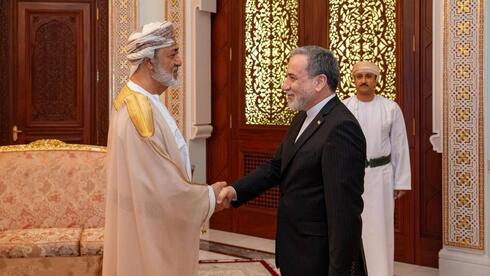
Oman has not reported on the attempted hijacking of the flydubai plane, nor on the identity of the attacker, co-pilot Hamam al-Hammami, which was revealed overnight between Friday and Saturday. While the initial silence from other Gulf states has been broken, and the pilot who was stabbed, Smith Machachar, has also issued a statement, the Omanis are still choosing not to respond.
U.S. media outlets reported overnight that al-Hammami, who tried to crash the plane with all its Israeli passengers aboard, had previously worked for Oman Air but was dismissed over suspicions that he had become radicalized. The Wall Street Journal, which first reported his suspension from Oman Air, stressed that it remains unclear whether those concerns were subsequently conveyed to flydubai before the airline hired the terrorist.
The flight path from takeoff in Dubai to the landing in Saudi Arabia
(Video: Assaf B.)


On Friday afternoon, despite the various reports that had already been published by that point, Khalifa al-Hinai, an Omani lawyer and former judge, posted on X about the discussion surrounding the attempt to crash the plane.
In the post, which was divided into several points, he wrote: “The facts of the investigation and the nationalities involved — so far, no official body or authorized investigative agency has issued an accurate, official account of the circumstances of the incident or the nationalities of those involved. Despite the information gap, hostile accounts rushed to celebrate and spread unverified narratives, exploiting the opportunity to disparage Oman and attempt to defame its people.”
His second point concerned “individual and legal responsibility.”
“Even if, for the sake of argument, it is later confirmed that the co-pilot holds Omani citizenship or is of Omani origin, the established universal legal and ethical principle remains unchanged — criminal responsibility is individual,” he wrote. “Omanis are human beings like all other peoples. Among them are the righteous and those who err. The attempt to hold an entire society or nation responsible for the act of an individual is both wrong and morally bankrupt.”
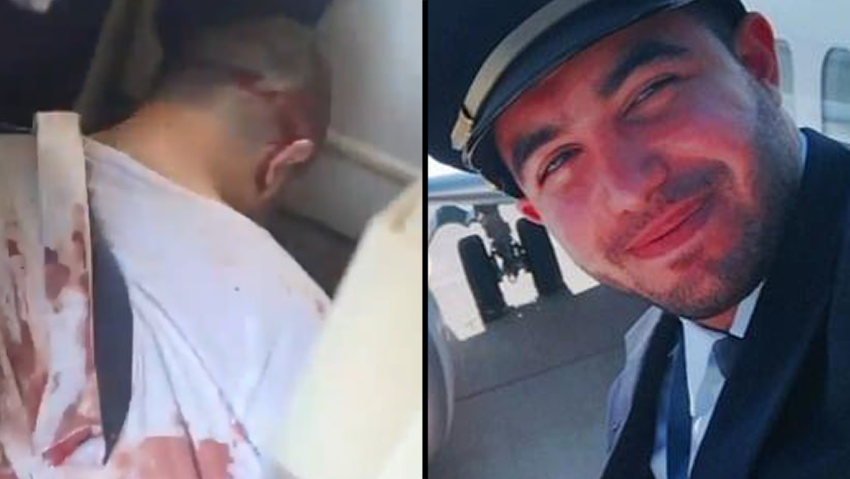
The terrorist Hammam al-Hammami after he carried out the stabbing and was subdued by passengers on the plane
In his third point, al-Hinai alleged an “excessive focus and rush to link the incident to Oman.” He said there were attempts to turn it into the dominant issue, adding that this would not “erase the criminal nature of Zionism and the atrocities it commits against innocent people.”
In the fourth and fifth points of his post, he added that from a legal standpoint, once the suspect’s identity is confirmed, Oman has the legal right to prosecute him under its domestic laws.
However, that does not negate the priority or right of the country where the airline is based to pursue the necessary legal proceedings.
He concluded: “We are all aware of the scale of the campaigns being waged against our country because of its positions and wisdom. We stand united behind our leadership and the government entrusted with managing the country’s political affairs. Oman, with its people and its wisdom, will remain impervious to all those with malicious intentions, under God’s watch and protection.”
Oman has played a central role as a mediator during months of negotiations between Iran and the United States, alongside other mediators, with meetings also held on Omani soil. However, when it comes to the conflict between Iran and the United States, it is difficult to describe Oman as a neutral party. The country lies across the Strait of Hormuz from Iran, at the center of the confrontation.
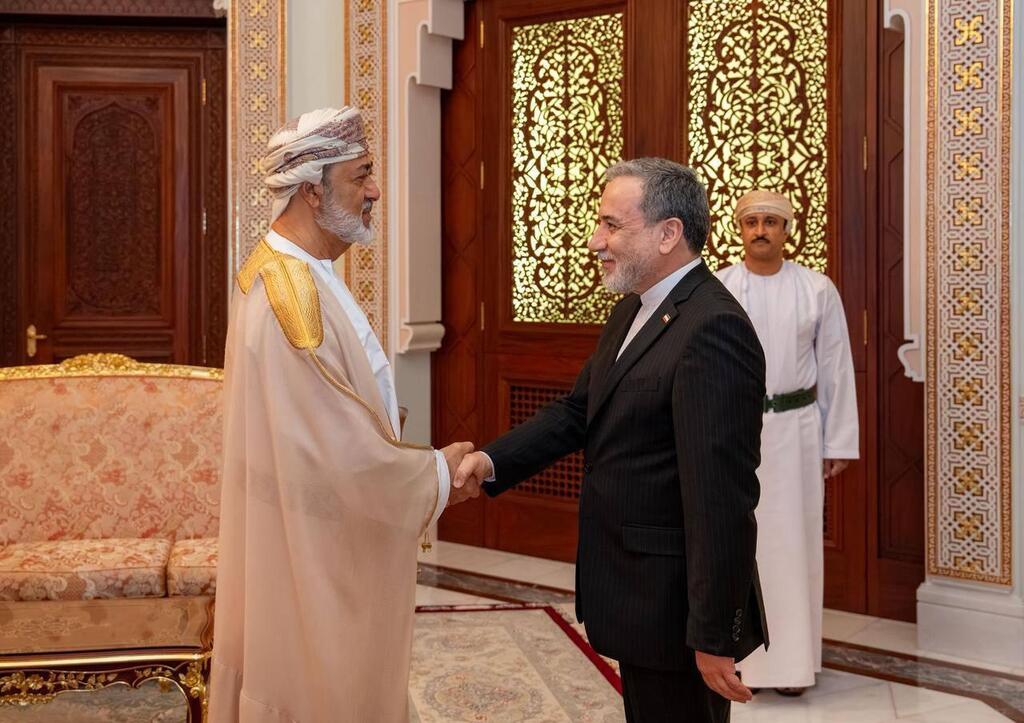
Iranian Foreign Minister Abbas Araghchi (right) meets with Omani Sultan Haitham bin Tariq
That effectively makes Oman part of the story itself. In recent months, reports have said Oman and Iran have been holding talks aimed at reaching understandings over the future management of the Strait of Hormuz. Conflicting reports have also emerged regarding Oman’s position on collecting fees for passage through the strait.
Against the backdrop of those contacts, Oman also received a surprising threat from U.S. President Donald Trump, who warned that if it stood in the way of the United States, he would bomb it as well.
Despite the talks between Iran and Oman, Iranian Foreign Minister Abbas Araghchi has made clear in recent weeks that any agreement with Oman would not mean the reopening of the strait. He said Iran’s condition for reopening the strategic shipping route is that the United States return to its commitments under the Islamabad memorandum of understanding.
Oman is ruled by Sultan Haitham bin Tariq Al Said. The country is one of the Middle East’s key mediators and generally operates under the radar. It seeks to maneuver among the various regional players and maintain the best possible relations with them.
In 2018, reports said Prime Minister Benjamin Netanyahu visited Oman. Israel Katz, who was transportation minister at the time, also visited the country that year. Israeli officials also made diplomatic visits to Oman in the 1990s. Progress in relations stalled over the years amid the deadlock on the Palestinian issue.
Oman has a distinctive religious makeup. Most Omanis belong to Ibadi Islam, a relatively moderate branch distinct from both Shiite and Sunni Islam. Oman also has a significant Shiite population from various countries, including Iranians who have immigrated there, work there and maintain ties with their countries of origin.
Unlike other mediators, and as has again been evident in the days since the attempted downing of the plane, Oman generally does not issue major public statements — or, often, any statements at all.