
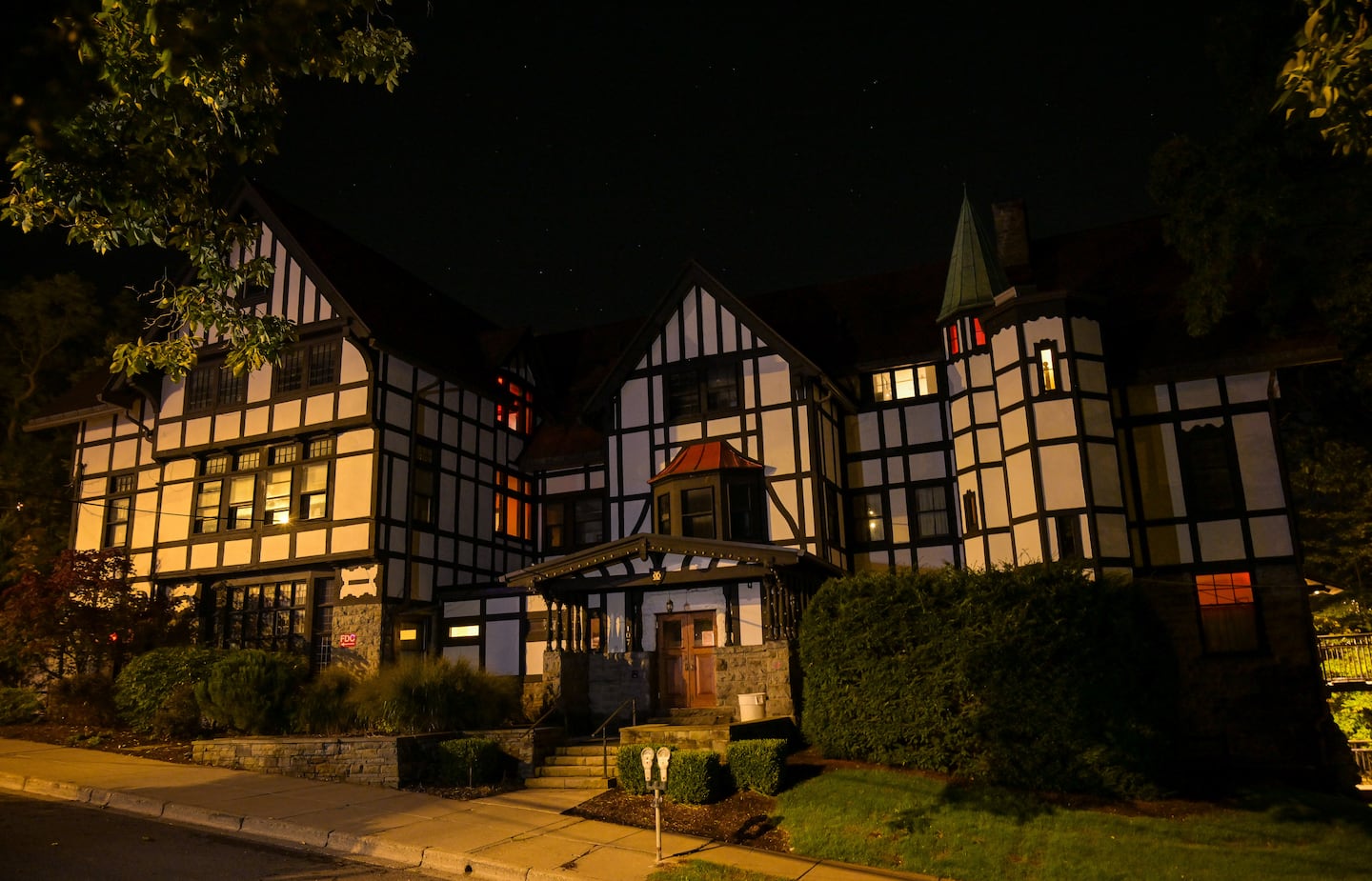
So now the spotlight has turned to Cornell University, and even people who don’t normally think about this sickness that surrounds us are paying attention. In a lawsuit filed last month, a former student said she was sexually assaulted by seven members of the Chi Phi fraternity in 2024, when she was a sophomore.
Four of the men said that they had had sex with her, but that it had been consensual. The others said they did not have sexual contact with her at all.
The scenario she described is almost too awful to contemplate. Already impaired by alcohol when she arrived at the frat house one October night, she agreed to a threesome with two men she considered friends. She said they plied her with more alcohol and drugs including ketamine, which made it impossible for her to escape that room. And that one of them sent a message that appeared in the Chi Phi group Snapchat, telling others in the house they could have sex with her too.
“Free [sex] in the alum pu,” it read.
“I [expletive] love chi phi,” wrote the other man who had been having sex with her.
One of the frat brothers who went to the room said he did it to investigate, later telling college officials that he was worried about the woman. According to material from Cornell’s investigation obtained by The New York Times, he said that he neither took drugs in that room nor touched Jane Doe, and that he left after a few minutes.
“If she wasn’t [OK], I’d like to think that I would have helped out and did something about it,” he said.
But, apparently, having determined that Jane Doe was a willing participant, this student did report back to the group afterward that the offer of her body was genuine, because he had seen her for himself.
“First person pov not a bit,” he told the group.
“Like you can walk in and whip it out,” replied one of the men who took Jane Doe into the room in the first place.
“Shop still open?” asked another one.
“Yea,” came the response.
How could you not despair, reading this? We have been at this for generations. We have persuaded, argued, begged, legislated, trained, and threatened in the hopes of a world where men see women as actual people and not piles of meat designed for their pleasure. But we are still raising boys who grow up to be . . . this.
The horrid Snapchat messages are one reason this awful case has risen above the general misogynistic noise. Dozens of people saw the messages, yet it appears nobody helped the woman, either by breaking up the gathering or calling police.
How can anybody be surprised? Frats are exclusive clubs that impose all kinds of onerous and humiliating requirements for entry. They are all about bonds between men that supersede other loyalties, allegiances that extend beyond college and out into the world. Many of them run the world, and donate to their alma maters.
It takes an especially strong person to buck all of that at the best of times, let alone when everybody is off their heads on drugs and alcohol. The kind of man who would never be a member of a frat in the first place.
Research has shown that fraternity men are three times more likely than other college men to commit sexual assaults. If frats were drugs or toys they would have been recalled decades ago. It’s not enough to advise women to stay away from them. If we actually cared about protecting women, they wouldn’t exist, period.
But even if we abolished frats tomorrow, we’d still have the horrifying failures by authorities that have been exposed by this case.
It took Jane Doe days to understand that what she’d experienced was rape. Like many victims, she was ashamed and in denial at first. In texts with one of the men, who apologized for “how things went down,” she tried to reassure him that nothing illegal had happened. The text messages were obtained by CBS.
Cornell repeatedly let her down, according to her lawsuit. She told a campus doctor that she was afraid she had contracted a urinary tract infection “in a traumatic way,” and instead of asking her if she’d been attacked and starting a rape kit, the doctor suggested she speak to a therapist.
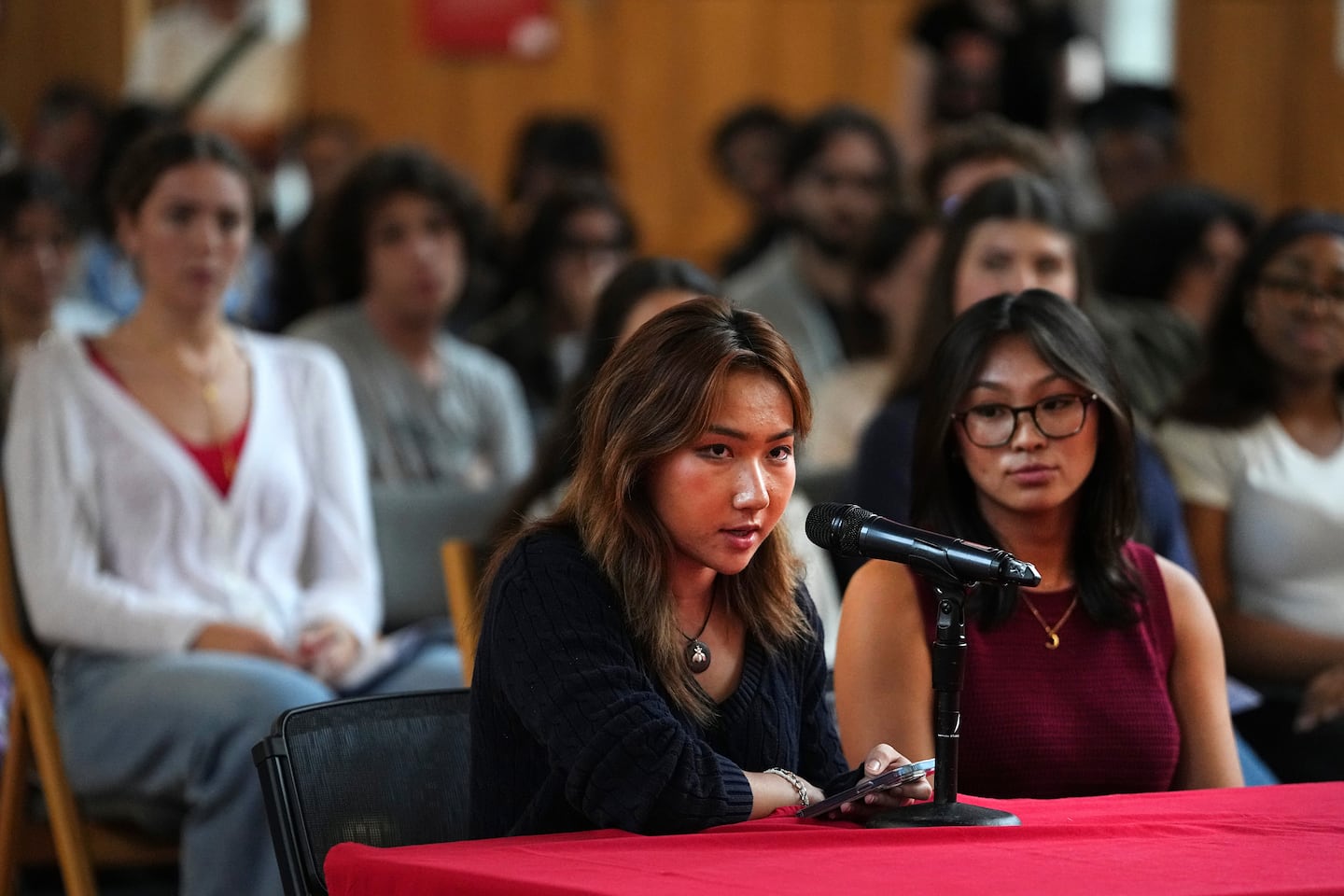 Cornell University students and ACLU student chapter members Jane Wang, left and Sophia Riley Sim spoke about sexual violence on campus during a student assembly meeting Oct. 1. AP Photo/Matt Rourke
In November, she finally sat down for an interview with campus police and recounted the events of that night, saying she was incapacitated and not able to consent, particularly as the night went on and other men arrived in the room.
“I can say with 100 percent confidence I was raped,” she said, according to a transcript of the interview. Yet that sentence did not make it into a summary the campus police prepared for the local district attorney.
The DA said the statement he saw left the impression that Jane Doe had consented that night, and that he could not bring sexual assault charges.
If he had, everything Jane Doe said in the days after the alleged assaults would be deployed by a defense attorney to destroy her credibility. Right now, it is absolutely being used in the court of public opinion to cast doubt on her claims.
The school conducted its own investigation. Two of the men were expelled from Cornell, two were given long suspensions, one had already graduated, and two were found not responsible for sexual misconduct. Cornell’s chapter of Chi Phi was shut down. Jane Doe left the school.
Now New York Attorney General Letitia James will reexamine her case. On Friday, she vowed to bring charges against the men if they are warranted.
No matter what happens, it will all come too late for Jane Doe, and the legions who came before her. To protect them, we would have had to act years ago, or decades, or longer.
But hey, maybe this will be the one that finally makes a difference.
Globe columnist Yvonne Abraham can be reached at yvonne.abraham@globe.com.