
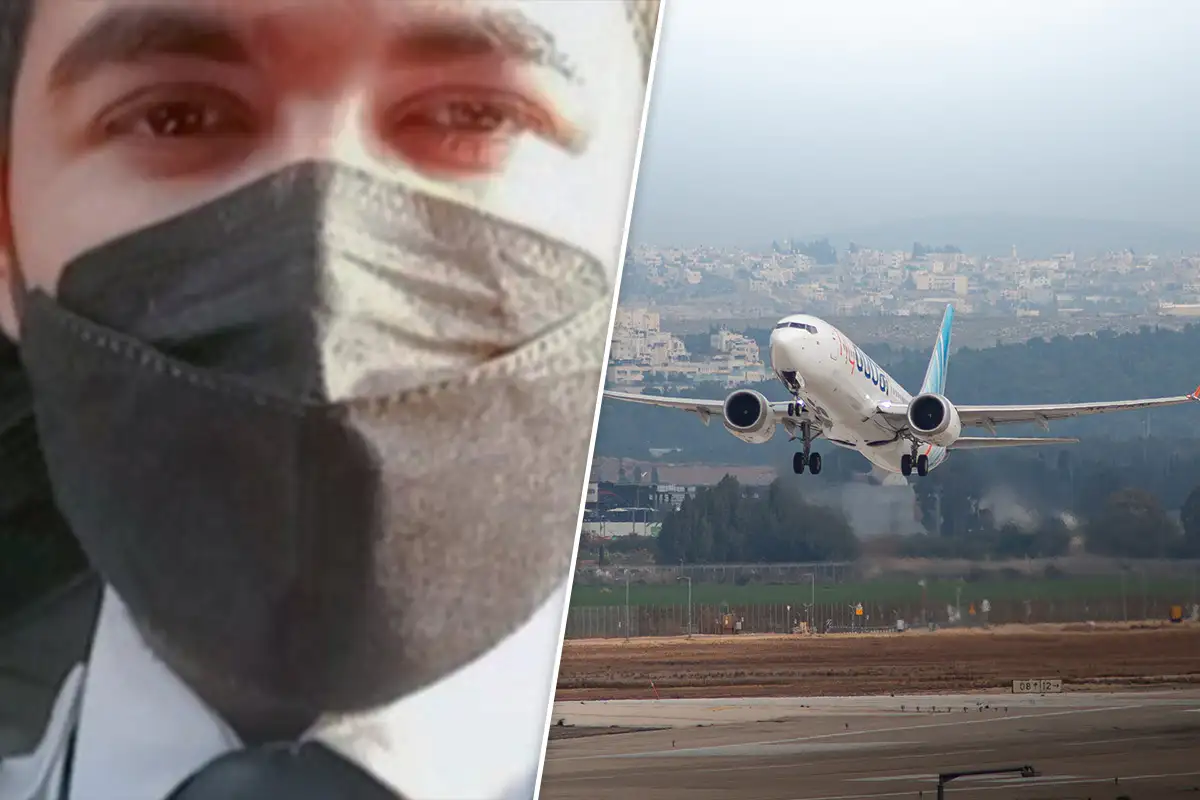
The investigation into the attempted terrorist attack aboard a flydubai flight has raised questions over security screening conducted in both the United Arab Emirates and Israel regarding the identity and ideology of co-pilot Hamam al-Hammami. One of the central lines of inquiry is whether he acted as a lone terrorist or was backed by a terrorist organization. An Israeli investigative team has joined the investigation in the UAE in an effort to obtain a complete picture of the case.
Israel Hayom has learned from sources familiar with the investigation that authorities are examining a possible Iranian connection through a Syrian terrorist group established by Iran during the Assad regime in the course of Syria’s civil war. According to investigators, the group may still be active in the country.
Al-Hammami, whose mother is Syrian, spent several years in Syria, where he underwent a process of religious radicalization and Islamist indoctrination. The investigation indicates that he was likely recruited by the terrorist group during that period. If the findings are confirmed, they would bolster the assessment that he was recruited specifically to carry out an attack using an aircraft, similar to the Sept. 11, 2001 attacks in the US.
 A flydubai aircraft. Photo: AP
During questioning, al-Hammami admitted, as previously reported by Israel Hayom, that he intended to crash the aircraft into a ground target in Israel. Investigators from several intelligence agencies assess that carrying out such an operation would require planning and logistical support, potentially indicating outside assistance from a terrorist organization.
If a link to Iran is established, Israel will have to consider whether, and how, to respond.
Intelligence organizations and agencies from across the region are involved in the investigation. In addition to Israel and the UAE, they include Oman, Syria, Morocco and the US. According to information gathered so far, investigators determined early in the inquiry that al-Hammami held an extremist Islamist ideology and had made little effort to conceal it.
In terms of his religious conduct, al-Hammami publicly avoided the company of women, speaking with them or making physical contact with them, including shaking hands. Ideologically and politically, he posted pro-Palestinian, pro-Hamas and anti-Israel material on social media, as well as content supporting suicide attacks.
The investigation is also focusing on the failures that allowed this information to go unchecked, even though al-Hammami’s identity and nationality were known to authorities in both the UAE and Israel following his previous flights.
The findings could lead to a reassessment of security procedures and working practices, particularly on the Israeli side, after several procedures were apparently either not followed or were carried out improperly.