
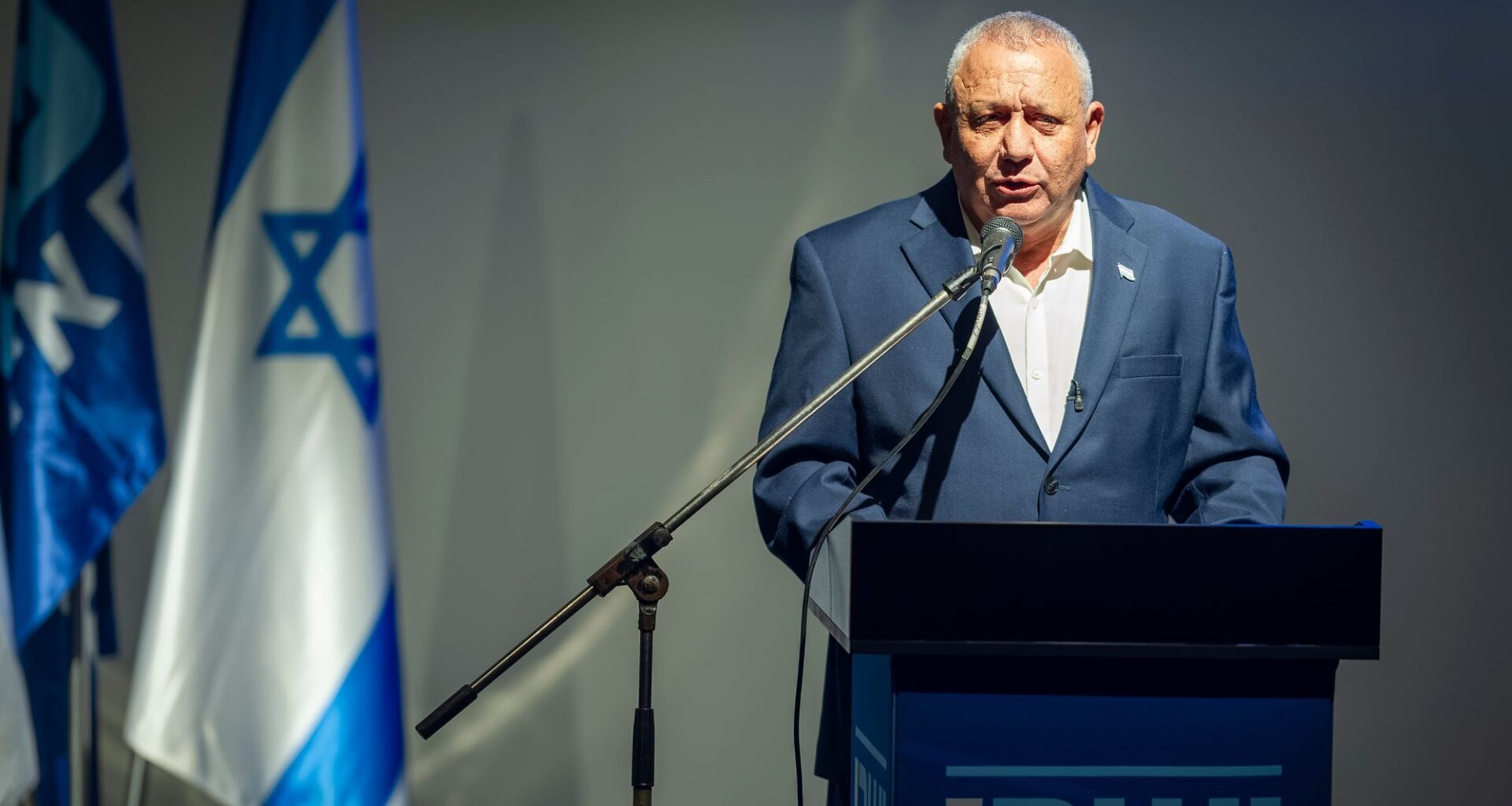
Yashar chairman Gadi Eisenkot formally invited Prime Minister Benjamin Netanyahu to take part in a televised debate ahead of Israel’s election at the end of this month.
Israeli elections: Gadi Eisenkot attempts to overtake Netanyahu as next Israeli Prime Minister
The invitation, issued on the eve of the national memorial day marking the October 7 massacre, called for a “direct, public debate” broadcast live across Israeli media.
“In 23 days, Israel will hold its most fateful elections, standing at a critical crossroads regarding the security and future of the State of Israel,” the party said.
Eisenkot accused Netanyahu of refusing to establish a commission of inquiry into the October 7 failures and of refusing to release full transcripts related to the events.
“Anyone seeking to lead has a duty to provide full, direct, and honest answers to the voters,” Eisenkot said. “They deserve clear and complete answers, free from spin and lies.”
Yashar laid out three main principals for the debate:
A format will be established that allows for substantive and comprehensive answers, and enables all Israeli media outlets to broadcast it.The debate moderators will be journalists selected by news channel editors.The rules of the debate and discussion, including time allocation, the questioning format, and other details, will be determined through coordination between the selected moderators and representatives of the candidates’ campaign teams.
Eisenkot’s party said it was ready to hold the debate immediately under those terms and called for talks to coordinate the details as soon as possible.
Why doesn’t Israel hold many electoral debates?
Unlike many other democracies Israel does not have a strong tradition of public electoral debates. Public televised electoral debates first began in 1977 when Likud’s Menachem Begin and Labor’s Shimon Peres held a debate patterned on US presidential debates.
Debates between Labor and Likud continued well into the 1990s. The 1996 debate between Shimon Peres and Benjamin Netanyahu is often considered the moment Netanyahu won the election.
This meant that in 1999, when there was meant to be another debate between Likud and Labor’s candidate Ehud Barak, Barak declined, believing it would help Netanyahu win the election. Barak defeated Netanyahu 56% to 44% in one of Israel’s few direct elections for prime minister.
While no further direct head-to-head debates ocurred after 1999, many candidates have challenged sitting prime ministers. The lack of head-to-head debates since 1999 may be attributed to the dissolution of the two-party system in Israel.
Whereas during the main era of debates, two main parties dominated politics, today, many parties compete for the premiership, which makes direct debates less attractive as a format.