
Key Takeaways:
The essay says the U.S.–Iran war is not a war on China, but Chinese oil buys, sanctions targets, and disputed dual-use and satellite claims—denied by Beijing and played down by Trump—are testing how far Washington can isolate Tehran.
Both sides want Hormuz open; Wang Yi is quoted as offering to protect Iran’s “legitimate rights” while urging restraint, and Gulf trade is said to cap any Chinese military alliance.
The author’s point is that each Iranian barrel to China and each disputed shipment limits sanctions, so the contest is over who shapes the system, not troops on the same front.
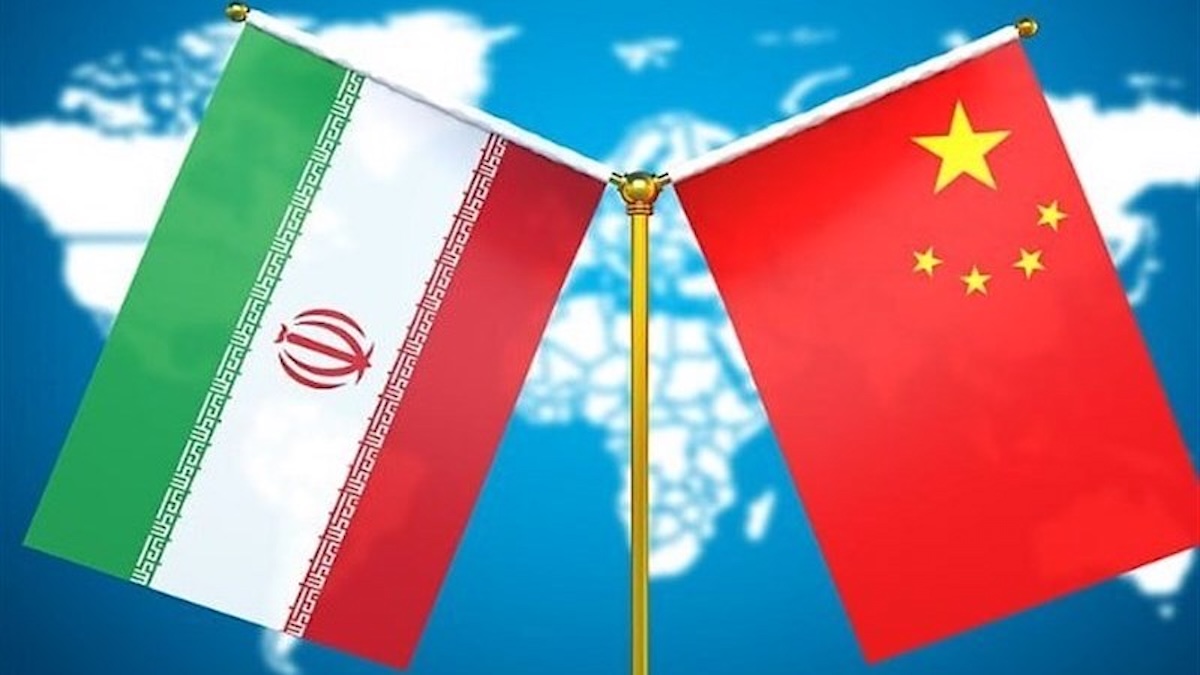
The war between the United States and Iran is increasingly becoming more than a confrontation between Washington and Tehran. A second contest is developing behind it. China is not fighting the United States directly, but its economic, technological and diplomatic links with Iran are complicating Washington’s strategy.
This raises a larger question: Is the Iran war becoming an indirect front in the wider US-China rivalry?
The evidence does not show that Washington is waging a war against Beijing. It does show, however, that the conflict is forcing the two powers into direct competition over energy, sanctions, technology, maritime security and the future balance of power in the Middle East.
China Has Become Iran’s Economic Lifeline
China occupies a special position in Iran’s wartime economy. It is Iran’s largest oil customer and has remained one of Tehran’s most important economic partners despite American sanctions.
Chinese purchases have helped Iran preserve an important source of revenue. Independent Chinese refineries have been particularly important because they are less exposed to the Western financial system than China’s major state-owned oil companies.
Washington has responded by expanding sanctions against Chinese companies, traders and logistics networks connected to Iranian oil and sensitive technology.
The United States has also targeted China-linked procurement networks accused of helping Iran obtain technology relevant to nuclear research and missile development.
This creates a difficult strategic problem for Washington. Sanctioning Iranian companies is one thing. Punishing major Chinese financial institutions would be very different.
It could turn the Iran confrontation into a much broader economic confrontation with China.
The Technology Question Is More Serious
The most sensitive development may not be oil. It may be technology.
Recent reporting has highlighted shipments from Chinese suppliers to Iran involving dual-use components. These reportedly include electronics and other items that can support military systems. US officials are also examining allegations that Chinese entities provided satellite imagery connected to an Iranian strike on a facility hosting American troops in Jordan. China has rejected such accusations, while President Donald Trump has publicly downplayed the issue.
The distinction between commercial technology and military assistance is becoming increasingly difficult to maintain.
Modern warfare depends on navigation systems, satellite imagery, communications equipment, electronics and advanced manufacturing. A country does not necessarily need to send missiles or soldiers to influence a war. It can provide components that make another state’s military more resilient.
That is precisely why Washington is watching China’s role so closely.
The Strait of Hormuz Connects the Two Powers
Energy makes the relationship even more complicated.
China depends heavily on Middle Eastern oil. Iran’s ability to disrupt shipping through the Strait of Hormuz therefore creates a direct economic problem for Beijing.
Washington also wants the waterway open, but for broader strategic and economic reasons. During earlier discussions, Trump and Xi agreed that the Strait should remain open to the free flow of energy. Beijing has opposed its militarisation and called for de-escalation.
This produces an unusual alignment.
China does not want Iran to collapse. But it also does not want a prolonged conflict that destabilises the Gulf and threatens energy supplies. Beijing therefore has an interest in both protecting Tehran’s economic survival and containing the war.
Beijing Is Not Becoming Tehran’s Military Ally
There is an important limit to the China factor.
Beijing has not entered the war as an Iranian military ally. China has repeatedly called for negotiations and has presented itself as a potential diplomatic actor.
Chinese Foreign Minister Wang Yi recently told his Iranian counterpart that Beijing was willing to safeguard Iran’s “legitimate rights and interests”, while simultaneously urging Tehran and Washington to remain restrained and reopen negotiations.
China also has substantial economic relationships with Saudi Arabia, the United Arab Emirates and other Gulf states. Those relationships make an unlimited commitment to Iran costly for Beijing.
For China, Iran is strategically valuable. But Iran is not China’s only route to energy, influence or regional access.
The Real Battlefield May Be the Global Order
The deeper competition is therefore not simply about Iran. Washington is trying to demonstrate that American sanctions, military power and control of the international financial system can still isolate a hostile state.
Beijing is demonstrating that those tools have limits when another major power is willing to keep trading with the targeted country. That is strategically significant.
Every Iranian barrel that reaches China weakens the effectiveness of US sanctions. Every Chinese technology shipment that reaches Iran creates another challenge for American export controls. Every dispute over the Strait of Hormuz exposes the dependence of both powers on the same regional energy system.
The Iran war is therefore testing the boundaries of American power and Chinese economic resilience at the same time.
A War Within a Larger Rivalry
Calling this an undeclared US-China war would go too far. Washington and Beijing are not directly fighting each other in Iran. But calling China irrelevant to the conflict would be equally misleading.
The Iran war has become another arena in which the United States and China are testing each other’s ability to shape events beyond their borders. Washington is using sanctions, military pressure and financial power. Beijing is using trade, energy purchases, diplomatic influence and economic networks.
The central question is no longer whether China will enter the Iran war. It is whether the war will accelerate the transformation of the US-China rivalry from a contest over trade and technology into a much wider struggle over who has the power to shape the international system. That may prove to be the most consequential China factor of all.

About Altaf Moti
Altaf Moti is a journalist, columnist, and geopolitical analyst specializing in international security and global finance. As a prolific contributor to various international media platforms, he provides insights into the shifting dynamics of the Middle East and South Asia. With a command of English, Urdu, and Arabic, Moti bridges the gap between regional narratives and global strategic discourse. His work explores the intersection of diplomacy, intelligence, and the evolving world order.