
Japanese Premier Takaichi reaffirmed Tokyo’s consistent support for the ICC on Gaza during the UN General Assembly, after the court issued an arrest warrant for NetanyahuTel Aviv and Seoul were locked in rare diplomatic row after South Korean President shared a video on social media alleging that Israeli soldiers abused a Palestinian child
After three years of Israel’s genocide in Gaza that has killed tens of thousands, Tel Aviv’s relations with its traditional Asian allies have increasingly fractured, deepening its diplomatic isolation.
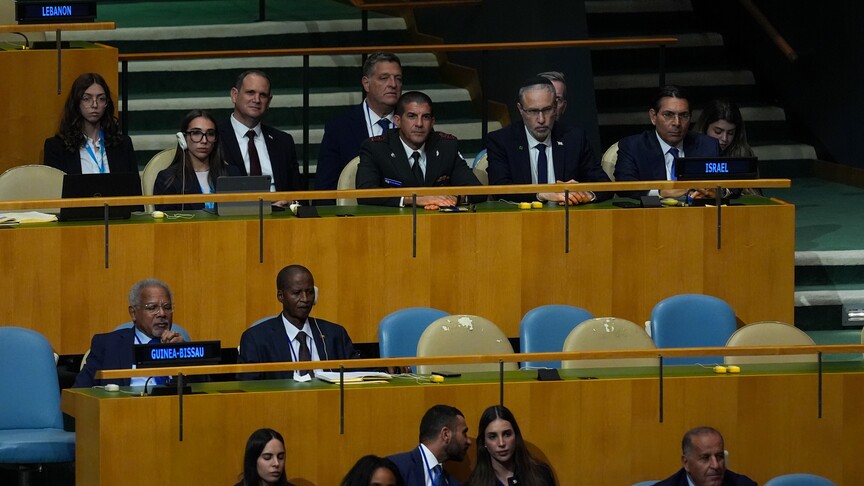
A recent illustration of that isolation came at the UN General Assembly late last month, where Israeli Prime Minister Benjamin Netanyahu cut a lonely figure as scores of delegates walked out of his speech.
The departing delegates included representatives from Asian nations such as Pakistan, Malaysia, Indonesia and Bangladesh.
Here is a look at how Asian countries have responded to Israel and the Gaza war.
East Asia
Israel has faced strong state-level criticism from its longtime East Asian allies, such as Japan and South Korea.
Japanese Prime Minister Sanae Takaichi opposed US sanctions against International Criminal Court (ICC) President Tomoko Akane, who sought an arrest warrant for Netanyahu over alleged war crimes in Gaza.
Takaichi reaffirmed Tokyo’s consistent support for the ICC during the UN General Assembly, pushing back against pressure from the US, and saying that the country takes the US sanctions against Akane “very seriously.”
Washington sanctioned Akane, the first Japanese national to head the ICC, in August, accusing the court of encroaching on state sovereignty.
With Seoul, tensions began in April after South Korean President Lee Jae Myung shared a video on social media alleging that Israeli soldiers abused a Palestinian child and then threw him off a rooftop.
Lee said it was necessary to determine the authenticity of the video and assess what actions were taken, stressing the seriousness of the allegations.
“Wartime homicide is no different from matters that we take issue with, such as the forced (enslavement of) comfort women, and the massacre of Jewish people,” he said.
The issue of “comfort women” refers to the sexual enslavement of thousands of women and girls, many of them Korean, by the Imperial Japanese Army during World War II.
Israel strongly criticized Lee for posting the video, calling it “unacceptable.”
Israel’s Foreign Ministry claimed that Lee relied on a “fake account” and had revived an incident from 2024 that had already been investigated.
The ministry accused Lee of trivializing the massacre of Jews on the eve of Holocaust Remembrance Day in Israel.
China, which has long supported a two-state solution, continued to reiterate its call.
President Xi Jinping said the two-state solution is the “right direction” for resolving the longstanding Palestine issue.
South and Southeast Asia
Sri Lanka, one of the first countries to recognize the State of Palestine, called at the UN General Assembly for the “early” recovery and reconstruction of Gaza, reiterating its support for Palestinians’ “inalienable” rights and a two-state solution.
“Recovery and reconstruction of Gaza must be an early priority,” Sri Lankan Foreign Minister Vijitha Herath said in his address.
He added that Colombo supports resolving the Palestine issue in line with the 1967 borders.
Pakistan, a member of the Gaza Peace Board, also reiterated its “unwavering” support for the Palestinian people and the establishment of an independent State of Palestine based on the pre-1967 borders, with East Jerusalem as its capital.
Addressing the UN General Assembly, Prime Minister Shehbaz Sharif said that Palestine must also be granted full membership in the UN.
India, for its part, continued to pursue its strategy of maintaining diplomatic and strategic ties with Israel while continuing to express traditional support for a two-state solution and Palestinian statehood.
India under Prime Minister Narendra Modi has significantly deepened its strategic relationship with Israel, including through Modi’s February meeting with Netanyahu, when the two countries elevated their ties to a “Special Strategic Partnership.”
According to Jatin Desai, a Mumbai-based political analyst, India has historically stood with the Palestinian people. He said India’s position was clear even before the establishment of Israel.
Thailand, which has maintained long-standing ties with Israel, continues to cooperate closely with Israel, particularly in agriculture and education.
Every year, around 100,000 Israeli tourists travel to Thailand, and thousands of Thai workers, both skilled and unskilled, are employed in Israel. The country is also a popular destination for Thai students pursuing academic studies.
Bangkok established diplomatic relations with Israel in 1954, while it officially recognized Palestine in 2012.
Pacific nations
In January, US President Donald Trump, as chair of the Board of Peace for Gaza, invited Australia, Vietnam and Thailand to join the international body.
Australian Prime Minister Anthony Albanese said Canberra would consider the offer, though no decision had so far been taken.
“We’ve received correspondence from the president that arrived, I think, last night. That’s something we haven’t had time to consider. We’ll consider all of these approaches respectfully and through our proper processes,” Albanese said after receiving the invitation.
Thailand said it was reviewing the details of the offer.
Vietnam’s Communist Party General Secretary To Lam accepted Trump’s invitation to join the Gaza Peace Council and “affirmed Vietnam’s readiness to participate as a founding member state of the council.”
New Zealand, which did not join neighboring Australia and other European nations to recognize the State of Palestine last year, said recognition of Palestinian statehood is “inevitable.”
In his final speech as foreign minister in the incumbent government earlier this month, Winston Peters said his decision in 2025 not to join most other UN member states in recognizing Palestine was an example of truly independent foreign policy.
But he said that recognition was a question of when, not if.
The Pacific, a cluster of small island nations, has provided Israel with a bloc of supportive voices in international forums, even as global criticism intensifies and more countries move to recognize Palestine.
Fiji further strengthened ties with Israel in September 2025 by opening a new embassy in Jerusalem. Days earlier, it abstained in a UN vote on a two-state solution. Like many of its neighbors, Fiji does not recognize Palestine.
Papua New Guinea followed a similar path. In September 2023, it also opened an embassy in Jerusalem and has since repeatedly opposed calls for a ceasefire at the UN. The country continues to reject recognition of Palestinian statehood.
Nauru has long been a loyal supporter of Israel. It recognized Jerusalem as Israel’s capital in 2019 and, in September last year, voted against a resolution backing a two-state solution.
Palau and Micronesia have consistently voted in line with Israel at the UN.
Samoa signed a visa-waiver deal in 2019 but took a slightly different line in September last year, when it abstained in the two-state resolution. Still, like most of its neighbors, it has not recognized Palestine.
Other Pacific nations such as Vanuatu, the Marshall Islands, Kiribati, the Solomon Islands, Tuvalu and Tonga maintain diplomatic relations with Israel, regularly support it at UN forums and do not recognize Palestine.
Tonga and Israel signed a visa-waiver agreement in 2010, while Vanuatu and the Marshall Islands have consistently backed Israel in UN votes.