
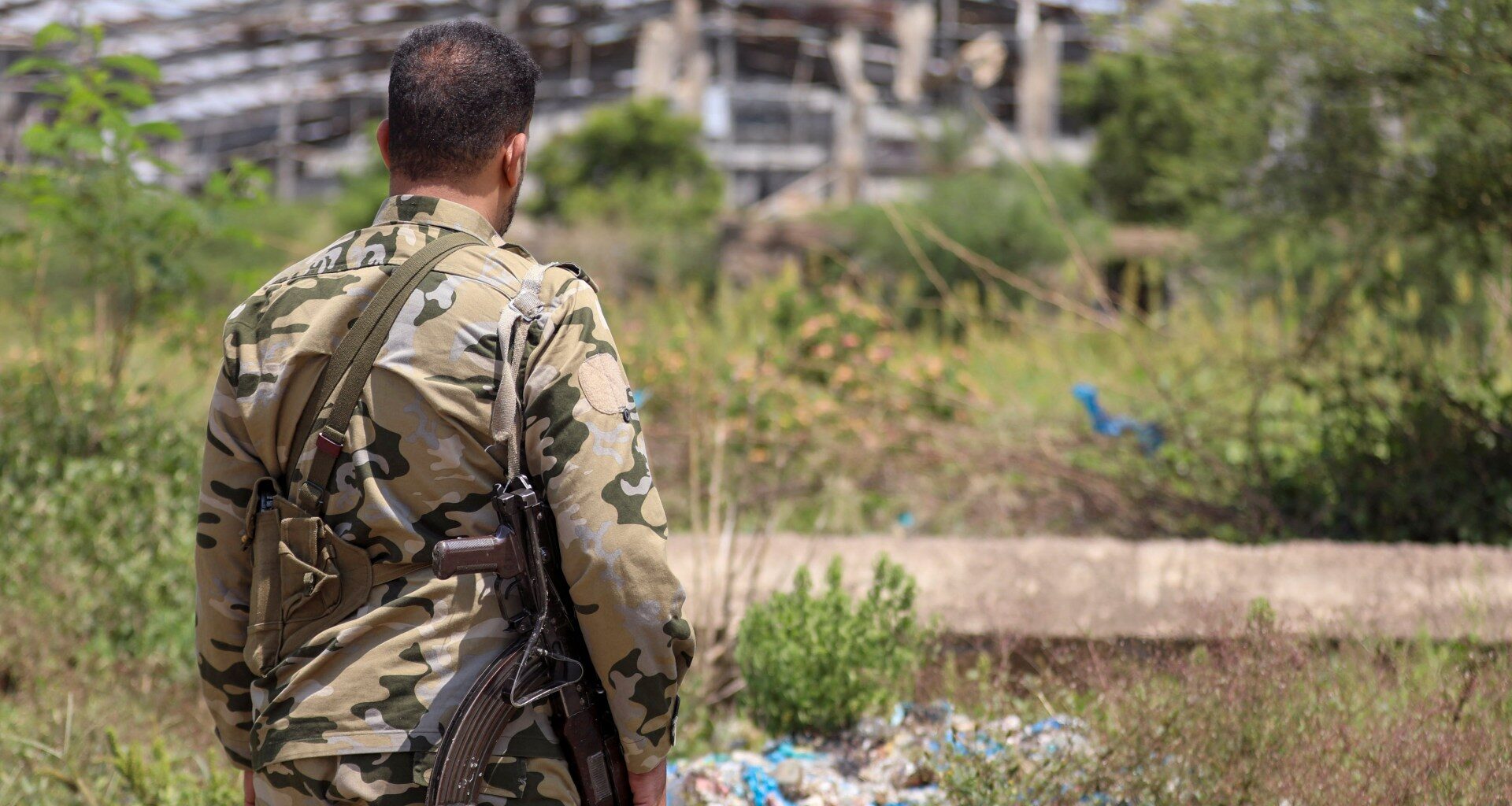
Yemen government forces have reported that they have retaken the strategic port city of Mocha as they pursue a major counteroffensive against the Houthis.
The internationally -recognised government’s military said on Monday that it had also retaken control of key positions near the Bab al-Mandeb Strait, as it seeks to oust the Iran-aligned Houthis from control of the strategic waterway – a key route for global energy supplies. A “strategic offensive” has also been launched on Yemen’s capital Sanaa, it added.
Recommended Stories list of 4 itemsend of list
The military said on social media that fighting took place across several fronts near Mocha, leaving a number of Houthi fighters dead and wounded.
Several Houthi fighters were captured, military sources said, without specifying the number of casualties.
Amid the United States and Israel’s war on Iran and the closure of the Strait of Hormuz, the Houthis have relaunched hostilities with the Saudi Arabia-backed Yemeni government.
In a rapid offensive in September, the group captured Mocha in western Taiz governorate, and then territory around the Bab al-Mandeb Strait.
Earlier on Monday, Yemeni government forces said they had reclaimed control of the governorate’s Dhubab district and key positions near the strait, as well as launching a “strategic offensive” on Sanaa. The Houthis have controlled the Yemeni capital and much of Yemen’s populous northwest since 2014.
“Forces from the Homeland Shield Forces and the Giants Brigades carried out a large-scale military operation with air cover targeting Houthi militia positions and movements in several areas of the district,” Yemen’s Saudi-backed military said in a statement carried by the government-aligned news agency Saba regarding the fighting in Dhubab.
“During the operation, they advanced and seized important positions – cutting off supply lines and roads leading to Bab al-Mandeb,” an unnamed army source told Saba.
The Houthis, also known as Ansar Allah or Supporters of God in Arabic, lost many fighters and several others were wounded in the clashes, with military equipment destroyed or damaged, according to the source.
Government forces are “continuing to comb and secure the liberated areas and cut off supply routes to the Houthi terrorist militia”, Saba reported.
Shortly afterwards, the Saudi-led military coalition backing the Yemeni government reported that it had launched an air campaign against the Houthis.
Coalition spokesman Major General Turki al-Maliki said 100 fighter jets were providing support to the Yemeni forces.
He said the coalition has secured “air protection” of the Bab el-Mandeb Strait and destroyed hundreds of Houthi targets.
Al Jazeera could not independently verify the battlefield reports.
Yemen has been at war since the Houthis seized Sanaa in central Yemen over a decade ago, forcing the government to retreat to the southern port city of Aden.
The war escalated after a fragile truce struck between the government and the Houthis in 2022 collapsed in July.
In mid-September, the Houthis swept across parts of western Yemen, seizing Mocha and key strategic islands in the Bab al-Mandeb Strait. The move choked off an additional key global oil passageway as Iran maintained a blockade on the Strait of Hormuz.
Since then, anti-Houthi forces have largely stabilised the front lines.
On Sunday, Rashad al-Alimi, the chairman of Yemen’s Presidential Leadership Council, the executive body of the internationally recognised government, announced the start of military operations to retake the remaining territory held by the Houthis.
The battlefield reports come as Pakistani Deputy Prime Minister Ishaq Dar, who also serves as foreign minister, arrived in Saudi Arabia for a meeting with Saudi and Turkish officials under their new defence pact, the Mecca Joint Defence Agreement.
Pakistani Defence Minister Khawaja Asif and military chief Asim Munir were accompanying Dar at Monday’s talks in Riyadh with their counterparts from Saudi Arabia and Turkiye, the Pakistani Ministry of Foreign Affairs said in a statement on X.
Saudi Arabia, Turkiye and Pakistan signed the agreement on August 7 to strengthen collective deterrence and expand defence cooperation in the region. The pact stipulates that an attack on one of the three countries is considered an attack on all.
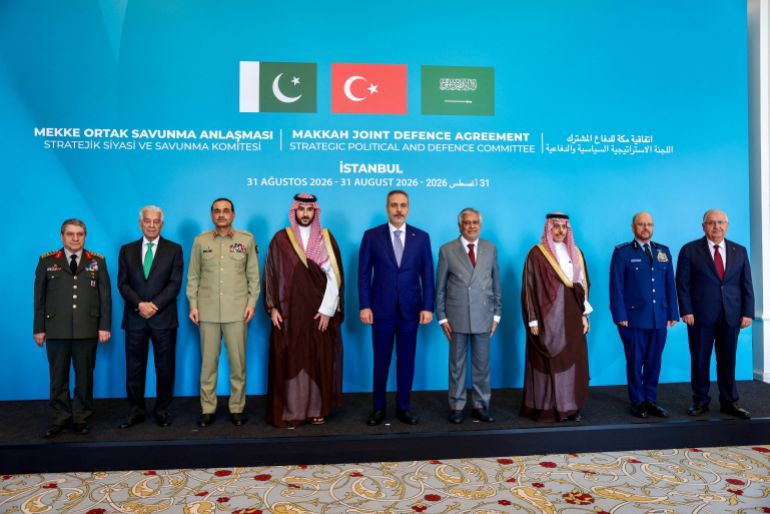 Senior political and military leaders from Pakistan, Saudi Arabia and Turkiye met three weeks after signing the Mecca Joint Defence Agreement, in Istanbul, Turkiye, August 31, 2026 [Murad Sezer/Reuters]
Pakistan’s Dar said last week the “urgent talks” would address a proposal for political engagement with the Iran-aligned Houthis as an alternative to the military option, following an approach by Tehran.
Al Jazeera’s Michael Appel said the Yemen war is expected to feature prominently in the Saudi-hosted talks.
“Civilians remain caught up in the fragmented front line of this war, and the announcement of an expanded military operation leaves tens of thousands with the prospect of continued displacement and hunger as a humanitarian crisis takes hold,” he said.