
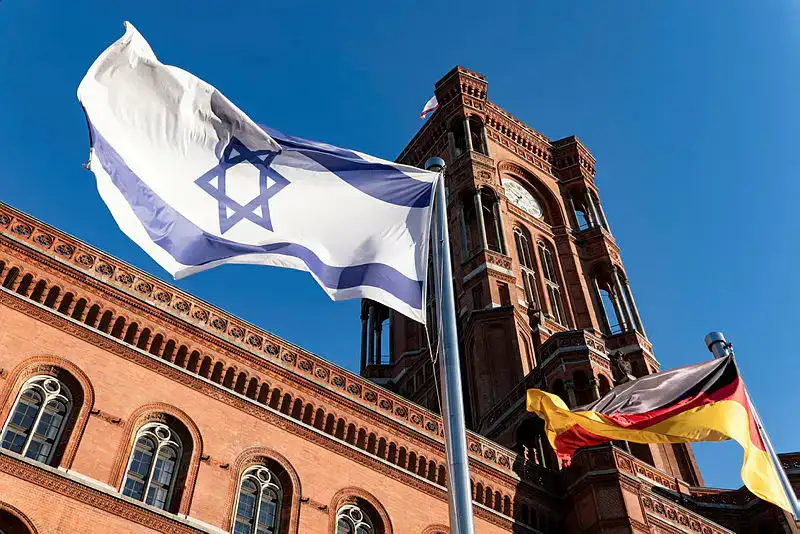
Berlin’s outgoing Governing Mayor Kai Wegner is nearing the end of his three-and-a-half-year tenure, but he told Israel Hayom that his commitment remains unchanged: “We will continue using every means available to us to protect Jews, Israelis and Jewish and Israeli institutions in Berlin.”
Wegner made the remarks Monday at Berlin’s Red City Hall during the opening of “Unbroken,” an exhibition examining Israeli sports in the shadow of the Oct. 7, 2023, Hamas massacre and telling the stories of sports that were part of the lives of many of those murdered that day and remain part of their families’ lives.
“Protecting Jewish life begins with the firm conviction that Jewish life belongs with us, that it is part of our city,” Wegner said. “And I expect that attitude from everyone who bears responsibility in this city, or wants to bear responsibility.”
His comments come as Berlin’s political future remains uncertain, with the possibility that the left-wing Die Linke party could form a coalition and install its candidate as the city’s next mayor. Wegner is due to arrive in Israel on Tuesday for a visit during which he will take part in memorial events marking three years since the massacre and visit Kibbutz Re’im near the Gaza border.
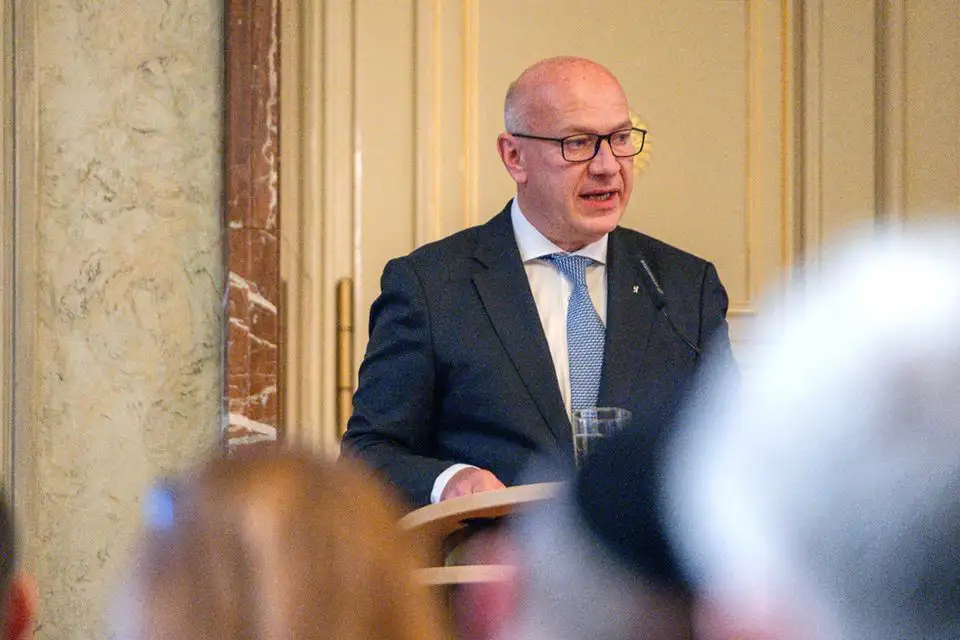 Wegner, Monday. “Berlin stands firmly by Israel” | Photo: World Jewish Congress
Antisemitism takes center stage
Since the Oct. 7 massacre, Wegner has stood out as one of Germany’s clearest voices in support of Israel. Days after the attack, the Israeli flag was raised over Berlin City Hall and remained there as long as Israeli hostages were held by Hamas.
When Die Linke’s faction in Berlin’s Mitte district demanded in the summer of 2025 that the flag be removed, Wegner responded: “If Die Linke regards the Israeli flag as a burdensome symbol, it should seriously confront its disturbing, and by now no longer ambiguous, attitude toward antisemitism.”
In February 2024, just four months after the outbreak of the war, Wegner traveled to Israel on a solidarity visit. He met Tel Aviv Mayor Ron Huldai, relatives of hostages and evacuees from Kibbutz Re’im, and visited Yad Vashem, the World Holocaust Remembrance Center in Jerusalem.
His comments carry added political weight about two weeks after Berlin’s state election, in which Die Linke, led by Elif Eralp, won 25.7% of the vote and became the city’s largest party. Wegner’s Christian Democratic Union, or CDU, fell to second place after Wegner himself withdrew from the race following controversy over his decision to play tennis during a major power outage in the city.
Die Linke, many of whose members have previously made anti-Israel and even antisemitic remarks, is now seeking to form a government with the Greens and the Social Democratic Party and bring Eralp into the mayor’s office.
The path to such a coalition, however, is far from assured. The Social Democrats and Greens have demanded clear agreement on combating antisemitism and organized crime as a condition for opening formal exploratory coalition talks. Disputes over attitudes toward Israel and antisemitism within sections of Die Linke have consequently become a central issue in discussions over the composition of Berlin’s next government.
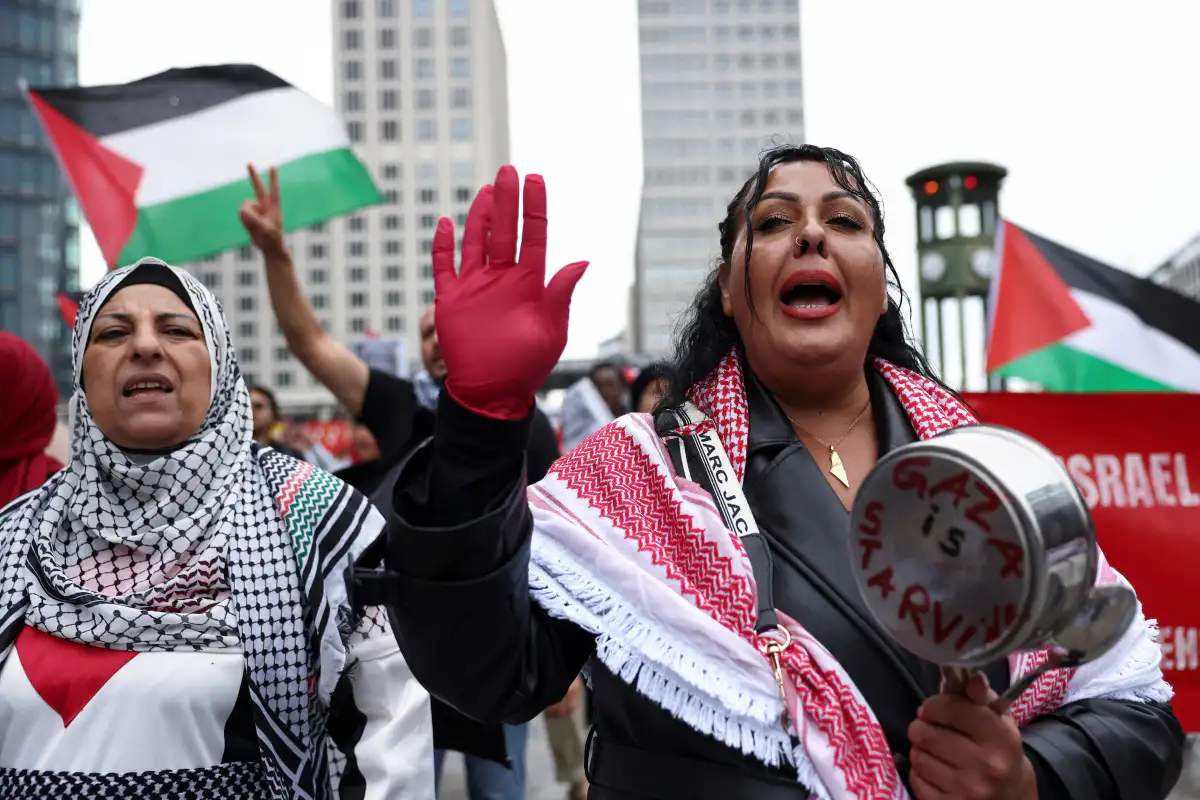 Pro-Palestinian protest in Berlin (file photo) | Photo: Reuters
Concern over political change
For many Jews and Israelis living in Berlin, the question of who governs the city is more than a matter of party politics. Since Oct. 7, Berlin has become one of Europe’s most prominent centers of pro-Palestinian demonstrations, and Wegner himself pushed to tighten the city’s law governing demonstrations to make it possible to ban certain protests in advance.
The prospect of a sharp political shift in the city has therefore drawn particular attention to how the next government might approach Israel and Berlin’s Jewish community.
Against the backdrop of concern among parts of the city’s Jewish and Israeli communities, Wegner stressed that the memory of Oct. 7 is not open to reinterpretation.
“We owe the victims a promise that this will never be forgotten and never be blurred or diminished,” he said. “Berlin stands firmly by Israel.”