
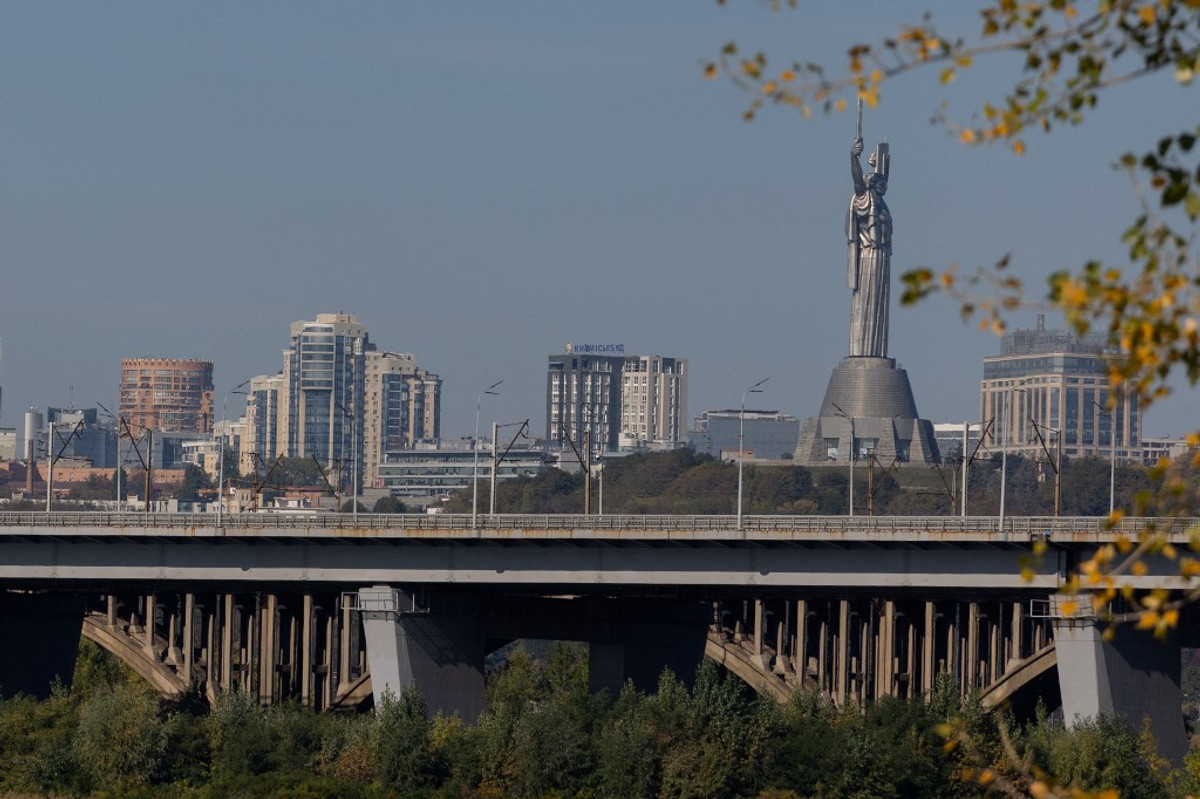
US Secretary of State Marco Rubio has dismissed months of Russian warnings for foreign diplomats to leave Kyiv, making clear that Moscow will not decide whether Washington maintains its presence in the Ukrainian capital.
“Look, we have an embassy presence there, and we’ll make the determination about whether it’s safe for them to be there or not,” Rubio told reporters Sunday.
JOIN US ON TELEGRAM
Follow our coverage of the war on the @Kyivpost_official.
“They’ve been warning diplomats to leave for months, and I don’t think it’s a surprise to anyone that Kyiv is under attack. I think that’s well understood.”
Rubio said the State Department assesses the security of every US diplomatic mission daily and would change its posture if Washington believed conditions required it.
“We haven’t done that up to this point there,” he said.
The remarks were the latest Western rejection of a sustained Russian effort to warn – and increasingly pressure – foreign governments to pull their diplomatic missions out of Kyiv.
For Moscow, however, the issue goes well beyond embassy security.
An exodus of Western diplomats from the Ukrainian capital would hand the Kremlin a powerful symbolic victory: the image of Ukraine’s allies abandoning Kyiv under Russian military pressure, four years after Moscow failed to capture the city.
Europe says it is staying
Rubio’s comments followed a coordinated response from European governments rejecting Russia’s latest warnings.
Other Topics of Interest
Russian Drones Sink Turkish-Owned Grain Ship as Ankara Pushes Black Sea Security Deal
Two crew members were killed aboard the Royad Mammadov as Turkey seeks regional backing for safer Black Sea shipping.
Germany, Italy, Spain and Sweden publicly declared that their embassies would remain in Kyiv, joining France, Poland, Estonia and the European Union in reaffirming their diplomatic presence.
“We are staying in Kyiv,” the embassies said in coordinated messages.
Kyiv Post previously reported that the statements came after Russia’s Foreign Ministry warned foreign nationals and diplomatic personnel that remaining in the Ukrainian capital represented a “mortal danger” as Moscow threatened further large-scale strikes.
The embassies called on Russia to respect the Vienna Convention and international humanitarian law rather than attempt to intimidate diplomatic missions.
EU Ambassador to Ukraine Katarína Mathernová went further, saying none of the 25 EU member states maintaining embassies in Kyiv was preparing to leave.
“I am not aware of any embassy that is leaving – and certainly not embassies of EU countries,” Mathernová said.
The EU Delegation and the EU Advisory Mission also remain operational in Kyiv.
The European Commission separately said Russia’s threats would neither reduce EU support for Ukraine nor alter the bloc’s diplomatic presence.
Poland likewise rejected any suggestion it was preparing to withdraw its mission, describing Moscow’s warnings as an effort to intimidate European governments and weaken their backing for Ukraine.
Moscow has been sending the message for months
The current confrontation did not begin with Russia’s October warning.
Kyiv Post reported in May that Rubio had already addressed Russian warnings about the security of diplomatic facilities in Kyiv after Russian Foreign Minister Sergey Lavrov conveyed a message from Vladimir Putin to the Trump administration.
At the time, Rubio said Russia had not directly ordered the United States to evacuate its embassy, but had issued broader warnings about the danger facing diplomatic facilities in the capital.
Foreign Minister Andrii Sybiha accused Moscow of responding to US peace efforts with threats against Kyiv, calling the warning a “brazen provocation.”
Days later, another controversy erupted when reports suggested the US Embassy had left Kyiv.
Kyiv Post reported that the embassy publicly denied the claim.
“The US Embassy is open. There are no changes to our operations and reports otherwise are false,” the mission said at the time.
Ukraine’s Foreign Ministry also rejected reports of an American evacuation.
Why an embassy withdrawal would matter to Moscow
Embassies are not merely administrative offices. Their presence in a wartime capital is an unmistakable political signal.
Foreign diplomats meet Ukrainian officials, coordinate military and economic assistance, host visiting delegations and maintain direct communications between Kyiv and allied governments.
Their continued presence also says something more basic: foreign governments continue to recognize Kyiv as a functioning capital whose government remains firmly in control.
That symbolism has carried particular weight since the opening weeks of Russia’s full-scale invasion.
Before Russian troops crossed the border in February 2022, the US and a number of other countries temporarily moved diplomats away from Kyiv as Western intelligence warned that Russian forces could rapidly reach the capital.
Russia then attempted to seize Kyiv.
It failed.
As Ukrainian forces pushed Russian troops out of the Kyiv region, Western officials began returning.
On May 18, 2022, the US formally reopened its embassy in Kyiv and raised the American flag over the mission again. Then-US Secretary of State Antony Blinken explicitly connected the reopening to Ukraine’s successful defense of its capital.
“The Ukrainian people, with our security assistance, have defended their homeland,” he said as the embassy resumed operations.
The return of diplomats became one of the clearest visual markers of Russia’s defeat around Kyiv. A mass departure now would carry the opposite symbolism.
Making Kyiv appear unlivable
Russia’s latest diplomatic warnings coincide with an intensified campaign against the Ukrainian capital. Moscow has struck transport infrastructure, residential areas and other targets while openly promising additional large-scale attacks.
President Volodymyr Zelensky has described Russia’s evolving strategy as an effort to make Ukrainian cities increasingly difficult to live in by systematically attacking the infrastructure required to sustain them.
Four years after failing to seize Kyiv, Moscow is again trying to isolate the capital through missiles, drones and threats.
It has failed again.