
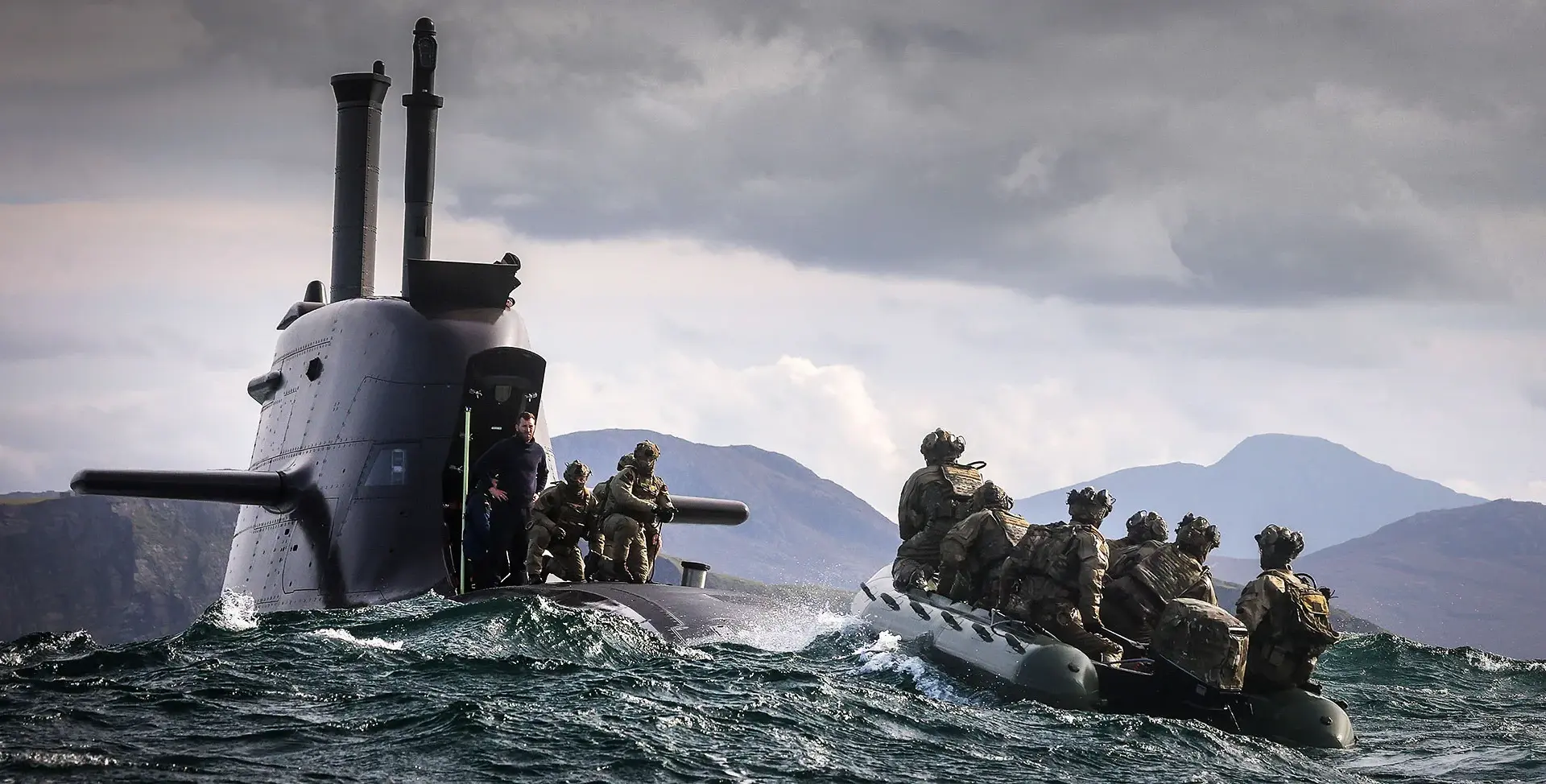
More than 2,000 personnel are taking part in UK-led NATO Exercise Strike Warrior 2026. Although Royal Navy warship participation has been minimal, the exercise has seen significant Royal Marine activity, including commandos deploying from a German submarine, directing naval gunfire and conducting amphibious, reconnaissance and strike missions.
Strike Warrior involved eight warships and 19 aircraft. The main naval elements were provided by units of Standing NATO Maritime Group 1 now under French command and comprising Canadian frigate HMCS St. John’s and the Dutch frigate HNLMS Van Amstel, supported by German auxiliary FGS Berlin. Although HMS Queen Elizabeth operated in close by for a portion of the exercise, she continues post-refit workup and her participation appears to have been minimal, if at all.
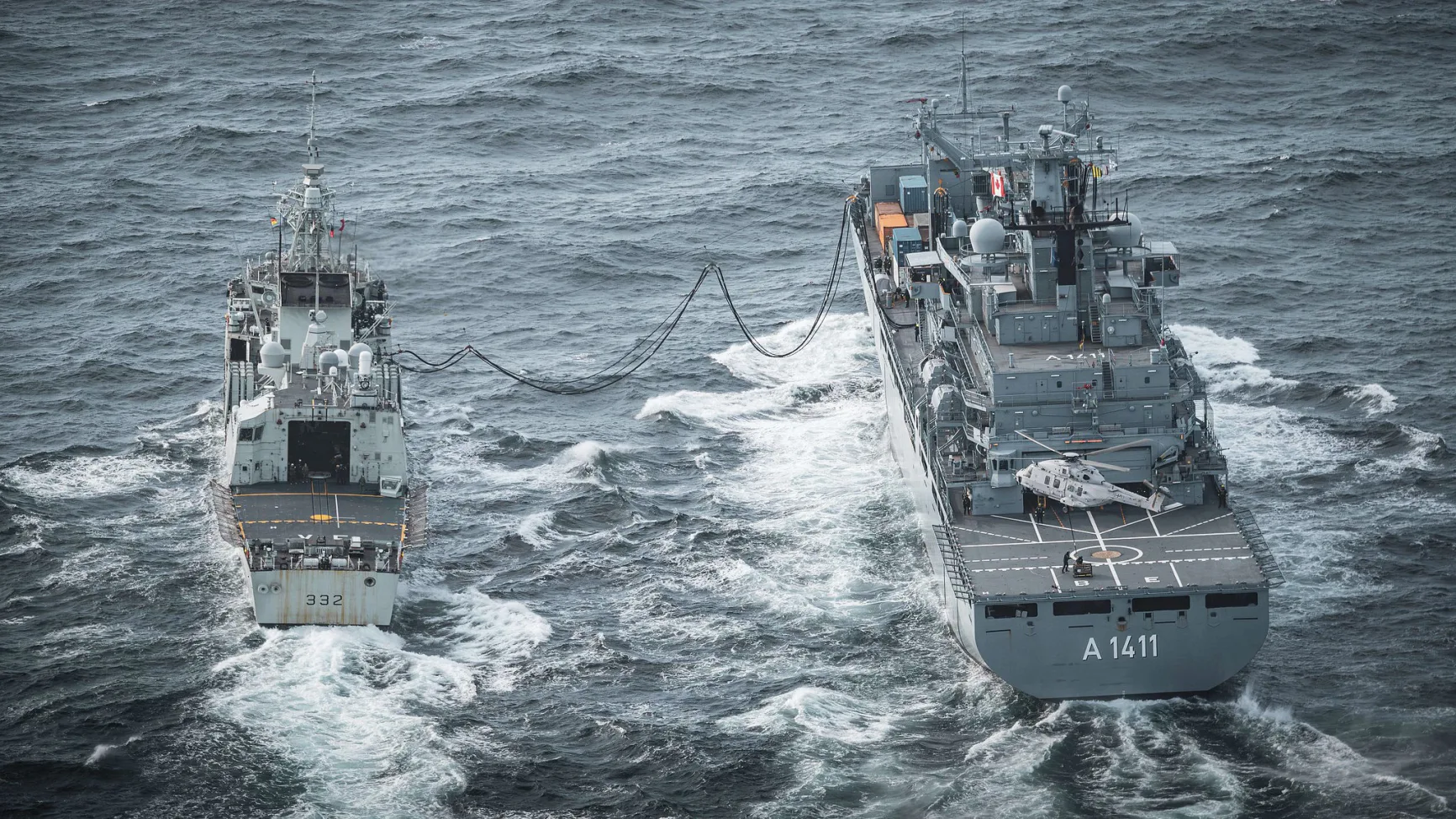 HMCS St John’s conducts RAS with FGS-Berlin during the exercise (Photo: NATO MARCOM).
Strike Warrior has brought together more than 2,000 personnel from six nations and is spread across a large part of Scotland and its surrounding waters. Activity has extended from the Western Isles and Cape Wrath through the North-West Approaches, Galloway and the Borders and out into the North Sea. The training has included amphibious assaults, boarding operations, intelligence and surveillance missions, logistics, maritime security and anti-submarine warfare. Uncrewed aircraft have also been used for reconnaissance, simulated strikes and the delivery of supplies to troops operating ashore. Medical teams have practised establishing protected underground treatment facilities intended to support dispersed forces operating in contested environments.
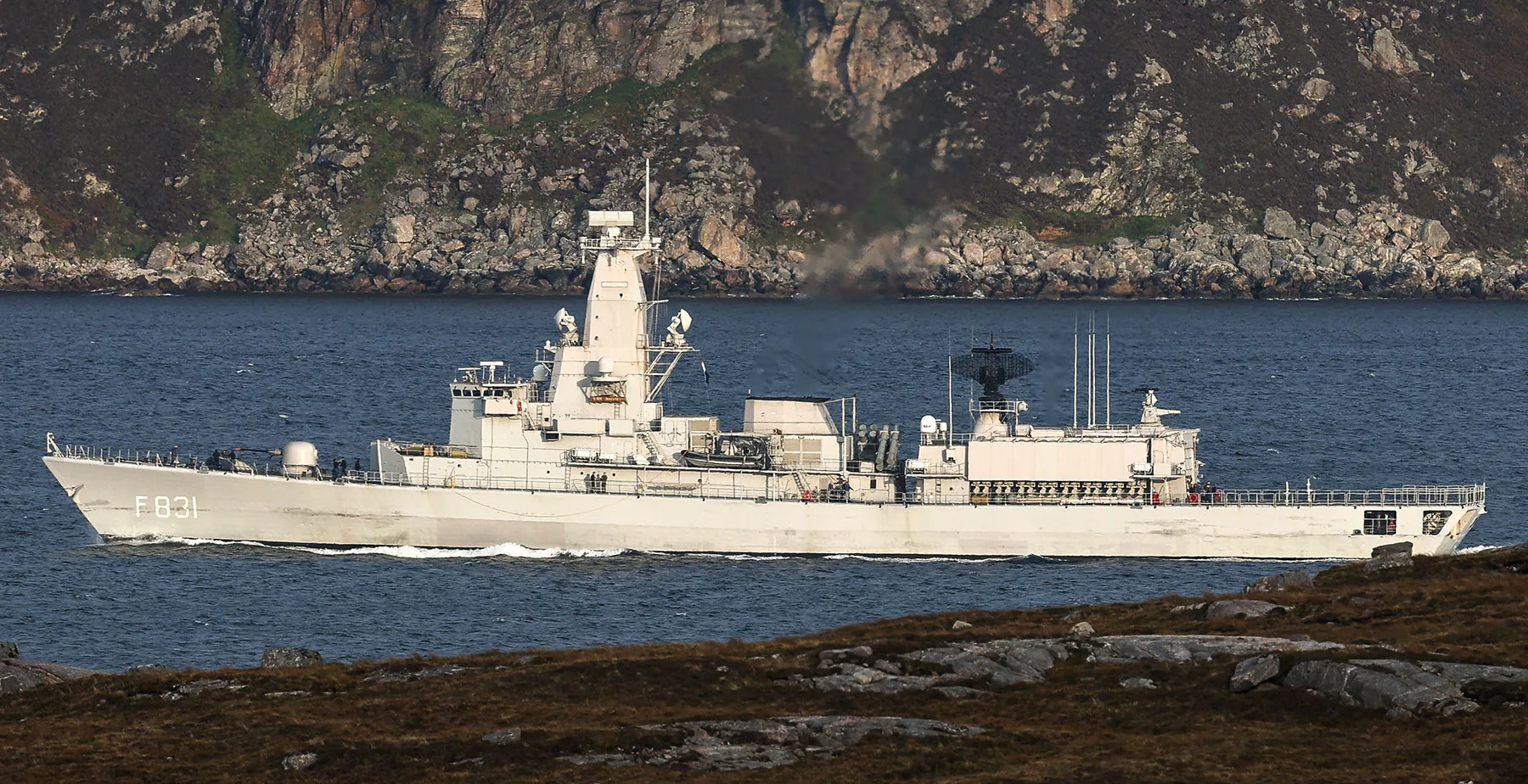 In the littoral… HMNLS Van Amstel operating very close inshore (Photo: NATO MARCOM).
The exercise area has allowed the Commando Force to practise dispersed operations across considerable distances rather than concentrating on a single amphibious landing area. The wide geographical spread reflects how the Commando Force is being reshaped for operations in the High North and North Atlantic. Rather than concentrating large numbers of Royal Marines aboard amphibious ships before conducting a conventional landing, smaller units are increasingly expected to disperse, gather intelligence, identify targets and coordinate firepower from other forces.
Strike Warrior is the first exercise for around 15 years in which virtually all elements of the UK Commando Force have been brought together on this scale and the biggest test since the live operations in Afghanistan. Since then, the Royal Marines and supporting Army units have increasingly focused on smaller, more dispersed operations and closer integration with NATO allies. Strike Warrior provides a snapshot of the direction in which the Commando Force is moving. The Royal Marines remain at the centre of the exercise, but increasingly rely on NATO partners to provide the shipping due to gaps in the RN fleet.
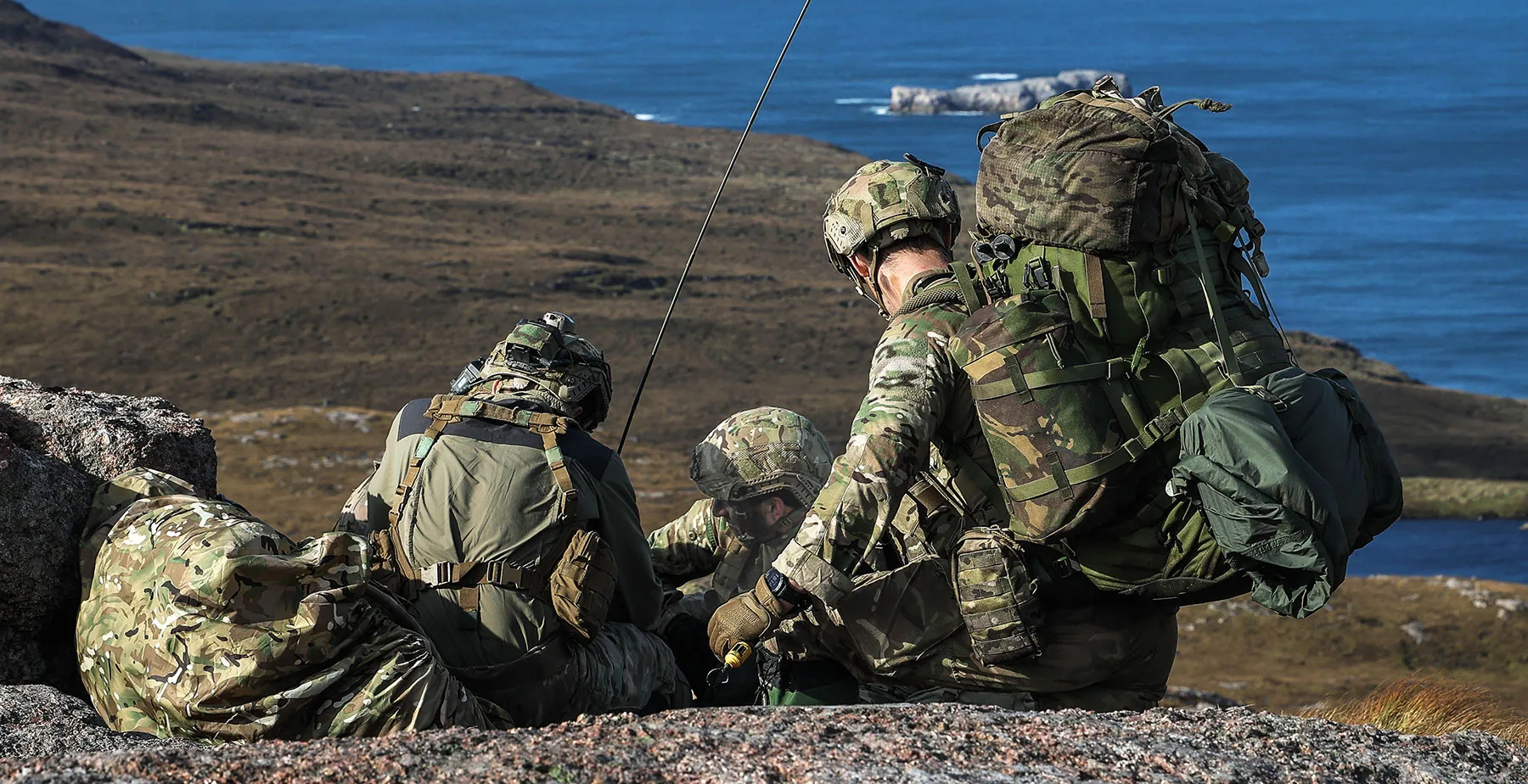 148 Battery personnel direct gunfire against targets on the Cape Wrath range.From beneath the waves
One of the most demanding serials saw Army commandos from 148 (Meiktila) Commando Forward Observation Battery embark aboard German Navy Type 212A submarine U36 before approaching Cape Wrath submerged. The submarine surfaced off the north-western tip of Scotland and the commandos deployed in inflatable raiding craft before moving ashore. Once established on land, the small teams occupied concealed observation posts overlooking the exercise area. (Royal Marines of the Surveillance and Reconnaissance Squadron (SRS) and Shore Reconnaissance Troop (SRT) conducted a similar serial with U-35 in the Arctic in March 2026.)
The operation demonstrated a demanding combination of submarine insertion, covert movement ashore and the subsequent direction of naval gunfire against targets on land. It also required British personnel to operate from a U36 and then link directly with Portuguese warship NRP D. Francisco de Almeida, providing the firepower offshore. From their observation positions, the teams directed the guns onto simulated enemy positions. According to 148 Battery, this degree of coordination involving live assets had not been achieved by the unit for nearly 30 years.
The battery is an Army unit specialising in Naval Gunfire Support Forward Observation (NGSFO) and is part of 29 Commando Regiment Royal Artillery attached to the Royal Marine Commando Force. Their role is the coordination of naval and joint fires. Its teams are trained to operate well ahead of conventional forces, locate targets and call in fire from ships, artillery and aircraft while remaining difficult to detect.
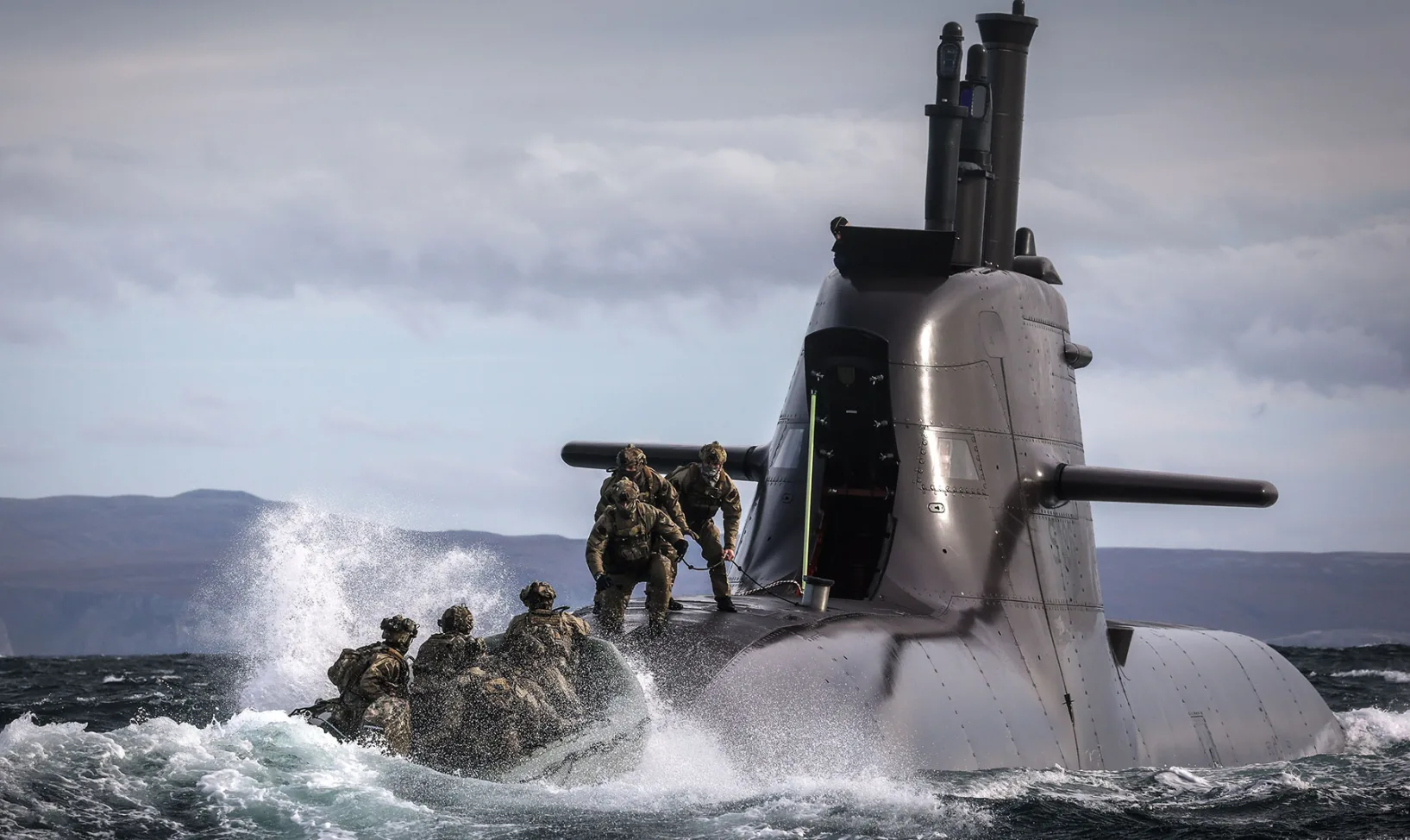 U36 recovers commandos by RIB. This is a demanding evolution, requiring the submarine to surface, hold position and bring a small inflatable safely alongside or onto the casing in heavy swell while remaining exposed and vulnerable for longer than normal. The use of a small conventional submarine (SSK) makes more sense than employing large and expensive nuclear boats (SSN) for this kind of high-risk activity.Calling in NATO firepower
Earlier in Strike Warrior, 148 Battery personnel had also directed naval gunfire from HNLMS Van Amstel and HMCS St. John’s. Both worked with commandos positioned ashore, bringing naval gunfire support (NGS) onto simulated enemy positions. It should be noted that these vessels are lightly equipped for this task, carrying a 76mm and 57mm mount respectively. The future of NGS may be somewhat doubtful as warships loitering close to shore are increasingly vulnerable to drone attacks or from the proliferation of cheap anti-ship missiles.
The activity formed part of the Naval Fires Operator Course being delivered to the newest observers from 148 Battery and personnel from 29 Commando Regiment Royal Artillery. The qualification is one of the basic requirements for personnel destined to operate in Special Observer Teams.
During the final phase of the course, small teams had to plan their own missions, move significant distances on foot and establish concealed observation posts from which they could maintain surveillance and acquire targets. They then coordinated naval gunfire from warships offshore against dynamic targets before withdrawing from the area.
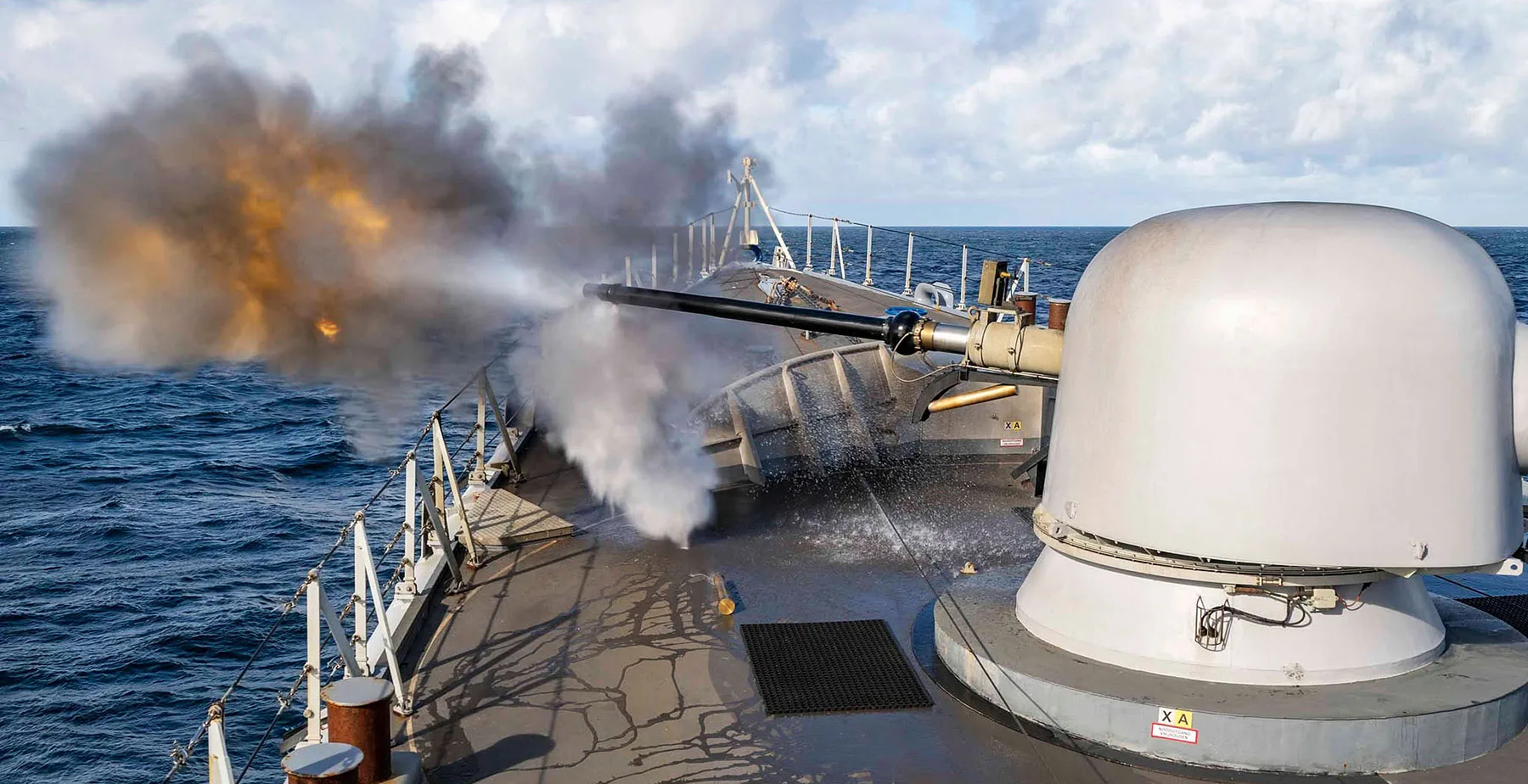 HMNLS Van Amstel opens fire with the Oto Melara 76mm compact gun. Designed in the 1960s, this gun has been exported to more than 50 navies worldwide (Photo: NATO MARCOM).
The serial is a useful demonstration of how the modern Commando Force is intended to operate. Small teams dispersed across a coastline or deep inland may have relatively little firepower of their own, but can act as sensors and targeting nodes for weapons carried by ships, aircraft and land forces many kilometres away. Operating from German U36 before calling in fire from a Portuguese frigate is probably more demanding than conducting the same serial entirely with British assets. The Commando Force is expected to operate as part of NATO formations and must therefore be able to plug into allied submarines, warships and command systems.