
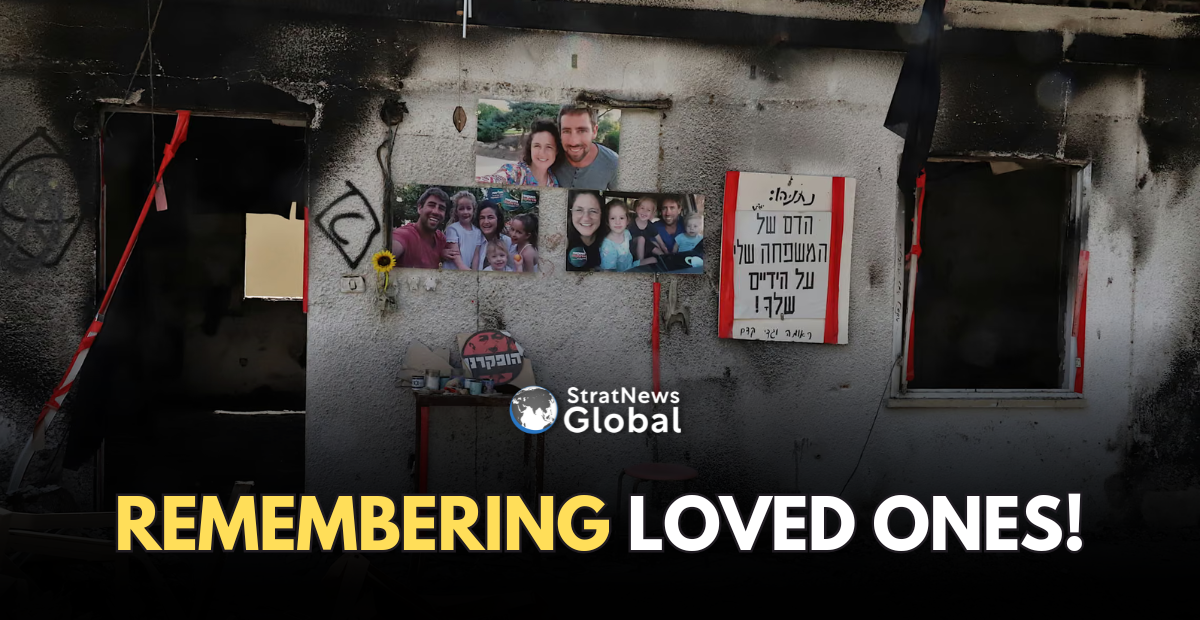

Israel is marking the third anniversary of the Oct 7 Hamas attack in which over 1,200 people were killed and 251 others taken hostage. Across this small nation of less than 10 million people, memorial ceremonies were held, beginning with a minute’s silence observed early this morning when the attack started.
The national flag was lowered in the Kfar Aza kibbutz where an estimated 250 militants comprising Hamas and Palestinians massacred 62 people. Over two days, they shot and killed civilians, sexually assaulted hostages and burnt homes. By the time the Israeli army entered the kibbutz, the militants had done their worst.
People went in large numbers to the site of the Nova festival, where 378 mostly young people were killed and 44 taken hostage.
Justice for Victims
Israel launched a military offensive on Gaza in response to this attack by Hamas. The offensive saw much of Gaza reduced to rubble, with at least 74,000 people killed; that’s according to the Hamas-controlled health ministry.
There was grief mixed with anger over what is seen as the politico-military failure that led to so many Israelis losing their lives. Anti-government protestors dyed red the fountain in Tel Aviv’s Dizengoff Square to remind the country of the lives shed.
Others demanded justice for the victims, and still others had posted pictures of Prime Minister Netanyahu with the words guilty written across. There have been public demands for an inquiry into the Oct 7 attack, which Netanyahu has avoided.
Israel’s Ongoing Operations
Although a ceasefire has been in place for a year, Israel continues to carry out military operations in Gaza “to remove threats and protect its troops and Israeli civilians, in accordance with the agreement”.
Elections are due in Israel on the 27th, and it’s unclear whether the public is ready to forgive Netanyahu for the Oct 7th lapse. All eyes appear to be on his challenger, Gadi Eisenkot, a former army commander who lost his son in the fighting.
Eisenkot is of Moroccan origin and, if elected, would be the first Mizrahi or Middle Eastern prime minister to lead the country. Until now, they have all been Ashkenazi or European Jews.
(with inputs from Agencies)