
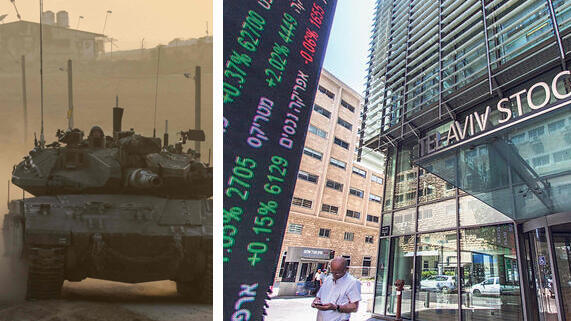
Three years of war have left deep scars on the State of Israel and its people, with trauma whose effects will remain for many years to come. Yet in at least one area, Israel has demonstrated remarkable vitality: its economy, and particularly its financial markets.
Israel’s gross domestic product grew by nearly 10% during this period, while the stock exchange’s flagship TA-35 index surged by no less than 130%. The TA-125 index, which comprises the 125 stocks included in the TA-35 and TA-90 indices, jumped by 120%.
These are impressive gains in their own right, but they are even more striking when compared with the world’s largest stock market. Since the eve of October 7, the S&P 500 has risen by approximately 80%, about 40 percentage points less than the TA-125. The Nasdaq has surged by about 101%, roughly 19 percentage points less than the Israeli index.
There is an important caveat. This is not to say that the war did not harm the local economy. Its cost was immense. According to Bank of Israel estimates, the cumulative loss of GDP from the start of the war through the end of 2025, relative to the pre-war growth trend, amounted to approximately NIS 177 billion, equivalent to 8.6% of annual GDP.
5 View gallery
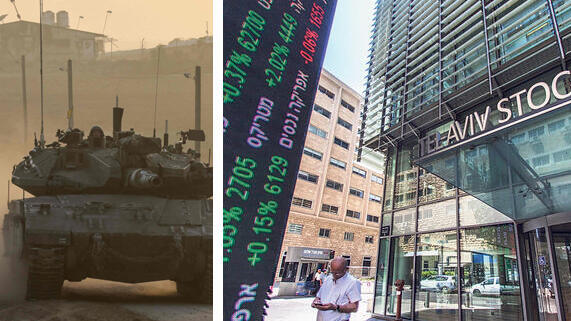
Tel Aviv Stock Exchange; IDF in Gaza
(Menahem Kahana / AFP, Bloomberg)
Nevertheless, the economy’s ability to continue growing and the stock market’s ability to surge during a prolonged war warrant examination. There have been countries that grew rapidly during and after wartime, such as the United States during World War II and the Korean War. But in those cases, the bulk of the fighting took place far from their own territory.
The war that began with the October 7 massacre played out across several fronts and directly affected Israeli territory and the home front. Despite this, the Israeli economy demonstrated resilience and financial markets recorded sharp gains.
There appear to be several contributing factors, though it is doubtful that any single one would have been sufficient on its own. We will not attempt a detailed analysis here, but will briefly examine some possible explanations. Foremost among them is the hard-earned experience the Israeli economy has accumulated in recovering rapidly from security-related shocks.
The economy’s starting position likely played a role as well. Israel entered the war with an excellent debt-to-GDP ratio of approximately 60%. War-related expenses and expanded military mobilization subsequently pushed that figure to nearly 70%.
The high-tech sector, one of Israel’s primary growth engines, is capable of maintaining a significant portion of its operations even under wartime conditions, thanks in part to remote work capabilities and its engagement with global markets. Defense industries and the cyber sector have provided an additional boost, driven by substantial state demand and the military buildup across Europe following Russia’s invasion of Ukraine.
Regarding high-tech’s contribution, Yonie Fanning, chief strategist at Mizrahi Tefahot, notes that “the Israeli economy’s growth engine was, of course, the primary driver of expansion, with current service exports running nearly 30% higher than pre-war levels. However, questions arise regarding the underlying dynamics. As is often the case with ‘geese that lay golden eggs,’ there is a certain mystique surrounding the ‘diet’ credited for this success, factors such as the state of education, Israel’s international standing, and investments in the local high-tech sector. In reality, it is difficult to claim that any of these driving factors have actually improved.”
Fanning adds that the slump in services exports was recorded, unsurprisingly, around November 2023, when the data showed a 9.2% year-on-year decline. A month later, the figure had already shifted into slightly positive territory. Despite the various rounds of fighting, missile attacks, school closures and other disruptions, the series recorded a year-on-year contraction in only eight of the 32 months of the war for which data is available.
Naturally, one must also factor in more moderate trends, such as defense exports, which account for roughly 25% of services exports and have benefited from the global security environment. But the bottom line is driven, no less than in the high-tech sector, by internal Israeli momentum, however that may manifest itself.
Alex Zabezhinsky, chief economist at Meitav, offers his own explanation for the stock market rally. He notes that between mid-2024 and April of this year, the TA-125 outperformed the MSCI World Index, which is composed primarily of US stocks, by 70%. Overall, since the start of the war, it has posted a 40% higher return.
“We haven’t seen such a significant lead since 2009. How can this gap be explained? Israel’s situation did not improve during that period, neither in terms of security nor strategy. The conclusion may be that financial markets act as a mechanism for measuring shifts in expectations rather than reacting to the current reality. The highest returns often emerge precisely when fear is at its peak. This happened during the financial crisis, the COVID-19 pandemic, and now during the war here.”
Tel Aviv Stock Exchange: Who rose, by how much, and who lagged behind
The stock exchange is surging ahead even though it is not heavily weighted toward technology. While a fair number of high-tech companies trade there, their weight in the leading indices is relatively low. Most local high-tech firms are private, while many of the largest publicly traded Israeli technology companies trade primarily overseas.
It is therefore worth examining which sectors drove the exchange forward and which contributed less.
Among the sectoral indices, the TA-Insurance index stood out above all, jumping 490% over the past three years. The rise was driven by factors including the high-interest-rate environment and consistent improvements in financial results, a combination that attracted significant investment from abroad.
The TA-Banks index also outperformed the TA-125, surging more than 140%. The TA-Industry index rose 120%, TA-Technology climbed 105%, and the TA-Oil & Gas index gained 85%. TA-Real Estate lagged far behind, with a 55% increase.
A notable omission from this comparison is the TA-Defense index. The reason is not its performance but its age. The index was launched only in November 2025, meaning it does not have a sufficiently long trading history for this comparison.
The stocks comprising the index nevertheless posted sharp gains during the period under review, driven by the factors already mentioned: massive state demand and a global arms buildup.
NextVision stood out above the rest. Shares of the miniature camera manufacturer surged 965% over the past three years, the steepest rise among TA-35 and defense-sector stocks. Elbit Systems, Israel’s largest publicly traded defense company, recorded a 200% gain over the three years of the war.
The country’s five largest insurance companies are included in the TA-35. Harel led the group with a 658% surge, securing second place in the index. Menora Mivtachim rose 585%, Phoenix 440%, Clal Insurance 425%, and Migdal 355%.
Among bank stocks, Leumi led with a 177% jump since the start of the war. Hapoalim rose 172%, Mizrahi Tefahot 100%, Discount 95%, and First International 75%.
Also standing out at the top of the TA-35 was the stock of the Tel Aviv Stock Exchange itself. It surged 635% to claim third place in the index, driven by the local market boom and sharp growth in exchange activity, reflected in trading volumes.
In 2023, average daily turnover in the equity market, including ETFs, stood at NIS 1.998 billion. In 2024, it climbed 10% to NIS 2.198 billion.
The following year, trading volume surged by 57%, with average daily volume in 2025 reaching NIS 3.45 billion. By the first half of 2026, it had reached NIS 5.7 billion, a jump of approximately 65% compared with the 2025 average.
This sharp rise in trading volume and stock prices helped drive the surge in the exchange’s share price, propelling it into the TA-35 during the most recent semiannual index rebalancing in May.
Before concluding this section, it is worth noting that only two TA-35 stocks ended this three-year period with negative returns: ICL, which lost 18%, and NICE, which fell 46%. During this period, in late 2024, NICE CEO Barak Eilam, who had transformed the company into a successful international enterprise, stepped down.
The hostilities that began in October 2023 triggered an unprecedented wave of government bond issuance to finance defense expenditures, driving yields higher as the deficit widened and the country’s risk premium increased. At the same time, the corporate bond market demonstrated resilience, recording strong demand from institutional investors that led to a rapid narrowing of credit spreads.
The immediate need to finance combat costs, the rehabilitation of affected communities and reserve duty payments compelled the Ministry of Finance to significantly increase the volume of bond issuance. The high supply of government debt, coupled with the sharp rise in the state’s structural deficit, exerted persistent pressure on the local yield curve.
At the same time, credit rating downgrades by international agencies translated into an increase in Israel’s risk premium, as reflected in credit default swaps. Investors demanded higher yields, and therefore lower prices, to hold government debt, particularly long-duration bonds.
This dynamic led to high volatility and price declines across government bond segments. The anticipation of monetary stability from the Bank of Israel and the stabilization of interest rates around 4% provided the market with some support.
The yield on Israel’s 10-year government bond rose from approximately 4.3% on the eve of the war in October 2023 to a peak of over 5.1% during 2024, before stabilizing around 4.08%.
Since October 7, 2023, the yield on the US 10-year government bond has also exhibited a sharp and volatile upward trend, climbing from around 4.7% at the time to a peak of approximately 5.34% by early October 2026. This surge to levels unseen since 2002 was driven primarily by persistent inflation, soaring energy prices and growing investor concerns over the widening US fiscal deficit.
Similarly, the UK’s 10-year government bond yield has risen sharply and remained volatile since October 7, 2023, climbing from about 4.6% at the time to a range of 5.24%-5.42% by early October 2026. The rise to these levels, the highest since 2007, was driven by a combination of persistent inflationary pressures in the UK, higher global energy prices, growing concerns over the widening deficit and the Bank of England’s continued high-interest-rate policy.
5 View gallery
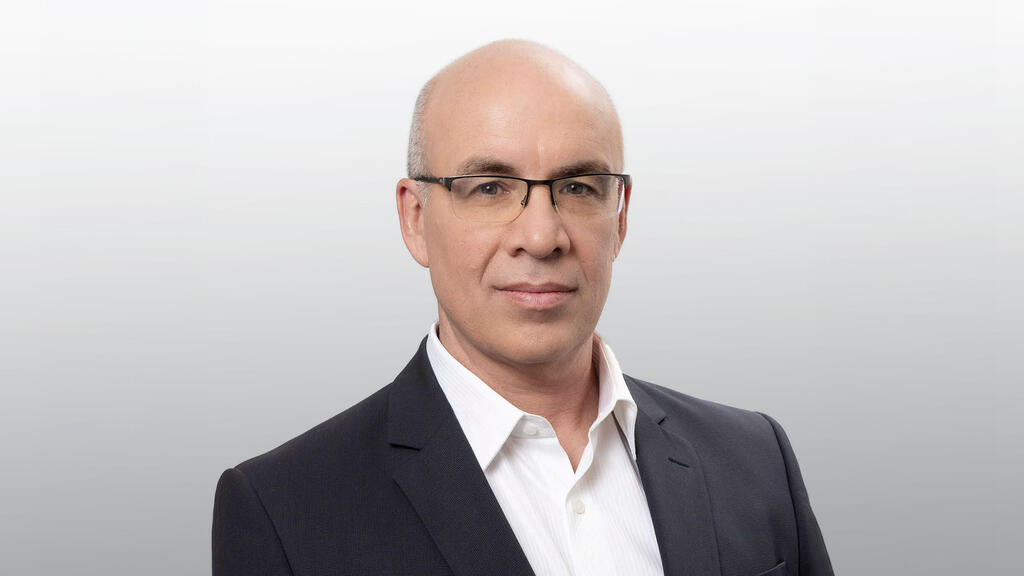
Alex Zabezhinsky
(Roi Mizrahi)
Corporate bonds: Record demand and institutional liquidity
In stark contrast to the volatility seen in government bonds, the corporate debt market demonstrated remarkable resilience, driven by the high liquidity of Israel’s institutional investors, including pension funds, provident funds and advanced training funds.
Seeking local investment alternatives with built-in protection, institutional investors generated record demand for bond issuances by major Israeli companies.
Leading firms, particularly banks and stable, income-producing real estate companies, capitalized on this market appetite to raise tens of billions of shekels. Driven by robust demand, credit spreads, the yield gap between corporate bonds and their government counterparts, narrowed rapidly after widening slightly at the onset of the war and eventually reached historically low levels.
The trend reflected market confidence in the repayment capacity of major local companies, making corporate bonds one of the more stable and attractive assets in investment portfolios throughout the period.
Saar Weintraub, deputy CIO at Altshuler Shaham, notes that “the Israeli bond market entered October 7 following a prolonged period of weakness.”
In the months leading up to the war, the debate surrounding judicial reform had already led to a decline in the value of Israeli assets and a rise in the risk premium, meaning the market started from a relatively weak position.
Nevertheless, following the initial reaction to the war, Israeli assets began a prolonged period of strengthening and falling yields, at times even when global yields were moving in the opposite direction.
“The watershed moment was the pager event. Until then, the market still carried with it a large part of the concerns built up in the months leading up to and during the war. After this event, a perception began to permeate that something fundamental is changing in the regional balance of power, and that the security developments may reshape the map of the Middle East. From that moment we saw a significant change in Israel’s pricing: the local assets got stronger, the shekel got stronger and later the bond market also performed very strongly, when the yields in Israel often fell in the face of an opposite trend in the global markets.
“In recent months, the interest rate cut by the Bank of Israel has also been added to this, which further strengthened the local interest rate market. For quite some time, we have seen a clear overperformance of the Israeli bond market in relation to the bond markets in the world. The local market benefits both from the improvement in Israel’s perception of risk and from an interest rate path that has become more supportive.
“Recently the picture has become more complex. The trend in the American bond market has become very negative, and yields in the US have risen to levels that make it difficult for the Israeli market to disengage as well. Therefore, despite the interest rate cuts in Israel and the relative strength demonstrated by the local market, we are already seeing upward pressure on yields in Israel as well.
“Added to this is the political uncertainty leading up to the election, so at this stage it is more difficult to continue the same sharp course of falling yields that we saw before. After a period in which the Israeli bond market clearly outperformed the world markets, it is now influenced to a greater extent by the global trend.”
5 View gallery

Saar Weintraub
(Eyal Nevo)
The strength of the shekel
The foreign exchange market tells a story that would have been difficult to imagine in the early days of the war, when the dollar surged past 4 shekels and the Bank of Israel took the unprecedented step of announcing that it would sell tens of billions of dollars to stabilize the market.
Three years later, not only have most of those dollars remained in the Bank’s foreign currency reserves, but the dollar is currently trading around 3.08 shekels, nearly 20% below its pre-war level.
On the eve of the war, the dollar was trading at 3.8388 shekels, following a significant depreciation of the shekel during 2023 driven by political uncertainty. With the outbreak of the war, the shekel weakened rapidly.
On October 9, the dollar jumped nearly 3% to reach 3.95 shekels, and on October 26 it hit a peak of 4.078 shekels, a rise of 6.2% in less than three weeks.
As early as October 9, the Bank of Israel announced a plan to sell up to $30 billion in foreign currency, alongside the option to inject up to $15 billion through swap transactions, in an effort to moderate volatility and maintain market functioning.
In practice, however, only a small portion of the Bank of Israel’s allocated resources was required. The Bank sold $8.2 billion in October and another $338 million in November, but ceased foreign currency sales from December onward.
Meanwhile, the shekel reversed course. By the end of December, the dollar stood at 3.6008 shekels, an 11.7% drop from the October peak and a level below that recorded on the eve of the war.
According to Shmuel Katzavian, chief strategist at Discount Bank, the Bank of Israel’s announcement itself was significant, even if it did not immediately halt the currency’s depreciation.
“The Bank of Israel’s announcement did not lead to a strengthening of the shekel in the days that followed, and the currency continued to weaken until nearly the end of October. Nevertheless, the announcement itself was highly important; it signaled to the market that the bank was prepared to intervene as needed and significantly reassured investors.”
He noted that while the intervention tempered the initial weakening of the shekel following the Hamas attack, it was not the factor that drove the currency’s strengthening over the subsequent three years.
Katzavian describes this three-year period as a transition from “initial investor surprise and fear” to an improvement in Israel’s strategic standing in the eyes of the markets and a resurgence of the structural factors supporting the shekel.
He explains that while the immediate reaction to October 7 involved foreign investors selling Israeli assets and a sharp depreciation of the shekel, as the war progressed, security developments were viewed more positively by investors.
This pattern was particularly evident around Operation True Promise, known in Israel as Operation Iron Shield. In the week leading up to the operation, the shekel actually weakened, driven by uncertainty and fears of a direct confrontation with Iran, but it strengthened sharply once the operation began.
According to Katzavian, a pattern emerged of “apprehension prior to the event, followed by a calming of the market once the event actually unfolded.”
A similar pattern characterized the situation on the eve of the ground incursion into Gaza, the eve of Operation Northern Arrows against Hezbollah, and the initial phase of Operation Roaring Lion.
“The shekel responded positively to the execution of proactive security measures by Israel that brought an end to periods of waiting and uncertainty,” Katzavian said.
In 2024, the shekel did not exhibit a consistent trend. The Bank of Israel described the exchange rate as volatile and heavily influenced by geopolitical developments.
By 2025, a clearer trend of appreciation had taken shape, with the shekel strengthening by approximately 6% against the dollar in the first half of the year and by a similar margin in the second half.
The pattern described by Katzavian was particularly evident during Operation Rising Lion. On June 13, the day the operation began, the dollar peaked at 3.68 shekels, but by June 16 it had fallen to 3.46 shekels, a drop of more than 3% in a single trading day.
5 View gallery
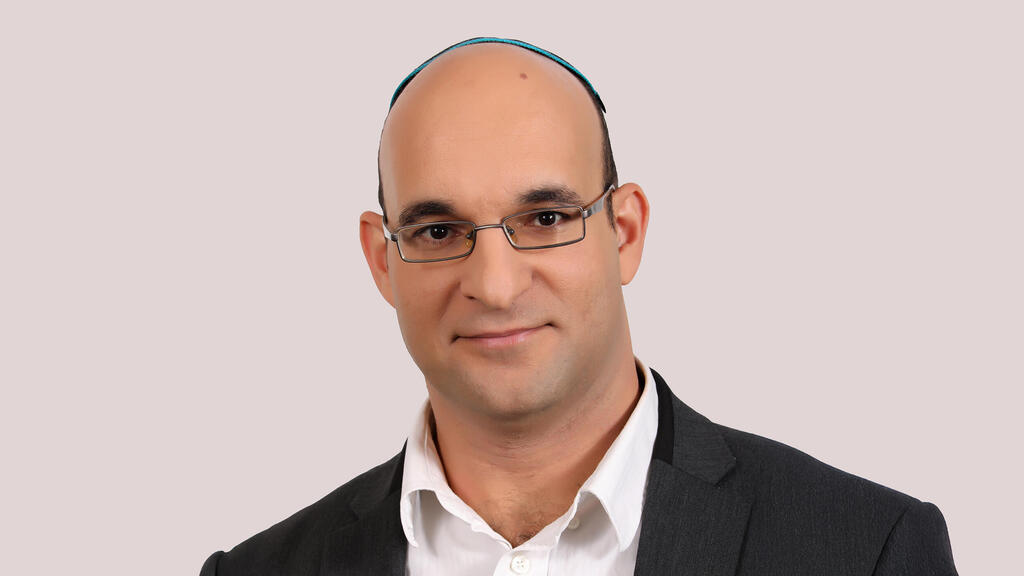
Shmuel Katzavian
(Ezra Levy)
It’s not just the war: Additional forces driving the shekel
Yossi Menashe, founder and co-CEO of Altshuler Shaham Financial Services, says that “one of the key insights from the past three years is that the security situation alone is insufficient to explain the currency’s trajectory.”
Alongside the decline in the risk premium, the activity of institutional investors is a significant factor in the foreign exchange market.
Pension funds, provident funds and insurance companies hold substantial assets abroad. When the value of these assets rises and their exposure to the dollar increases, these institutions sell dollars and buy shekels to maintain their desired hedging ratio. Consequently, gains on Wall Street can create additional pressure for the shekel to strengthen.
In 2025, institutional investors sold a net $20 billion in foreign currency, and in the second quarter of 2026 alone, they sold an additional $13.8 billion. During the same quarter, foreign residents also sold a net $6.4 billion in foreign currency.
According to Menashe, alongside the activity of institutional investors, other structural forces are also at play, including foreign currency inflows from exports, particularly in the technology sector, the domestic savings base and the influx of foreign capital into Israel.
“Over time, these forces can be more significant than the immediate reaction to a security or political headline,” he said.
5 View gallery
Yossi Menashe
(Rami Zranger)
It’s not just a weak dollar
Part of the decline in the dollar-shekel exchange rate can be attributed to the global weakening of the US currency, but only in part.
Between October 6, 2023, and October 1, 2026, the dollar fell 19.8% against the shekel, whereas the Dollar Index, which measures the US currency against a basket of leading currencies, fell by only 4.1%. At the same time, the euro also weakened against the shekel, dropping 14.4%.
In other words, even after accounting for the global weakness of the US currency, a significant appreciation of the shekel itself remains evident.
On May 29, 2026, the representative exchange rate for the dollar was set at 2.81 shekels. Compared with the peak of 4.078 shekels in October 2023, this represented a decline of nearly 31%.
Since then, the dollar has risen 9.3% from that low and currently trades at around 3.08 shekels.
According to Katzavian, April and May saw the sharpest two-month strengthening of the shekel against the dollar on record, with the exception of the final two months of 2023.
However, unlike the situation in late 2023, which involved a correction following the sharp depreciation at the outbreak of the war, this time the appreciation followed a prolonged period during which the shekel had already been strengthening.
According to Katzavian, the exchange rate of 2.81 shekels to the dollar was already “excessive” given the underlying economic conditions.
From selling dollars to buying them
One indicator illustrates the shift in the foreign exchange market over the past three years particularly clearly: the activity of the Bank of Israel itself.
In October 2023, the Bank sold billions of dollars to stabilize the market. By the second quarter of 2026, it had become a net purchaser of foreign currency, buying approximately $1.8 billion.
In less than three years, the market had swung from fears of a sharp depreciation to a situation in which the shekel was trading at its strongest levels in years.