
When Hamas struck across multiple locations in Israel on October 7, 2023, there was a sense of disbelief, shock, and fear. Israeli intelligence had been tricked, and the military had been caught off guard. But Israel recovered in an instant and launched a massive counterattack into Gaza. Driven by a collective sense of rage and revenge over the brutal killing of 1,140 people and 251 hostages in the terror attack, Israel vowed to eliminate Hamas from the face of the Earth and raze Gaza to the ground. It was also felt that a crucial red line had been crossed this time and that the episodic nature of conflicts in Gaza or the West Bank, like in the past decade, could not be allowed to happen anymore. The threat had not only to be dealt with but eliminated forever.
What followed thereafter was the most brutal and punishing military campaign by the Israeli Defence Forces (IDF), eliminating Hamas, entering and occupying Gaza, cutting off food, water, and medical supplies to Gaza, and destroying weapon caches and hideouts of Hamas deeply buried in an extensive underground tunnel network. The IDF operations, however, did not remain limited to Gaza. It took on all threats on its borders – Hezbollah in Lebanon, Palestinian Islamic Jihad (PIJ) and its affiliates in the West Bank, and the Shiite militias in Syria and Iraq. Over the course of the next two years, Israel and Iran exchanged missile and drone strikes more than once, culminating in the ‘12-Day War’ in June 2025, when the US joined Israel and bombed Iran’s nuclear sites. Even Houthis operating from Yemen were in the crosshairs of the IDF. And, as the Israeli Prime Minister said on 6th October 2024, on the eve of the first anniversary of 7th October, Israel was fighting a ‘Seven Front War’.
When the ceasefire finally took effect on 10th October 2025, Israel had succeeded to a large extent in its goals tactically, although a decisive strategic victory still eluded it. Hamas had been defeated and its key leadership eliminated, Hezbollah had been brought to its knees, President Assad in Syria had been ousted, and a former Islamic State (IS) terrorist, Al Sharaa, had been placed in command, PIJ was being hunted and destroyed in the West Bank, and even Iran had been targeted and its nuclear programme ‘obliterated’ in the 12-Day War. So, when Israel and the US launched pre-emptive strikes into Iran on February 28, 2026, the resistance should have been minimal and the victory quick and decisive. However, after seven months of war, the situation remains stalemated, Iran is defiant and holding on, the US has suffered heavy losses, and its pride has been hurt more than once as the Strait of Hormuz remains blockaded and the Gulf nations are utterly disappointed at the failure of American security guarantees.
Although Israel has largely stayed out of the war in Iran after the first 40 days, its fight in its neighbourhood continues and, on most accounts, it still faces serious military challenges. The question thus arises – has Israel’s initial success over its enemies across the ‘Seven Fronts’ in the Gaza war resulted in decisive gains? Has the Iran-led and supported ‘Axis of Resistance’ been defeated or is it resurgent once again? To explore these questions, a brief examination of each component of the Axis may be useful.
Hamas
The primary target of Israel was Hamas, and it did achieve tremendous success over the next two years. Thousands of its cadres were killed. Its chief, Ismail Haniyeh, was assassinated in a targeted strike on 30th July 2024 in Tehran, while its main military leader, Yahya Sinwar, was killed in an encounter in Gaza on 16th October 2024. The ‘Gaza Metro’, the extensive tunnel network of Hamas in Gaza, was destroyed to a large extent and control over the Gaza crossings meant that Hamas was deprived of crucial supplies into Gaza. Has the Hamas threat been therefore eliminated? The answer is, sadly, ‘No’.
Both Israeli and US intelligence agree that Hamas has been able to recruit more than 20,000 fresh cadres over the past two years. Despite continued restrictions at the entry points, including the crucial Rafah Crossing into Egypt, as well as control over more than 70% of territory in Gaza, the IDF has not been able to eliminate the Hamas threat. In encounters and ambushes since October 2025, reports indicate that at least seven IDF soldiers have been killed, while many more have been injured in Hamas ambushes. Hamas still retains its weapons and, despite efforts by the Board of Peace (the governing body appointed to oversee peace efforts in Gaza), no forward movement has happened on disarming and demilitarisation of Hamas in Gaza yet.
Hezbollah
Hezbollah was completely decimated in the Gaza war. To start, its senior military commander and No. 2 in the hierarchy, Faud Shukra, was assassinated in Tehran on 30th July. The pager attacks on 17th September, successive elimination of senior leadership culminating in the assassination of its charismatic leader Hassan Nasrallah on 27th September 2024, was the final nail in the coffin, beyond which there was no hope that Hezbollah would recover. When it signed a ceasefire deal in November 2024, it was supposed to be the end of Hezbollah as we knew it. The ouster of President Assad in Syria also added to the effect, as it cut off a crucial supply route to Hezbollah from Iran. What happened thereafter? Did Hezbollah collapse? The answer, once again, is ‘No’.
The resurgence of Hezbollah in March this year, coming out in full support of Iran, took Israel by surprise once again. Israel was not only forced to divert its critical military resources to the North but was forced once again to launch ground operations against Hezbollah. Over the next 40-odd days, bitter battles were fought in Southern Lebanon before the first ceasefire was agreed to on 17th April. Despite overwhelming military superiority, the IDF could not make the desired territorial gains and was, at many places, beaten back by Hezbollah counterattacks. As per most reports, the IDF has already lost more than 33 soldiers in this sector, with many more seriously injured. The stalemate on the ground continues as Hezbollah continues to hold on and the IDF is still deprived of a decisive victory.
Iran
When the 12-Day War ended in June 2025, most Western analysts claimed that Iran was down and out. Therefore, when Israel and the US launched pre-emptive strikes into Iran on 28th February, it was expected that Iran would be overcome in a few days and weeks. However, the Iranian counterstrikes and the asymmetric strategy adopted by Iran have upstaged all calculations and, even after seven months of unending war, Iran still stands defiant. Military options have been followed by economic sanctions by the US under ‘Operation Economic Outcast’. The naval blockade is severely affecting Iranian oil exports, but once again, a stalemate continues, and the US is running out of options to defeat Iran, even as the global energy crisis continues to worsen.
Houthis
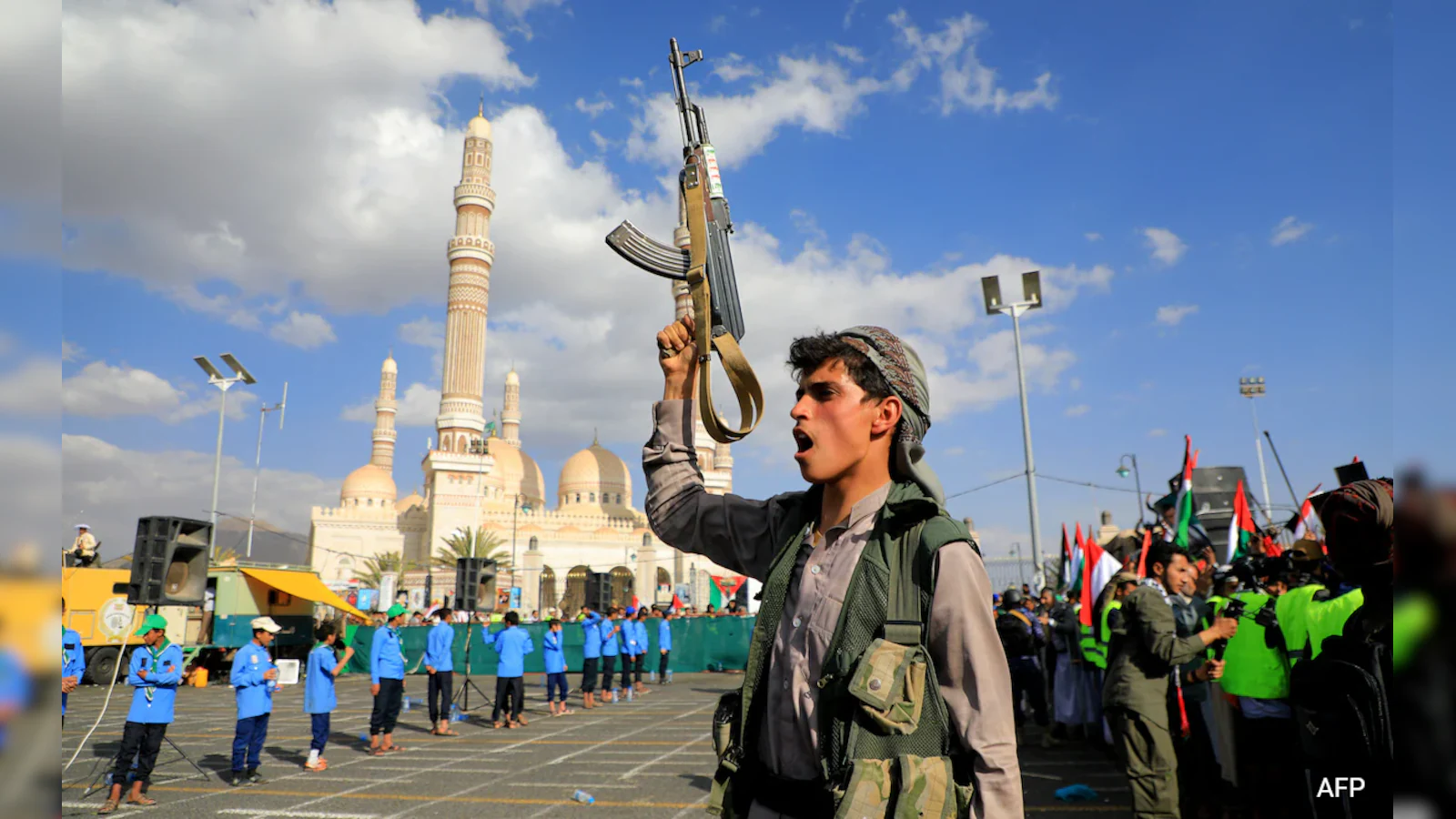
The Houthis, who had largely stayed out of the Iran war except for an occasional missile strike attempted into Israel, have opened an unexpected and probably an uncalculated front. Its offensive against the Saudis since August has caused heavy destruction to Saudi energy assets and its military advance has meant that the Houthis have control over the Bab-al-Mandeb, the crucial maritime choke point in the Red Sea through which Saudi Arabia was exporting the majority of its crude oil. The US has so far refused to enter this conflict, and the countries in the Mecca Pact – the tri-nation security alliance between Saudi Arabia, Turkey, and Pakistan – are still getting their act together, even as Saudi Arabia is fast losing territory as well as control over its energy infrastructure. The ability of the Houthis to successfully target Riyadh International Airport and other major cities and ports has been a major embarrassment, too.
Others in the Axis of Resistance
Others too in the Axis seem to be resurgent. In Iraq, with the full withdrawal of US forces from Iraq on September 30, the Popular Mobilisation Front (PMF) and other militias are likely to get a new lease of life under a weak Iraqi government and strong Iranian support. Already, there have been a number of incidents when missiles and rockets from these militias have inflicted huge damage on American forces. In the West Bank, the clashes between the IDF and the PIJ and its affiliates continue with no decisive victory and, in Syria, the Al Sharaa government has slowly started asserting itself. He raised the issue of regular Israeli incursions into Syria at the UN General Assembly last month, saying that it violates Syria’s territorial integrity and sovereignty. Plus, the occupation of the Golan Heights by Israel too is likely to become a conflict point.
Three years since the start of the Gaza war, the number of conflicts in the region has only increased. Although the ceasefire continues to hold in Gaza, the war has not yet ended. In Southern Lebanon, the possibility of conflict resuming at any time remains strong. Plus, the war in Iran continues with no quick solutions. And, the Houthis’ offensive against the Saudis has not only added another layer to the complicated security situation in the region but has also highlighted how the various components of the ‘Axis of Resistance’ are not only alive but are resurgent. Iran has been badly battered and bruised and its economy is in a steep dive, but its collective national pride and the regime’s instinct for survival are keeping it afloat.
As we commemorate the third anniversary of the Hamas terror attack of 7th October, there are larger questions to be asked. Has military superiority yielded the desired results for Israel and the US? What is the future of Gaza if the Board of Peace does not make any major headway? What about the cost of the war, especially the 74,000 people killed in Gaza so far? Has Iran been defeated? If not, what is the solution – continued military strikes or a negotiated settlement? Was it a war for the US to fight in Iran, to start with? And many more questions. Meanwhile, the conflicts continue across the region and the ‘Axis of Resistance’ slowly recoups and resurges.
(Col Rajeev Agarwal is a foreign policy and security expert and author of book, ‘Between Tehran and Tel Aviv: Gaza’s Story of Unending War’)
Disclaimer: These are the personal opinions of the author