
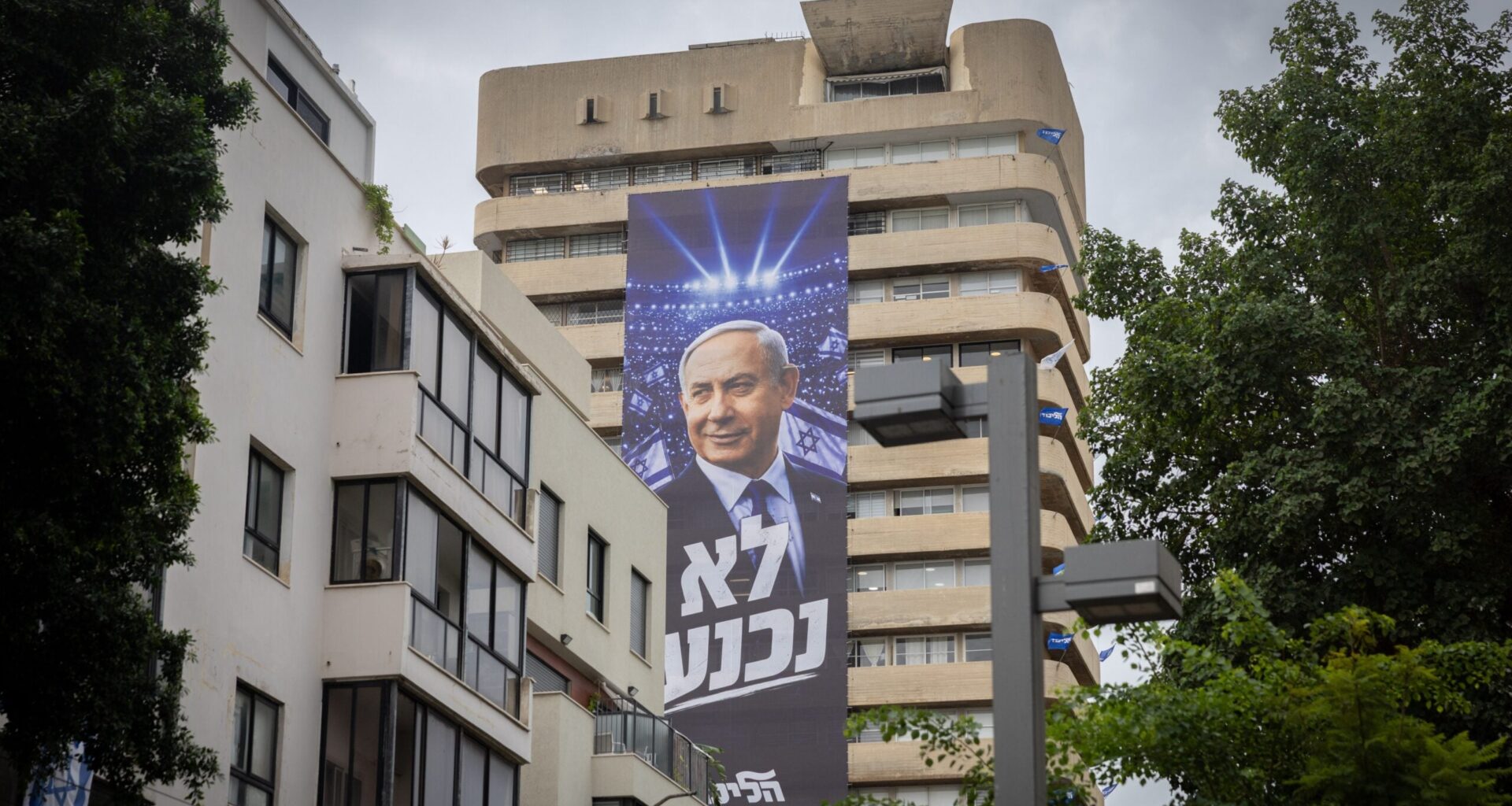
JERUSALEM – For all that Oct. 7 transformed life in Israel, there is one notable place that still appears stuck: politics.
Three years after Hamas’s devastating attack, the massacre and the wars that followed dominate the political campaigns for Israel’s Oct. 27 election. Yet according to political analysts and the latest polling, they have done little to redraw the country’s political map or change the odds of Prime Minister Benjamin Netanyahu staying in power.
The events, instead, have served to strengthen people’s convictions and further cement the political blocs: one led by Netanyahu, the other by opposition parties and their leaders, primarily former IDF chief of staff Gadi Eisenkot.
A survey by the Israel Democracy Institute (IDI) published last month, ahead of this week’s anniversary, did find that most Jewish Israelis (68%) say Oct. 7 is a central factor in who they are voting for.
However, Tamar Hermann, the institute’s leading public opinion expert who carried out the survey, said Oct. 7 had in effect pushed people “deeper into the political camps they were originally in.”
“It’s been three years since the Oct. 7 attack, something that, of course, made an entire society post-traumatic, but will it really make people decide which party to vote for? I doubt it,” she said.
“Most of the facts are already on the table, and it is the interpretation of the events that influences people’s decisions,” Hermann said. “The main question is which interpretation does one adopt?”
According to the polls, which in Israel are generally commissioned and published by mainstream news channels, it’s unlikely the pro-Netanyahu bloc or the opposition bloc will be able to garner the 61 seats needed in Israel’s 120-seat parliament, the Knesset, to form the next government.
One poll published Monday by Channel 12 News found that the coalition of five parties supporting Netanyahu would receive around 49 seats, while the four parties that make up the opposition bloc, also dubbed the “change bloc,” would win 54. Most of the other polls offer similar results, with only one, conducted by the pro-Netanyahu Channel 14, putting him in the lead.
A bloc needs at least 61 seats to form a fairly stable government. Parties representing the country’s Arab sector and two new parties that are vying for a place in the next Knesset are not considered part of the blocs.
Since early July, when the election was first called, fresh allegations about failures leading up to Oct. 7 haven’t moved the needle.
Over the past few weeks, as the election race has heated up, new information has come to light. An investigation by the Israeli daily Haaretz, backed by reporting in The New York Times, suggested that Netanyahu received a warning about the impending Hamas attacks from United Arab Emirates President Sheikh Mohamed Bin Zayed.
Another investigation by The Atlantic reported that Egypt’s intelligence chief made an emergency trip to Israel days before the attack, with warnings about Gaza. Netanyahu has denied those allegations and initiated defamation proceedings against Haaretz.
Similarly, the Sept. 30 attempted hijacking on a flydubai flight to Tel Aviv, which has since raised some serious questions about the current security establishment and government procedures, appears not to have had too much impact on the polls, which have remained stable since the start of this election cycle.
Each new revelation or piece of information, particularly those relating to Oct. 7, only serves to support already-existing narratives, Hermann said.
“The anti-Netanyahu camp tries to remind people of Oct. 7 as a political issue… they try to convince voters that Netanyahu was the one to be blamed for it,” Hermann theorized.
“On the other side, they are asking ‘why now?’ and the answer is that the new piece of information is being revealed right now as part of a campaign to topple Netanyahu,” she said.
Hermann pointed out that the rifts in Israeli society were there before Oct. 7.
This election, she said, is more about “the vision for Israel’s future, about its Jewish character, how prominent it should be, and whether it goes hand in hand with a democratic regime?”
Ilana Shpaizman, a senior lecturer in the Department of Political Studies at Bar-Ilan University, said it is clear that Oct. 7 is playing a central role in the debate, especially for the opposition.
Apart from the B’yachad party led by former prime ministers Naftali Bennett and Yair Lapid, Shpaizman said none of the other parties had particularly strong policy platforms other than saying “we need better leadership” or calling for everyone who was in power on Oct. 7 to “go home.”
As for the coalition, she said, their campaign is to avoid talking about Oct. 7 because they know it’s their weak point.
Their emphasis, Shpaizman said, is on what has happened after Oct. 7, the military successes against Hamas, Hezbollah and Iran.
“They’re trying to portray Netanyahu as the person who changed the landscape in the Middle East,” she said.
While the debate around Oct. 7, responsibility and the highs and lows of the war feature prominently in election campaigns, Gideon Rahat, a political scientist at Hebrew University of Jerusalem, says Israel’s election boils down to “identity.”
“You would expect the election debate to be about responsibility [for Oct. 7], but really it is all about identity,” Rahat said.
“People who have a religious identity and, for some, a Mizrahi [eastern] identity, will vote for Netanyahu whatever happens, and on the other side, it is the same — even if Netanyahu had really succeeded in this war, many secular people, or Ashkenazi people, will never support him.”
Rahat, who is also a senior fellow at the IDI, said the divisions also run into the realm of “affective polarization,” a political concept where the divisions are driven by emotional hostility, dislike and social distance between supporters of different political camps, rather than just disagreements over policies.
“Politics in Israel is highly personalized, it’s highly polarized, and highly populist… and identity politics is linking to this type of politics very well,” he said.
Even with views so entrenched and divisive, Rahat noted that support for Netanyahu has appeared to have fallen since the last election, which was held in 2022. In that vote, the coalition succeeded in gaining a majority of 64 seats. The same coalition now, he said, barely reaches 52, depending on the poll.
“They lost some support, but still the other side does not have a majority, so that’s the big story,” said Rahat.
As the Year Turns, Support the Journalism You Trust. JTA covers the stories shaping Jewish life around the world — with the depth this moment calls for. As you reflect on the year ahead, consider a gift that keeps independent Jewish journalism strong.
One-time
Monthly
Choose an amount to donate
$72$180$360$500
Support Us