
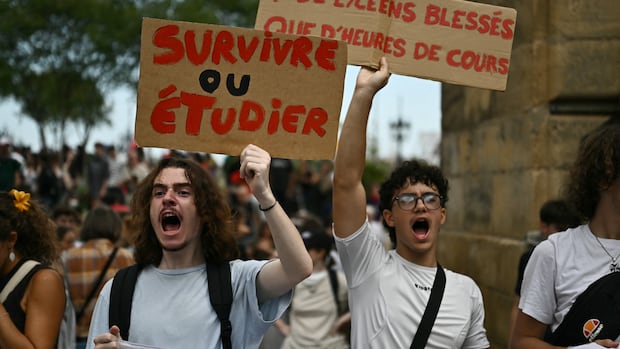
France has been thrown into crisis as student-led protests erupted across the nation, calling for better conditions for learning and for the government to address a decade-long staffing shortage.
Protests began at a Paris-region high school in mid-September, soon growing into a nationwide movement. More than 250,000 people took to the streets on Tuesday, including 56,000 in Paris, the Interior Ministry said, in the demonstration’s biggest day yet. (Organizers put the number higher, at 450,000.)
The rallies have led to widespread school disruptions, arrests and violence, with police deploying tear gas and other riot-control weapons against crowds of mainly teenagers — angering their parents and teachers and prompting them to participate.
It represents the latest test for outgoing President Emmanuel Macron. His prime minister Sébastien Lecornu addressed the nation on Wednesday night, pledging to introduce new measures by the end of the month. A platform for students to voice grievances, launched on Tuesday, has already received some 40,000 submissions.
Here’s a look at what we know so far about the protests — and how they became so widespread.
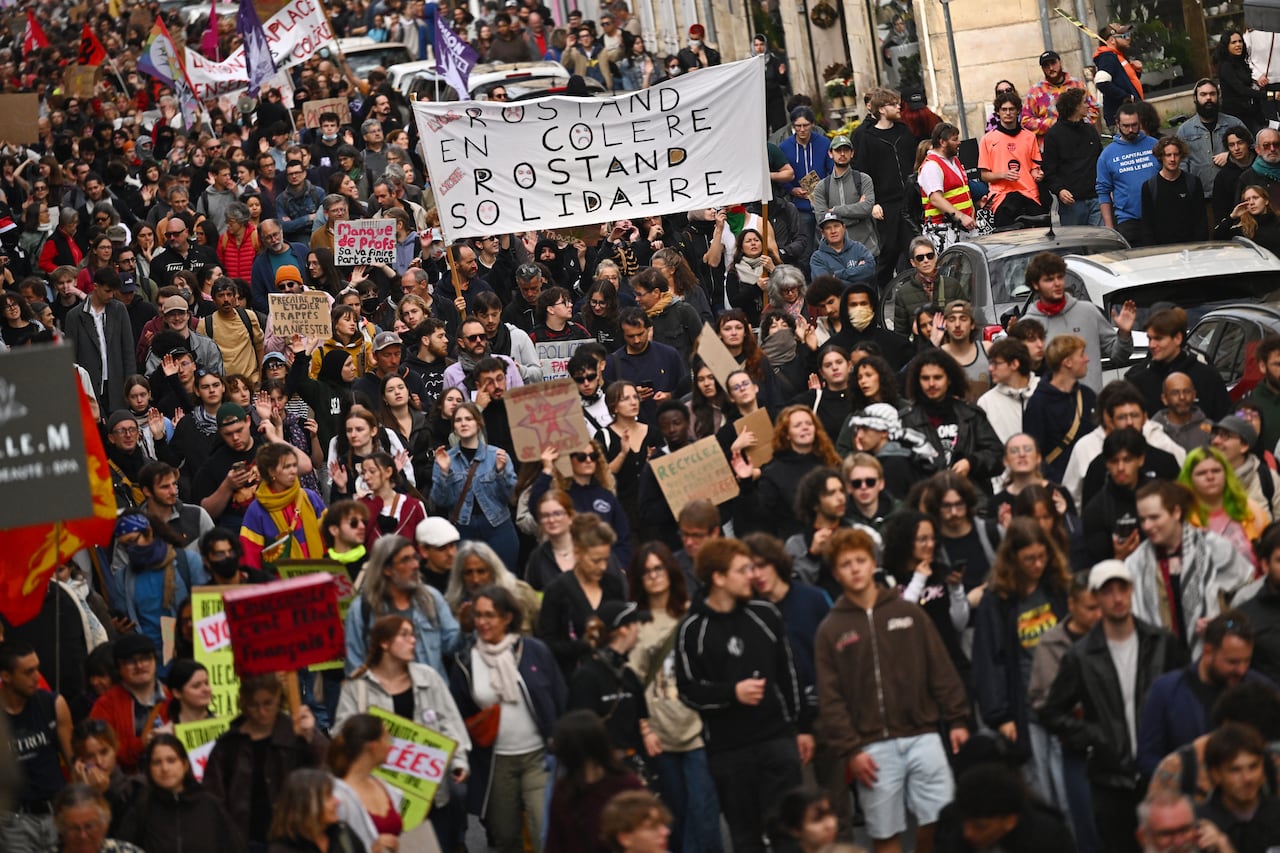
Protesters hold a banner reading ‘Rostand angry, Rostand supportive’ during the protest in Caen, France, on Oct. 6. (Guillaume Saligot/AFP/Getty Images)
Why are they protesting?
Many high school students say the state of their learning environment is poor, from decaying infrastructure to a lack of personnel. More than half of all schools are short-staffed this year, according to a survey conducted by a secondary school teachers’ union.
The shortage has affected public education in France for close to a decade. The chronic failure to replace absent teachers or hire substitutes means students can miss hundreds of hours of instruction.
They are fed up with overcrowded classrooms, as well, which have increased to an average of 25 to 30 students a class.
Students also describe dilapidated buildings, pest infestations — including cockroaches and rats — and uninsulated classrooms severely affected by temperature shifts, particularly during recent heat waves.
“In the summer, it’s 35 degrees,” said Rudy Cuvilliez, who studies in the Paris suburb of Pantin. “And we’re, like, 30 to 35 students in every class, so it’s unbearable!”
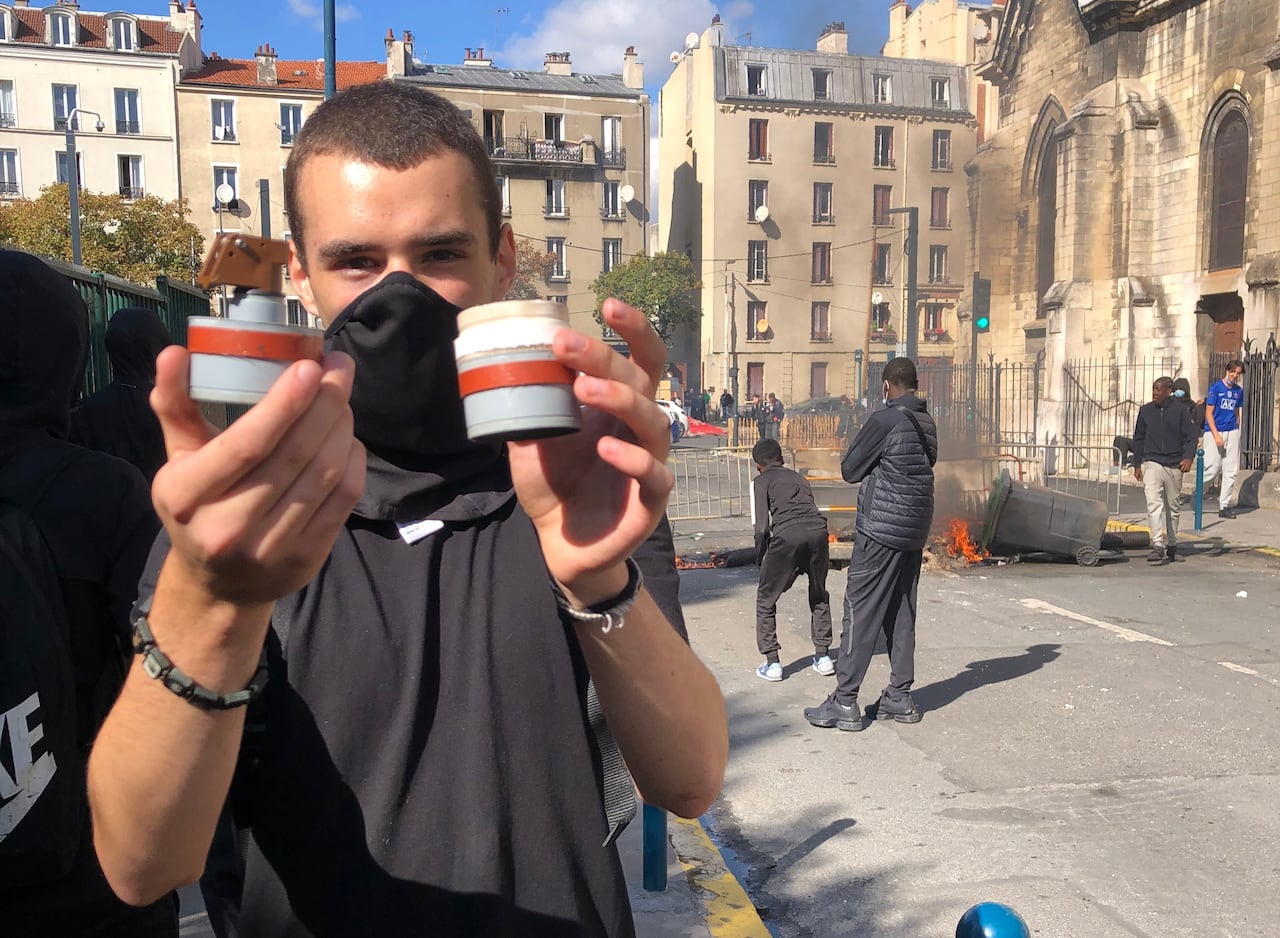
Rudy Cuvilliez, who studies in the Paris suburb of Pantin, holds up canisters from tear gas he says police fired earlier in the day on Oct. 6. (Kyle G. Brown/CBC)
Students and their supporters have taken to the streets for weeks because they feel the government is doing too little, too late. The Education Ministry will receive an additional €1.2 billion in funding next year, but it will not be enough, according to opposition parties, who say the amount barely keeps up with inflation.
Why is the state of schools so poor?
The French state spends more on education than on any other ministry, but it has not kept up with a sharp increase in the youth population, expected to peak in 2028.
The movement originated in the suburbs of the greater Paris region — areas historically underserved and facing significant growth. There are considerable regional disparities, with Île-de-France spending less than any other region in the country.
Schools in higher-income areas benefit from parents’ contributions, while those in underprivileged areas often lack resources.
WATCH | Students say education system is underfunded: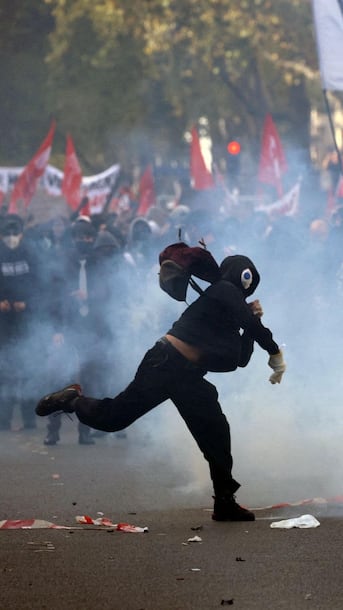
Why thousands of high school students in France are protesting
Police fired tear gas and water cannons at protesters blockading French high schools — as students, teachers, parents and unions took to the streets against what they say is underfunding of the education system. Rights groups and students have accused authorities of using disproportionate force against minors. The government has responded to the demonstrations with riot police and says the movement has been hijacked by outsiders and morphed into urban violence.
Meanwhile, administrative and contracting procedures can be complex, meaning that even repairs that have been financed can take a long time to carry out.
As for personnel, teachers are not valued as they once were — entry-level salaries were more than double minimum wage in 1980; now, they are only just above the minimum.
“The government has not really made an effort to make the profession attractive,” said Agnès Van Zanten, a senior research professor emeritus at France’s National Centre for Scientific Research, “such as by raising salaries, for instance.”
What do the students want?
Many want to see large-scale recruitment of teachers, school nurses and teaching assistants. Students, particularly in the banlieues, or economically deprived suburbs, call for urgent repairs and renovations to school buildings.
Recent educational reforms have resulted in longer school days, often extending from 8:30 a.m. to 6 p.m., which many find onerous.
But students should be careful what they wish for: The French school day is so long in part to compensate for lengthy school vacations — some 16 weeks compared to the European average of 14. Shortening school days may mean fewer holidays.
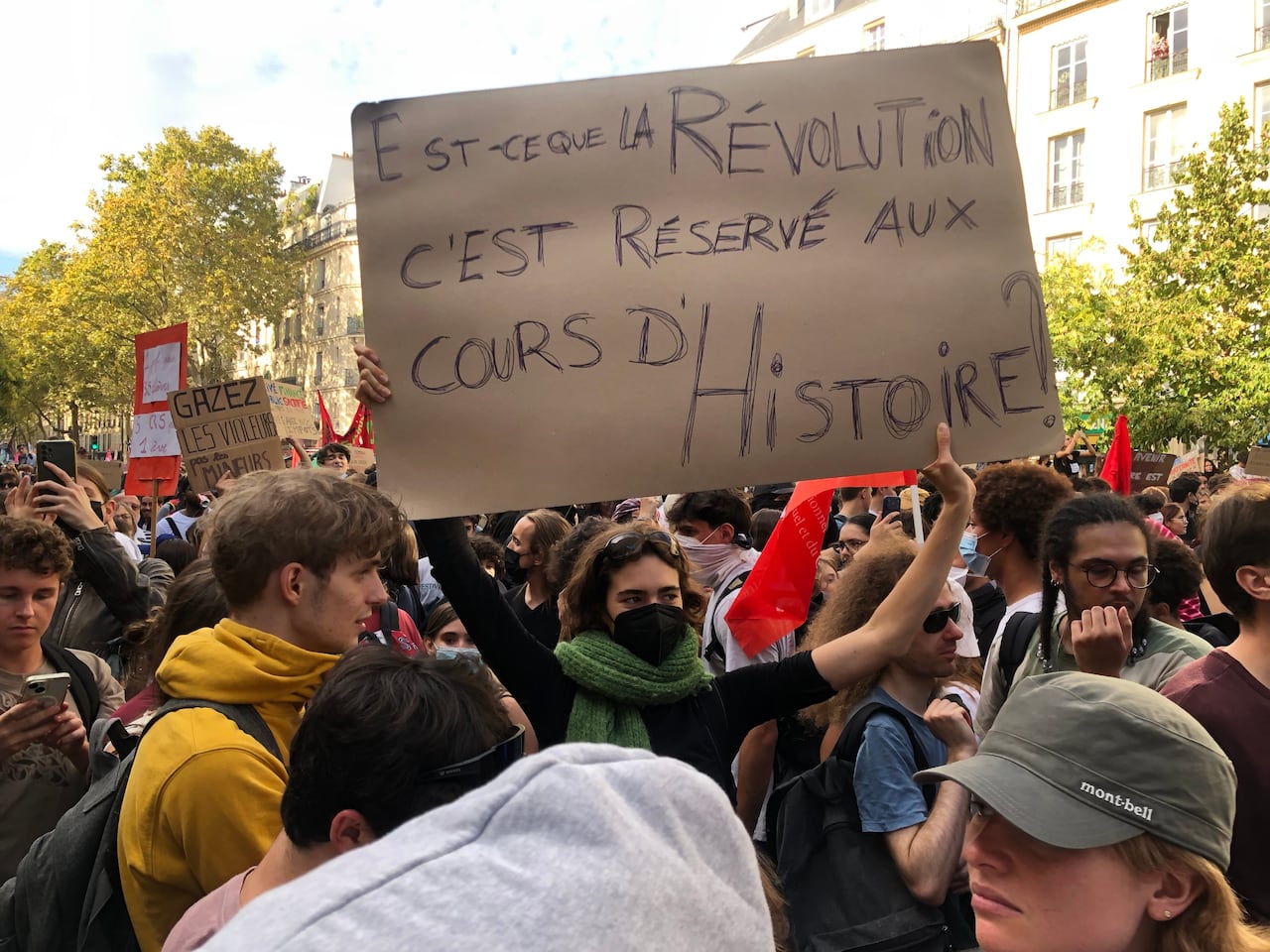
A protester in Paris holds a sign that says, ‘Is the revolution reserved for history classes?’ in French on Oct. 6. (Kyle G. Brown/CBC)
What keeps other students awake at night is “Parcoursup,” a national web platform where high schoolers can secure a place in a higher education institution. Students can list up to 10 schools of preference, with their marks and test results included in their applications.
How they are assessed, however, is a bit of a mystery, with critics calling for the repeal or overhaul of the process.
It was among the topics raised by students meeting with the national education minister last week, but they reached no agreement, and school blockades resumed.
Wracked by weeks of student protests and an increasingly broad base of support, the French government is now trying to rush through a number of reforms.
What disruptions have the protests caused?
Since the movement began last month, hundreds of schools have been blockaded. And while the majority of protests have been peaceful, some have been marred by vandalism and violence. Police have made more than 5,000 arrests so far.
More than 200 people have been injured since the student mobilization began, “whether in accidents … or due to injuries caused by troublemakers,” said Education Minister Édouard Geffray.
WATCH | Hundreds of schools remain closed: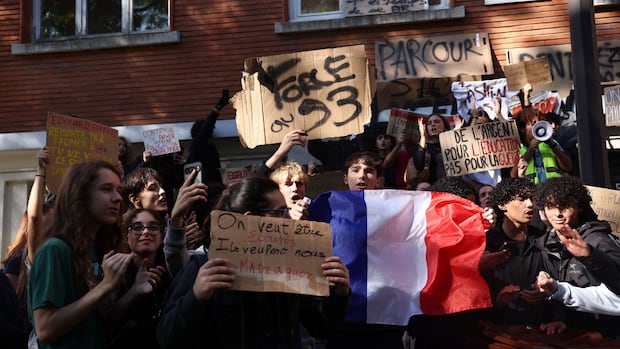
Up to 500 schools in France to remain closed amid student protests
Hundreds of French high schools began a second week of closures on Monday as protests over dilapidated schools and classrooms, overcrowding and teacher shortages spread across the country.
Police have also severely injured some people, including a youth who was blinded in one eye after being hit by a flash-ball. France has suspended the use of stun grenades after 15-year-old boy’s hand was mutilated in northern France.
Amnesty International condemned “the disproportionate use of force against secondary school protests,” calling for police to de-escalate. At least 18 internal police investigations are underway into alleged police violence.
Why has the response been so aggressive?
The Interior Ministry is applying a policy of “absolute firmness” to break up blockades and prevent the destruction of public property. Twenty-four schools had been burned or ransacked on Sunday, according to the education minister.
French police forces have often been criticized by human rights groups and the UN for their use of excessive force, and the response to the student protests has sparked intense controversy, not least among parents.
WATCH | Teen loses hand in protests: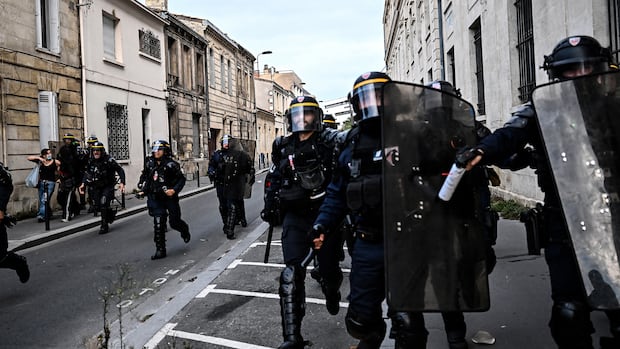
Teenager loses hand in violent France school protests
A 15-year-old boy lost a hand during student protests across France calling for better school conditions. More than 5,000 young people have been arrested during the unrest, and dozens of schools have been burned or ransacked, according to the education minister.
Critics blame the prime minister and interior minister for inciting the police by insisting the movement was a problem of social order rather than trying to address students’ demands.
Why is the government worried about these protests?
Even though most of the protesters are under 18 — the minimum voting age in France — the government still sees the continued uprising as a threat to public order, particularly now that parents, teachers and activists of all kinds have joined in solidarity.
Indeed, the government is concerned about a potential “coalition of anger,” in which frustration with a decade under Macron reaches a boiling point. Historically in France, youth movements have often served as a catalyst for wider social movements and upheaval.