
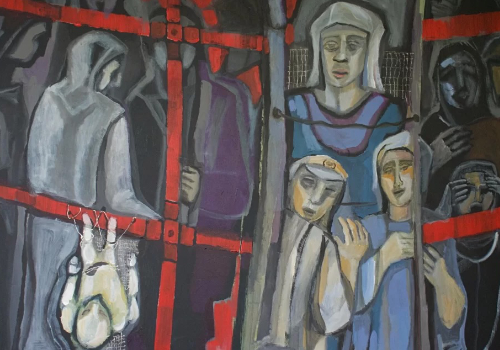
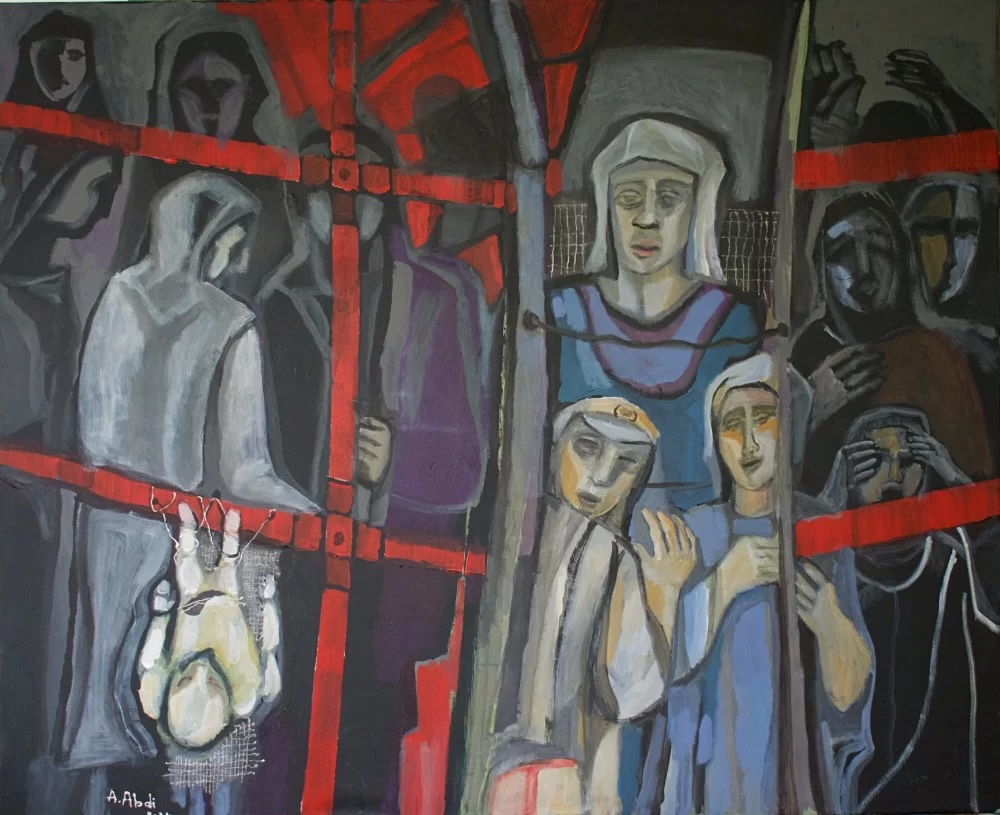
Abed Abdi (Palestine), In the Shadow of the Aggression, 2024.
Dear friends,
Greetings from the desk of Tricontinental: Institute for Social Research.
Israel’s genocidal bombing campaign has devastated Gaza’s wastewater system, destroying or damaging nearly 90% of the territory’s water and sanitation infrastructure since 2023. Every day, 45,000 cubic metres of untreated sewage are discharged into the Mediterranean Sea while an additional 15,000 cubic metres seep into the ground. This collapse of sanitation infrastructure has led to an infestation of rats and other rodents in Gaza, with two in three children living in displacement sites plagued by these vermin. In September 2026, an exceptional algal bloom clogged filtration systems at five of Israel’s six desalination plants, with the Israeli environmental group Zalul warning that untreated sewage from Gaza was contributing to the worsening crisis.
As you sow, so shall you reap.
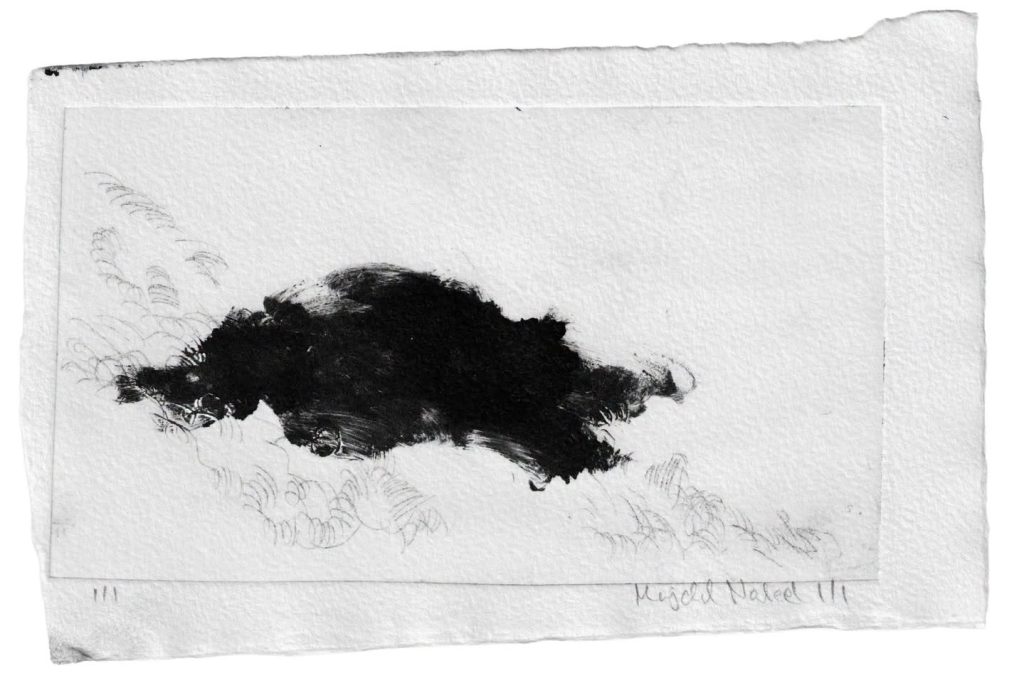
Majdal Nateel (Palestine), Studying the Void of Amputation, 2025.
A ceasefire does not rebuild a home. In Gaza, Palestinians still live among the ruins of Israel’s campaign of mass killing and destruction. A year after the ceasefire took effect, hundreds of thousands remain in worn-out tents, temporary shelters, and damaged buildings. The halt in major fighting has not even restored the basic conditions in which people can live with dignity.
The destruction in Gaza cannot be captured by data alone, though numbers do give a sense of the scale of the devastation wrought by Israel and its allies. For instance, a recent UN Trade and Development (UNCTAD) report found that 92% of Gaza’s economic establishments had been destroyed or damaged. In 2025, real GDP per person was $212, just 17% of its already low 2022 level, and more than 90% of Gaza’s working-age population was without employment. By May 2026, just $17 billion had been pledged towards the estimated $71.5 billion cost of Gaza’s recovery and reconstruction and only a small fraction of the pledged funds had been disbursed. Gaza will remain a ruin for some time yet to come.
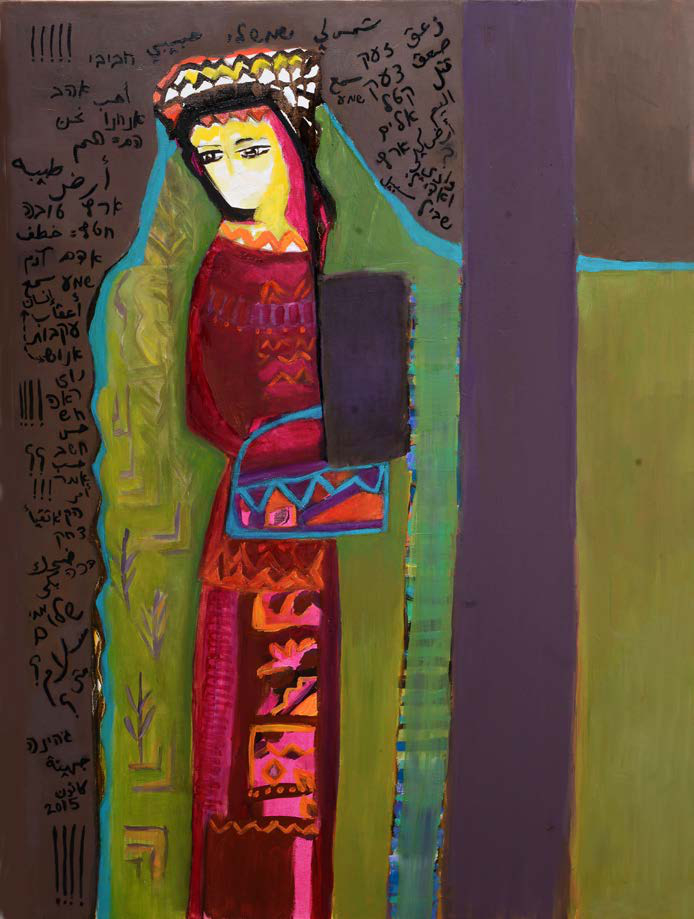
Juhaina Habibi Kandalaft (Palestine), Ardi, biti (My Home, My Land), 2015.
Families in Gaza who have lived in tents for over two years report that their living spaces are so cramped that every aspect of family life – from conversation and cooking to sleeping and bathing – takes place without privacy. A mapping exercise by the United Nations Population Fund (UNFPA) of more than 500 displacement sites found that only about half were within 500 metres of a safe space for women and girls. As of late July 2026, 17 such spaces remained closed for lack of funding and two more for security reasons, according to the United Nations Office for the Coordination of Humanitarian Affairs. Psychosocial specialist Abeer al-Shurafa told al-Araby al-Jadeed that ‘the closely stuck tents leave people’s lives exposed to others and create conditions that encourage prying, interference in family affairs, and eavesdropping on conversations. Many of the problems that now exist between families are directly linked to this imposed reality. The absence of privacy affects the upbringing of children and relations between spouses and may contribute to an increase in family disputes and divorce rates because what once took place inside the home now happens in an exposed space where others can hear it’.
UNFPA reported that between April and June 2026, cases of gender-based violence recorded by ten case-management partners rose 27% compared with the previous quarter. The three most commonly reported forms of violence – denial of resources, psychological and emotional violence, and physical assault – each accounted for roughly one third of reported cases while forced and early marriage accounted for 2.6%. These figures cannot be separated from the material conditions created by Israel’s assault on Gaza. The destruction of homes, property, and livelihoods, together with the breakdown of family and social support under displacement, has made women more dependent on aid agencies and men in their families for food, water, shelter, and income.
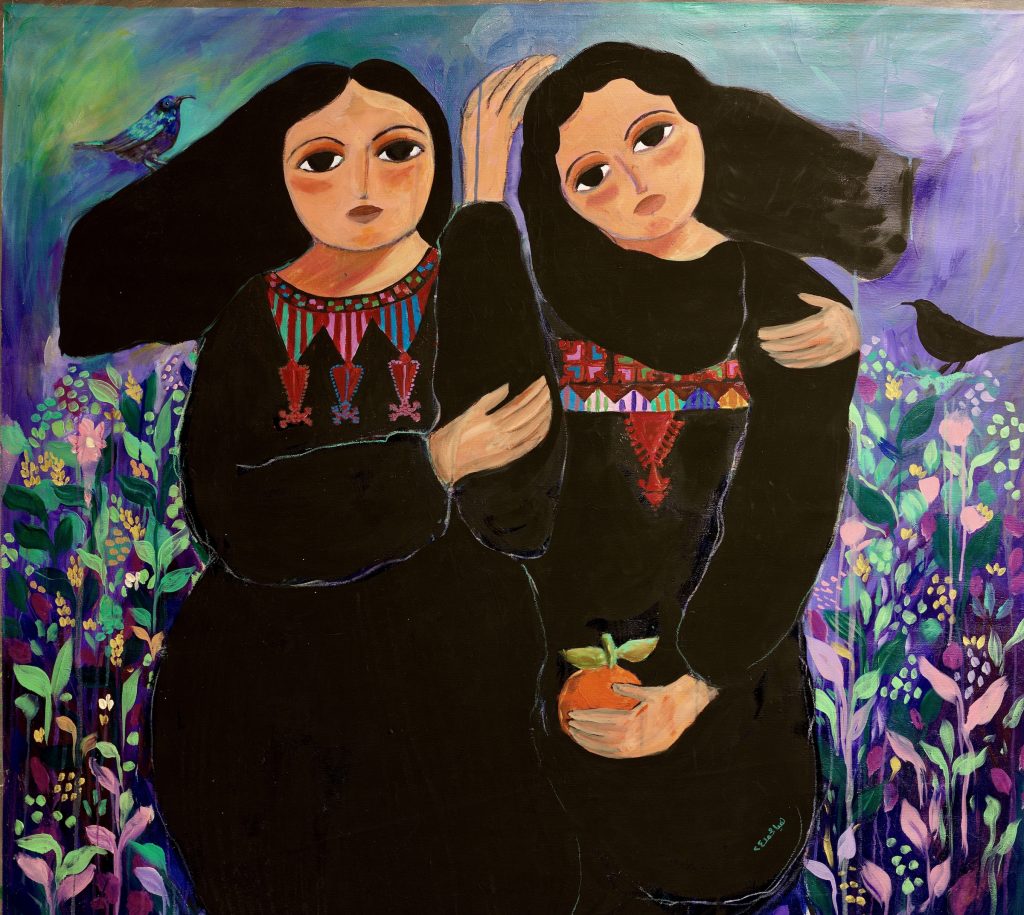
Haya Kaabneh (Palestine), The Mourning of Spring, 2024.
Meanwhile, in the occupied West Bank Israeli forces demolish Palestinian homes and Zionist settlers drive communities from land that their families have inhabited for generations. This displacement is not an accident.
In January and February 2025, Israeli forces entered the Palestinian refugee camps in Jenin, Nur Shams, and Tulkarem, forcibly displaced their populations, and destroyed hundreds of homes, roads, and other civilian infrastructure. The roughly 33,000 expelled Palestinians remain barred from returning.
In February 2026, after years of attacks and harassment, Israeli settlers forced the 45 members of a Bedouin herding community out of al-Wadi al-Shamali, north of al-Lubban ash-Sharqiya in the occupied West Bank. The expulsion left the valley without a Palestinian presence, enabling settlers to extend their control over grazing land and threatening some 2,000 dunams of surrounding farmland, including olive groves. This seizure, along with Israeli plans to build thousands of illegal settlement units in the E1 area near Jerusalem, undermines the territorial basis of a future Palestinian state.
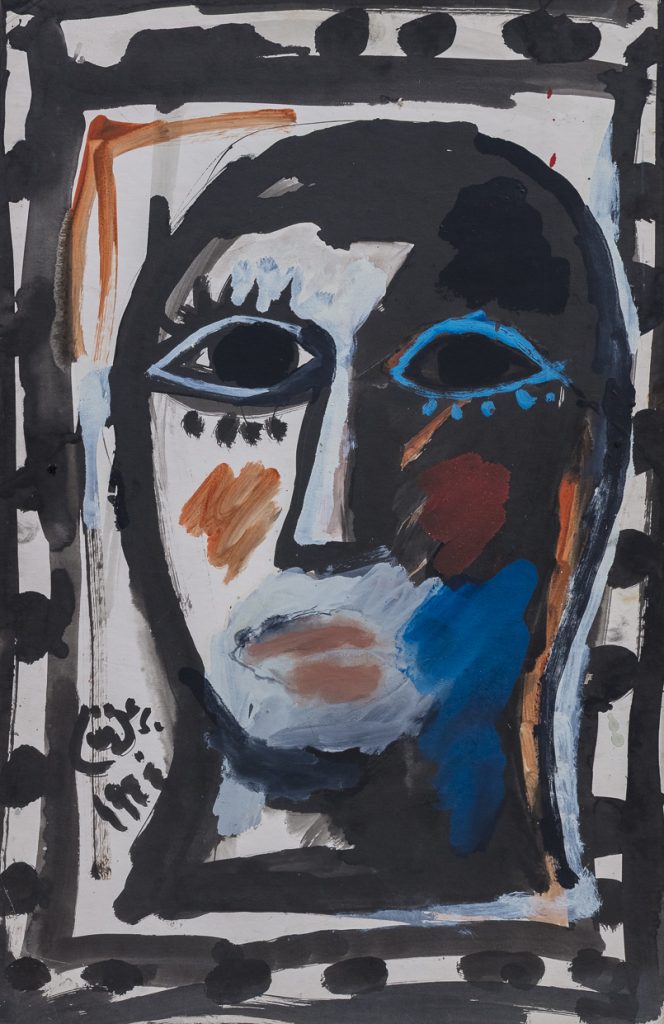
Ismail Fattah (Iraq), Untitled, 1994.
Less often discussed is the economic stranglehold that Israel exercises over the occupied Palestinian territory. According to the UNCTAD report, the Israeli government deducted or withheld more than $3.67 billion in Palestinian revenues between January 2019 and March 2026. Palestinian dependence extends into the currency itself. Much of the income earned by Palestinians enters Palestinian banks in Israeli shekels. But Israel limits how much physical cash those banks can return to Israel’s banking system. Data from the Palestine Economic Policy Research Institute (MAS) show that between 2021 and 2024, the permitted transfers did not keep pace with the volume of cash that required repatriation. The resulting surplus fills bank vaults with money that cannot readily be lent or used to settle payments, leading some banks to restrict new shekel deposits. The MAS study cites an IMF estimate that the cost of holding this surplus reduced Palestinian banks’ profits by about 20%.
Trapping this cash in Palestinian bank vaults creates more than an awkward pile of banknotes. Payments to suppliers depend on a functional correspondent banking link with Israeli banks. A breakdown of this system could disrupt imports of electricity, fuel, and water. In August 2026, Israel agreed to bring forward the fourth-quarter shipment of 4.5 billion shekels, easing the immediate pressure. But discretionary shipments do not end a system in which Israel determines whether Palestinian banks can process payments in the currency on which much of the Palestinian economy depends. Electronic payments may slow cash accumulation, MAS argues, but they cannot remove that structural constraint.
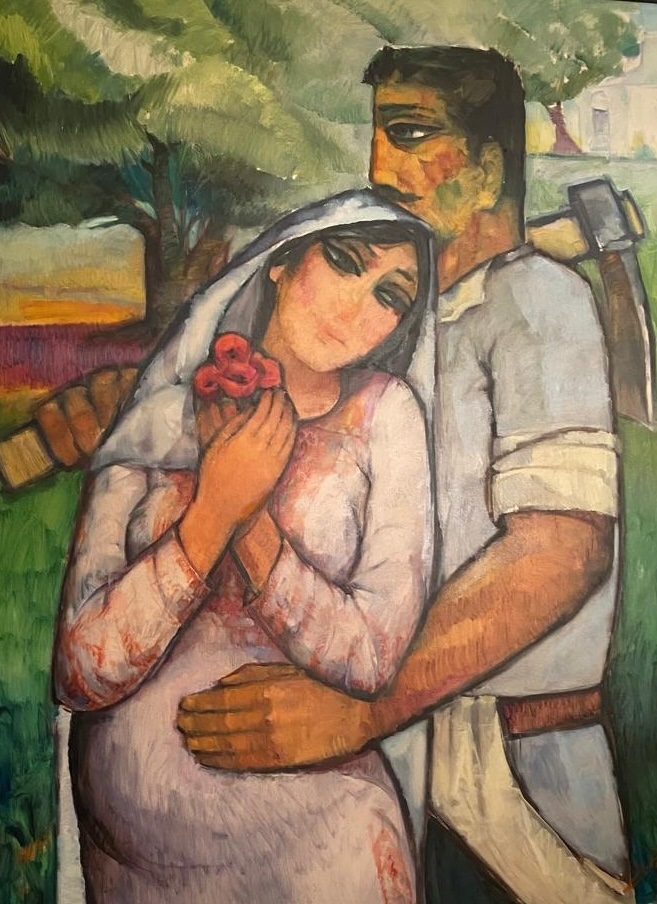
Ismail Shammout (Palestine), Untitled, 1994.
Israel is not the only beneficiary of this policy of apartheid, strangulation, and expropriation. On 25 September 2026, the UN Human Rights Office updated its database of enterprises involved in specified activities linked to Israeli settlements in the occupied Palestinian territory, including East Jerusalem. The updated list includes companies based in France (Egis and Egis Rail), Germany (Heidelberg Materials AG), the Netherlands (Booking.com), and the United States (Airbnb, Booking Holdings, Expedia Group, and Tripadvisor). The report identifies activities such as services that sustain settlements and the commercial exploitation of land or other natural resources. It assesses different forms of corporate involvement, including contribution and direct linkage, rather than making a criminal finding about every firm.
These are familiar names because settlement commerce is folded into ordinary consumer and business infrastructure: a holiday listing, a transport service, a quarry product. The database is explicitly limited to settlement-related activities: it is neither a census of every company profiting from the occupation nor the end of the inquiry into those it names.
The UN Human Rights Office asks states to regulate businesses under their jurisdiction and calls on companies to prevent or address adverse human rights impacts. The question for Western governments is concrete: will they let companies registered at home continue to provide the services and material connections that enable the settlements?
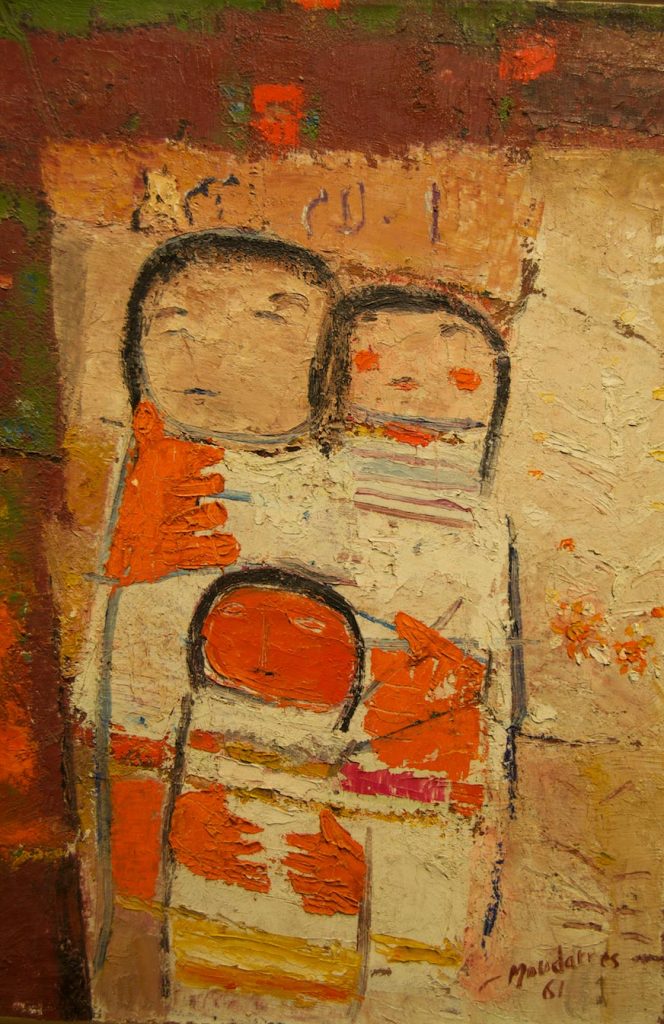
Fateh Moudarres (Syria), Alm (Pain), 1961.
While writing this newsletter, I came across ‘Nablus Street’ by the journalist and poet Mustafa Abu Sneineh in an anthology of contemporary Palestinian verse. The poem seethes with frustration at apartheid, genocide, and expropriation. Ordinary life rubs against these ugly phenomena.
It was a wordless confession.
I recall the sun sliding into the darkness of the settlement,
Soldiers with guns beating the sunset
until it passed out.
A lovestruck boy stealing poems from Nizar Qabbani
and love letters from The Snow Comes Through the Window.
I’m still a lovestruck boy
Even though the sun has long since gone under
Even though my first confession of love
Was made in the crosshairs of the occupation’s guns.
I want to walk on Nablus Street with you too and to read Hanna Mina’s The Snow Comes Through the Window (1969). Mina, who was born in Syria, worked as a barber and distributed the Communist newspaper Sawt al-Shaab (Voice of the People) on the streets. His novel follows Fayyad, a leftist writer who flees to Lebanon to escape political persecution. It is the story of a sensitive man who moves from private fear to collective struggle. The soldiers in the poem beat the sunset, but the next day, the sun rises and brightens the sky.
Warmly,
Vijay