
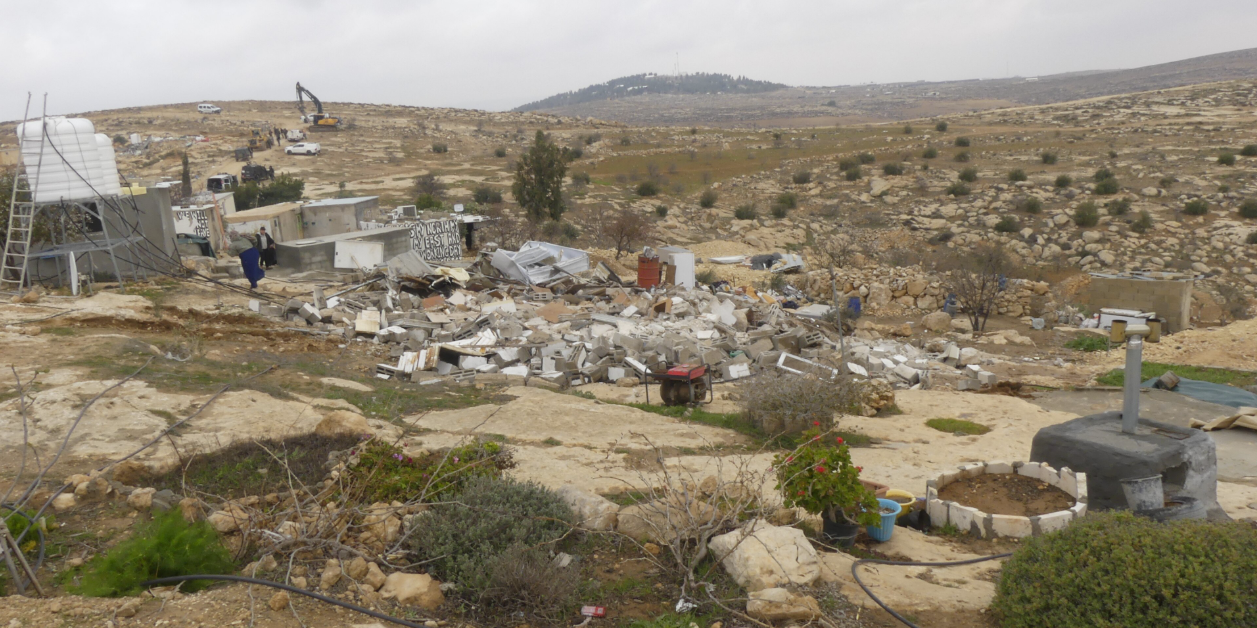
The UN Office for the Coordination of Humanitarian Affairs (OCHA) on Tuesday condemned building demolitions in the West Bank that have displaced 69 Palestinians, calling it the largest single-demolition displacement in East Jerusalem since the agency began tracking these figures in 2009.
According to OCHA, Israeli authorities demolished a residential building in At Tur, in East Jerusalem, noting that over half of the displaced people included children. According to the report, families were denied access to the area by Israeli authorities, and were unable to retrieve their belongings from the rubble.
According to the UN, many of the homes were demolished because they lacked Israeli-issued building permits, which are rarely granted to Palestinians in the affected areas. Official OCHA statistics (updated as of October 6 2026, illustrate 15,095 Palestinian-owned structures have been demolished on the West Bank since 2009, resulting in 23,683 displaced people. The Internal Displacement Monitoring Centre (IDMC) pointed out that 2.8 million people were displaced in 2025, with Israel’s targeting of three major refugee camps resulting in mass forced displacement.
The Office of the United Nations High Commissioner for Human Rights (OHCHR) noted that coordinated efforts by settler organizations backed by Israeli courts have led to the mass evictions of Palestinians from the neighbourhoods of Sheikh Jarrah and Silwan, with at least 218 families evicted in early 2026 alone.
In 2024, the Jerusalem District Court held hearings on four appeals involving 66 Palestinians from the Batan Al-Hawa residential neighbourhood in Silwan, where it later rejected the appeals and ordered them to vacate their homes in favour of settlers associated with the Ateret Cohanim group.
Amnesty International has previously criticized Israel’s passing of the Legal and Administrative Matters Law (1970) which has been used to allow Israelis to reclaim property in East Jerusalem that they had allegedly owned before 1948, stating that the same rights were not afforded to Palestinians who had been expelled in 1948. Additionally, the 1950 Absentees’ Property Law has been criticized by Adalah, the Legal Center for Arab Minority Rights in Israel, for dispossessing properties belonging to Palestinian refugees by having their properties taken by the state and passed to the Custodian of Absentee Property for guardianship.
Although the Israeli Supreme Court has largely upheld the law’s constitutionality, the BADIL Resource Center has stated records also show the court acknowledging that “[t]he interests of Arab citizens were ignored and evidence presented by the Custodian to certify them as absent were frequently groundless […].”
Practices of forced demolition and displacement directly contravene Article 49 of the Fourth Geneva Convention which prohibits individual or mass forcible transfers and Article 46 of the 1907 Hague Regulations which guarantees that private property cannot be confiscated.