
NEED TO KNOW
Scientists have discovered a previously unknown ancient species of crocodile
The fossil was identified in the Mokattam Formation, which contains scores of ancient fossils and was also used to build the Great Sphinx
The ancient reptile has just two living relatives, both of which are endangered
A new (or very, very old) crocodile species has been discovered, thanks to bedrock used to build one of the ancient world’s most recognizable figures.
According to a research study published in the Royal Society Open Science journal on Oct. 7, scientists identified an ancient species of gharial — classified within the crocodilian family and distinguished by its thin, needle-like snout — in rock from the Mokattam Formation, the same bedrock used to construct the Great Sphinx in Egypt around 2,500 B.C.E.
The Mokattam Formation, a thick limestone bedrock layer in Egypt, provided the primary material for the Sphinx and the Great Pyramids at Giza, per CNN. But before the rock contributed to the famous structures, the formation preserved scores of fossilized remains of prehistoric creatures, including sharks, whales, and now a crocodile.

A gharial crocodile at the Fort Worth Zoo in 2023
Credit: Amanda McCoy/Fort Worth Star-Telegram/Tribune News Service via Getty
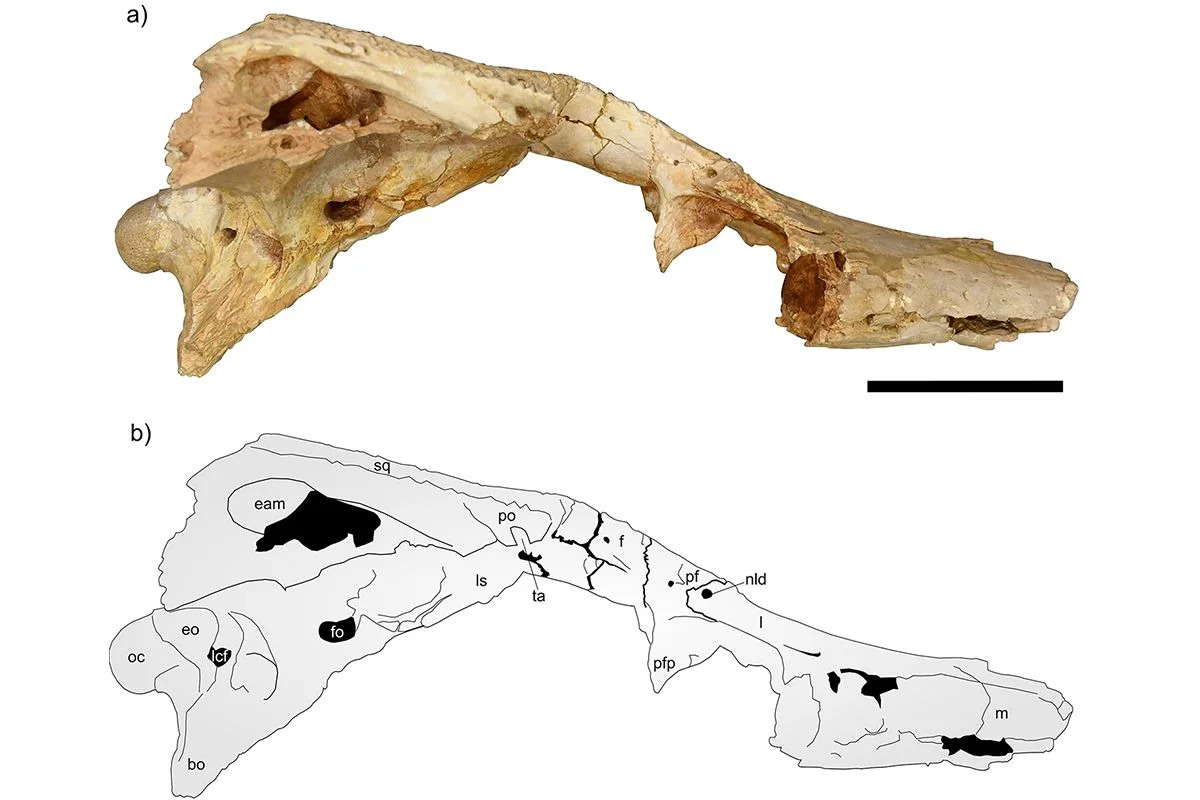
Coincidentally, the fossil of the newly identified gharial species resembles the Sphinx, as both lack the tip of their nose. For that reason, scientists named the new genus Herugavialis, after Heru, also known as Horus, an Egyptian god connected to the ancient structure.
“Herugavialis cairensis is one of the six species of gharials that we see in the Mediterranean across a 43 million year period, from 66-23 million years ago,” co-lead author on the study, Paul Burke, told CNN. “Of course, there could be even more species that we just don’t know about yet.”
Only two species of gharial are known to be alive today: the Indian gharial and the false gharial, classified as critically endangered and endangered, respectively.

Life reconstruction of Herugavialis cairensis
Credit: The Royal Society Publishing
Scientists in the study conducted evolutionary analyses between the Herugavialis fossil — first discovered, but not identified, in 1927 — and other known living or extinct relatives, and determined that Herugavialis belonged to a completely different genus.
Philip Mannion, the study’s lead author, told CNN that the discovery of Herugavialis suggests bigger discoveries lie ahead in the Mokattam Formation.
Never miss a story — sign up for PEOPLE’s free daily newsletter to stay up-to-date on the best of what PEOPLE has to offer, from celebrity news to compelling human interest stories.
“It’s probable that larger fossils are also present within the walls of these monuments,” he said, “and I think it’s very likely that other fossils will continue to be found in this formation, especially of animals that like shallow marine environments.”
Read the original article on People