
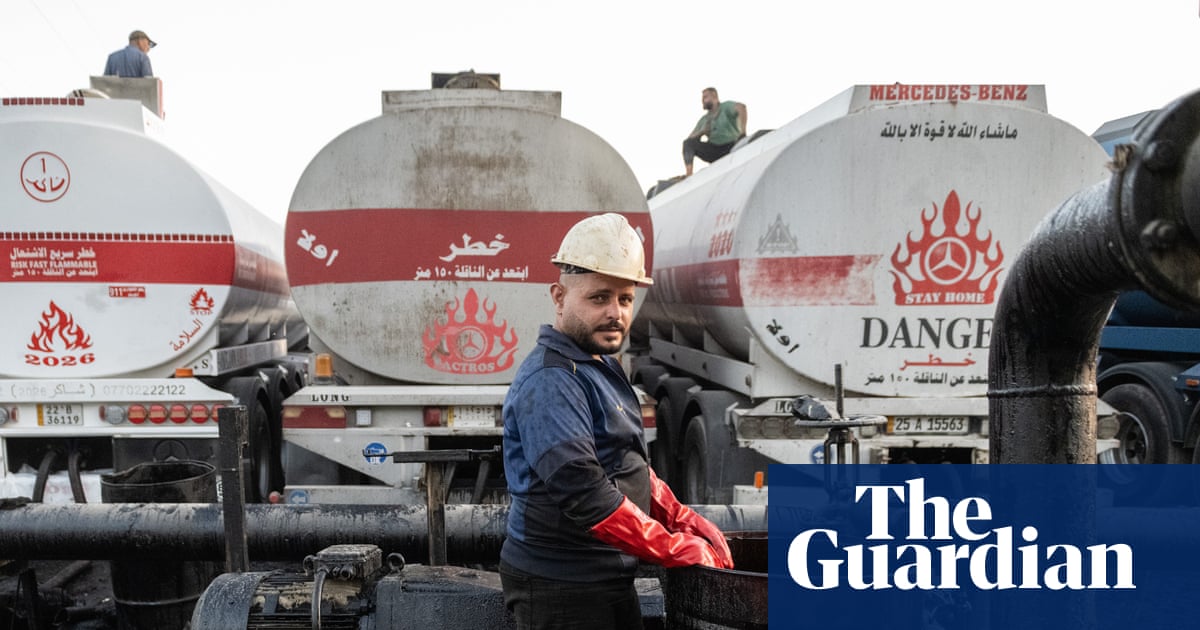
Oil prices have risen sharply amid fears about escalating tensions in the Middle East and a squeeze on production from the threat of a hurricane off the US coast.
Brent crude, the international benchmark, rose by 5% to $105.3 a barrel on Thursday, triggering a wave of selling in the global bond and stock markets.
In the UK, the yield – or interest rate – on the 10-year government bond hit its highest level since July 2007, rising by six basis points to 5.515%. Investors appear concerned that rising oil prices could stoke higher inflation.
The yield on the 30-year bond – the UK’s benchmark cost for its long-term borrowing – rose by three basis points to 6.0117%, after touching 6.036% on Wednesday, the highest since January 1998.
The climbing cost of government borrowing places further pressure on John Healey, as he prepares to deliver his first budget, on 28 October.
The market swings came after the Atlantic reported that the White House had asked the Pentagon to draw up options for strikes against Iran before the US midterm elections. The report cited unnamed officials in Donald Trump’s administration who said the size and targets of potential strikes, and whether they would go ahead, were still being debated.
The report has weakened hopes that Trump will refrain from escalating the conflict with Iran before the midterm polls next month. A “limited operation” could be followed up with more substantial action after the midterms, it states.
Another wave of strikes against Iran represents further risk to oil supply from the Middle East, with the US-Israeli war against Tehran now entering its eighth month. Attacks on tankers in the strait of Hormuz have reached their highest levels of the war, cutting traffic through the waterway and deepening fears about supply.
The latest attack came on Wednesday, when a tanker was hit by projectiles off the north coast of Qatar, causing casualties, according to United Kingdom Maritime Trade Operations.
Oil prices also rose in response to a squeeze on production in the Gulf of Mexico, after Tropical Storm Isaias strengthened to become the first hurricane of the Atlantic season.
Shell and Chevron said they were shutting down production as the storm approached the region, forecast to make landfall on Friday or Saturday.
The Danish shipping group Maersk added to worries around rising energy prices on Thursday after it said it was increasing its emergency fuel surcharge on all its export collections and import deliveries. The rise in energy prices has fed fears about inflation, reinforcing expectations that central banks will have to raise their interest rates in order to control rising prices.
skip past newsletter promotionFree newsletter |Every weekday
Sign up to Business Today
Get set for the working day – we’ll point you to all the business news and analysis you need every morning

after newsletter promotion
A sell-off in global bond markets continued on Thursday. In France, which has been hit particularly hard over worries about its rising debt and growing spending, the 10-year yield rose by six basis points to 4.931%, just behind the 24-year high of 4.994% it hit last week. Yields rise when prices fall.
The German 10-year yield, the benchmark for European debt, rose by two basis points to 3.504%.
The yield on the US 10-year treasury, which is widely considered the best quality government debt on the market, rose by five basis points to 5.331%.
Global stocks also fell, with Japan’s Nikkei share index falling 1.4% and the South Korean Kospi down 2.6%.
In Europe, the Stoxx Europe 600, which tracks the biggest companies on the continent, dropped 0.9%. The UK’s FTSE 100 slipped by 0.4% in early trading on Thursday.