

Listen to this article
Estimated 3 minutes
The audio version of this article is generated by AI-based technology. Mispronunciations can occur. We are working with our partners to continually review and improve the results.
A record-low vote share for Quebec’s incoming government has reignited a long-standing debate over how the province elects its leaders.
The Parti Québécois secured enough seats to form a minority government despite getting only 28 per cent of the popular vote — the lowest vote share for a governing party in Quebec history.
Advocates say the result is proof the province’s first-past-the-post electoral system needs to change.
Ted Cragg, a spokesperson for the national advocacy group Fair Vote Canada, said the current model is outdated, particularly in an era of multi-party elections. The group advocates for some form of proportional representation as an alternative.
“We have elections to choose representatives that reflect our wishes, but the system is not reflecting those wishes,” Cragg said in an interview.
“It’s set up in such a skewed way that people win seats with less than 30 per cent of the vote. Governments now are formed with 30 per cent of the popular vote.”
WATCH | Behind the push for electoral reform: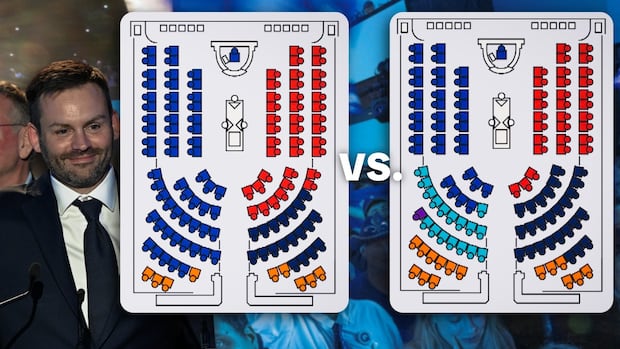
Why the PQ’s victory is reviving calls for electoral reform in Quebec
The Parti Québécois secured enough seats for a minority government with only 28 per cent of the popular vote. Advocates say that outcome is proof the system needs to change.
All five of Quebec’s major parties received more than 10 per cent of the vote on Monday, but those results were not reflected in the seat count.
The PQ won 59 of 127 seats, while the Coalition Avenir Québec was wiped off the electoral map entirely despite capturing 13 per cent of the vote.
Québec Solidaire, for its part, won just nine seats with a 12 per cent vote share.
Jean-Pierre Charbonneau, president of Mouvement démocratie nouvelle, a Quebec organization advocating for democratic reform, said many voters feel disenfranchised by the current system.
“People saw the result. We have a National Assembly that doesn’t reflect the votes that were cast,” Charbonneau told Radio-Canada.
During the election campaign, PQ Leader Paul St-Pierre Plamondon said he was committed to electoral reform. Québec Solidaire and the Conservative Party of Quebec have also backed reform.
Whether those promises will lead to action remains uncertain.
Both former prime minister Justin Trudeau and former Quebec premier François Legault campaigned on electoral reform, only to abandon those commitments after being elected under the existing system.
Cragg, however, remains optimistic that this outcome could mark a turning point, citing a decade of growing public support for electoral reform in Quebec.
“We take any kind of promise with a grain of salt,” he said.
He pointed out that in 2018, all the parties at Quebec’s National Assembly, led by Legault, committed to moving forward with some form of proportional representation.
“It does show that there’s interest,” he noted, “and there’s some precedent for the parties to work together.”