
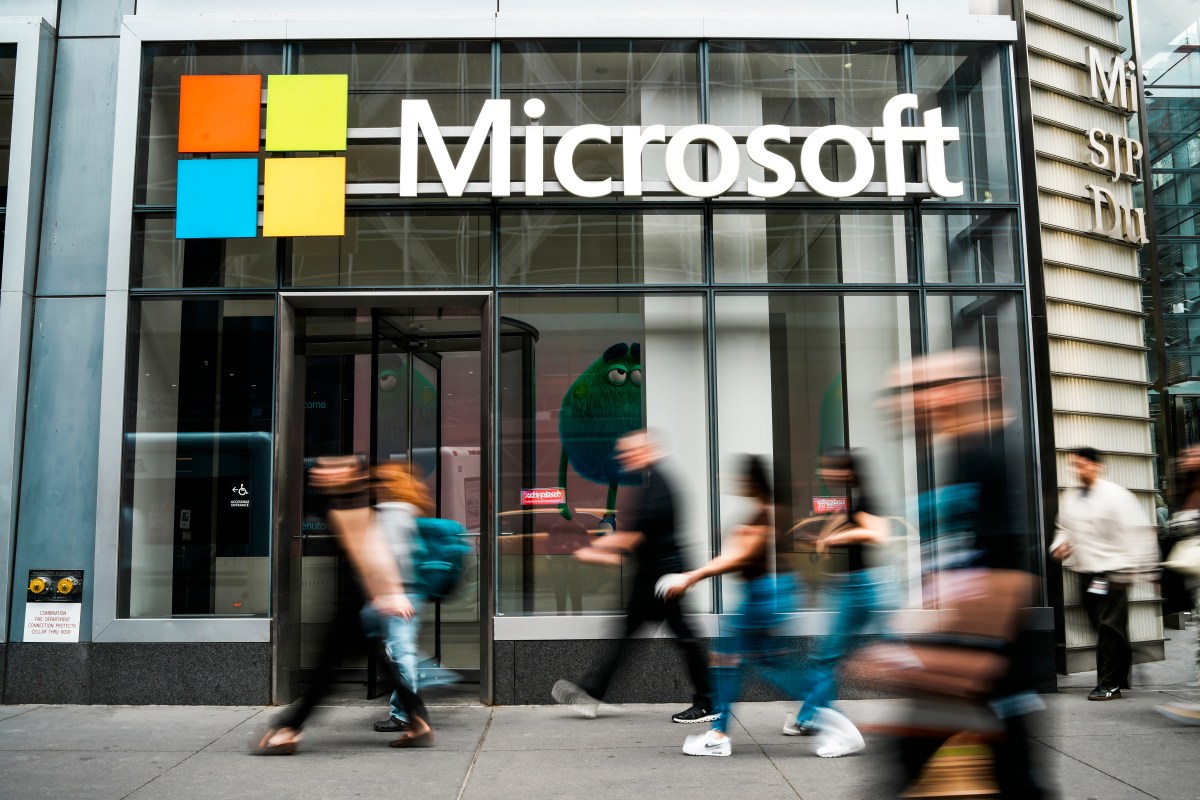
The Trump administration blocked multiple tech companies, including Microsoft and Adobe, from applying for green cards for their H-1B visa holders Thursday, saying they would no longer steal jobs from American workers.
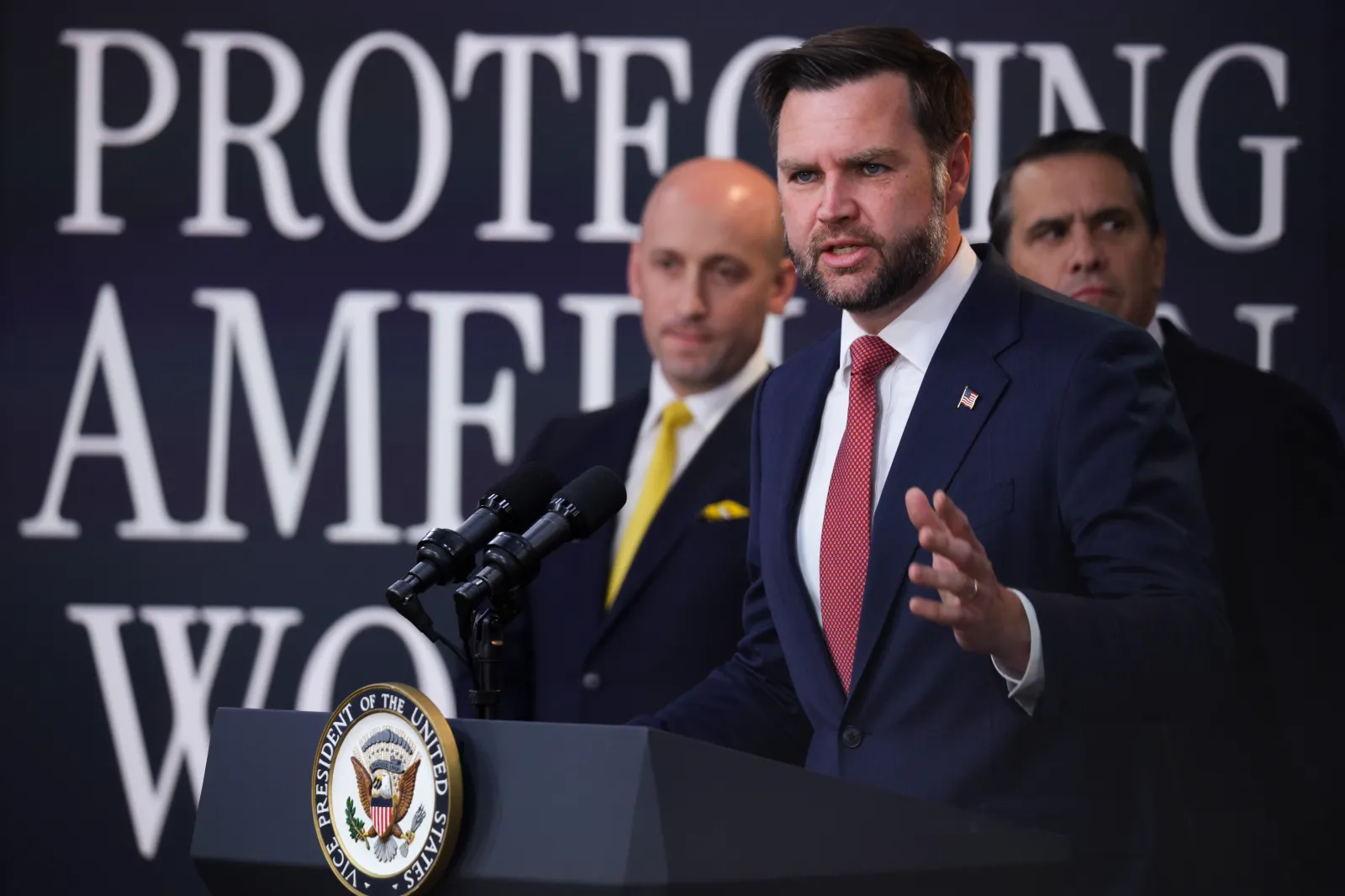
In an announcement led by Vice President JD Vance, officials said companies seen as using the green card pathway to hire cheap labor and undercut American workers would have their access to the PERM program suspended.
Vance used Microsoft as a key example of the alleged abuse, noting that the tech giant laid off thousands of workers in the past year while still applying for H-1B visas and subsequent green cards.
Read More on Politics
“Now, our message to Microsoft and to any other foreign or domestic corporation is quite simple: We obviously want you to thrive in the United States of America,” Vance said.
“We want people to invest in the United States of America, particularly the American technology sector. We are the biggest boosters of your industry. We want you to continue to grow and to employ a lot of people, but we want you to employ American workers,” Vance said. “And so, our message to Microsoft is you’re a great American company, but you’ve got to hire great American workers.”
Microsoft responded to the announcement, saying in a statement shared with Newsweek that it believes in the “strength and talent of the American workforce.”
“That is why the vast majority of Microsoft employees in the United States are Americans,” the statement read.
“Microsoft only files H-1B petitions for those who meet the rigorous standards of this visa category. We pay our employees some of the highest compensation in the tech sector, and our wages are among the highest of all H-1B filings. We pay our H-1B employees the same as any other employees doing comparable work.”
The announcement sparked praise from some immigration reform advocacy groups, and some pushback, including from the libertarian Cato Institute.
“This is further evidence of the Trump administration’s lawless antipathy to high-skilled legal immigrants,” David Bier, Cato’s director of immigration studies, told Newsweek. “The Department of Labor cannot legally suspend a company that it has not proven has violated the rules. As far as I know, they haven’t yet detailed exactly what they are doing here, but this policy would have extremely negative effects on workers and companies.
“The companies cannot expand their operations in the United States if they don’t know who they can hire or not, and the workers may be forced to leave the United States if the companies cannot sponsor them for green cards when their H-1B visas expire.”
Jeremy Beck, co-president of the immigration reform group NumbersUSA, told Newsweek Vance’s announcement was significant as no sitting vice president had “ever acknowledged what millions of Americans have come to know: the H-1B visa program displaces Americans and exploits guest workers.”
“Bully for Vance and his team for making an example of an American company,” Beck said.
Microsoft, Adobe Among Tech Companies Suspended
While Vance focused on Microsoft in his speech, the Department of Labor (DOL) also suspended other major tech companies from the PERM process Thursday.
U.S. Secretary of Labor Keith Sonderling said IT outsourcing firms Cognizant, Infosys, Tata, Wipro, HCL, and Capgemini would all be suspended from the program. Adobe and Microsoft’s suspensions were due to “multiple active federal investigations,” Sonderling said.
The secretary said this meant current green card applications would not be processed further and no new applications would be accepted from the affected companies.
During the White House announcement, Vance said that no company had abused the H-1B program and its green card pathway more than Microsoft.
“So, in the last year, Microsoft—and I want to be clear about the data here…Microsoft laid off last year 6,000 American workers,” Vance said. “At the same time, the company benefited from 6,300 H-1B visas and almost 3,000 green cards.
“In other words, if you do the math, for every worker that Microsoft laid off, they replace that worker with one and a half foreign indentured servants.”
U.S. Citizenship and Immigration Services (USCIS) figures show Microsoft received 6,258 H-1B approvals in the last fiscal year, while Department of Labor numbers show 3,157 PERM filings.
Microsoft said in its statement that it would look to provide the administration with more details on how it uses the program.
“Microsoft succeeds as a global technology leader by developing the world’s best technology workforce,” the company’s statement read. “We do this by strengthening this country’s talent pipeline, hiring American workers, and attracting the best talent from around the world.”
Doug Rand, a former DHS official, said in a statement shared with Newsweek that the administration’s actions may not help the situation it is trying to address.
“If the Trump administration were truly concerned that H-1B workers are ‘indentured servants,’ then the last thing they would do is block companies from helping their own H-1B workers get green cards,” Rand said. “Once you have a green card, you’re no longer dependent on your employer for your immigration status—you’re a permanent resident who can change jobs and negotiate higher wages without fear.”
Newsweek reached out to all affected companies for comment via email.
What Is the PERM Program?
The PERM program is the system the DOL uses to issue what is known as Permanent Labor Certification.
While not unique to the H-1B, it is commonly associated with the high-skilled work visa, which has a two-term limit of six years. After that time, companies can opt to apply for a green card for that immigrant worker.
Unlike the initial H-1B process, employers have to prove to the government that the visa holder is the only person suitable for the role linked to their green card application, and that efforts have been made to find an American-born worker to fill that job.
Part of the issue for critics of the program is that companies can simply advertise the role in a Sunday newspaper, and if no one else applies, this can be taken as evidence of an exhaustive search.
Advocates of the PERM process argue it gives employers stability, as well as stability to H-1B workers who may have moved to the U.S. with a spouse and/or children, whose lives would also be uprooted if permanent residency is not an option.
Trump Admin Cites Fraud, Loss of American Jobs
Sonderling, Vance, and other administration officials laid out the issues they see with the H-1B-to-green-card pipeline, raising long-running concerns about potential fraud and the displacement of American-born workers.
The Labor secretary said that while his department had uncovered $22 billion in visa fraud, what was being announced Thursday was more valuable than that—limiting fraud that had “flooded our country with foreign labor” at the expense of U.S. workers.
“The fraud doesn’t end with getting the job,” he said. “That job becomes a pathway for foreign workers and their families to stay in America permanently and eventually becoming U.S. citizens. And who pays for all that? American workers.”
Sonderling said companies had for too long been allowed to bring in cheaper labor through the H-1B program, and that the administration was actively investigating those bending immigration rules to do so.
Advocates have argued that H-1B visas are necessary because there are not enough American-born workers who are skilled enough or willing and able to fill certain roles.
Vance said it was insulting to suggest that Americans would not work on farms, in certain “dirty jobs,” or in business and technology, adding that it was a lie that Americans were not good enough to build the future of the country.
Earlier, however, Vance said the high-skilled visa program had some positives, pointing to Elon Musk as an example of someone who had benefited the United States.
Vance Questioned on Microsoft CEO Honor
Vance’s first question after the speeches concerned a ceremony at the White House later Thursday involving tech leaders and President Donald Trump.
The president is set to present medals to executives including Microsoft CEO Satya Nadella, whose company has now been barred from the PERM program.
“Microsoft is a great American company, and we have a great relationship with them. They do a lot of important things,” Vance said, before again pointing to the layoffs. “Our message to Microsoft is not that we want to harm your company, it’s that we want your company to thrive, but we want it to thrive by employing and empowering your fellow Americans.”
Other tech executives set to be honored include Musk, Dell Computers’ Michael Dell, and Nvidia CEO Jensen Huang.
Vance Calls for H-1B Reform
While Vance remained largely skeptical of the H-1B program, he did not call for it to be scrapped. Instead, he said reform was needed.
“This is a terribly pernicious system. It’s gone on for too long, and we’d all encourage, by the way, Congress do something about it,” Vance said, adding later, “It is very clear it’s not working in the way that it should.”
Beck agreed, pointing to attempts by lawmakers to reform the visa that have so far failed to pass.
“Today’s announcement won’t end the financial incentive to displace Americans with cheaper, captive foreign-workers. That takes reforms that only Congress can pass: limiting the program to genuine shortages and requiring wages high enough that no employer would choose a guest worker just to save money,” Beck said. “Those reforms would treat guest workers more fairly, too.”
Contact Newsweek editors on this story: Samantha Beech and Sam Wilson.