
Democrats’ path to the Senate majority is improving. In fact, recent polls have shown the party leading in three states that President Donald Trump carried by double digits in 2024: Alaska, Ohio and Texas. Democrats need at least two of those to win the majority.
But even as it looks like they might clear that daunting threshold, other states are proving more difficult.
The polls in Iowa — which Trump also carried by double digits — have been closer than some surveys in Alaska, Ohio and Texas — including in new CNN polling released Thursday.
And even as Democrats look like they could win some pretty red states, they’re still struggling to lock down swing and even blue-leaning territory in Maine, Michigan and arguably New Hampshire. (There is also some question about Minnesota, but the data there is limited.)
The road to the 2026 midterms starts now
The idea that, a month before the midterm election, Democrats would poll better in Ohio and Texas than in Maine and Michigan would’ve been called crazy a year ago. But that’s where we’re at.
So what do polls tell us about why that is? Let’s dig in.
The story here isn’t that Democrats are doing badly; it’s just that they’re not polling as well as they have in Alaska, Ohio and Texas — despite Trump having carried all of those states by similar margins in 2024.
Recent quality polls have Democrats winning Alaska by 7, Texas by 6 in a few polls, and Ohio by as much as 6 and 8 points.
But even as the new CNN polling showed a 6-point Democratic edge in Ohio, the CNN Iowa poll was neck-and-neck, with GOP Rep. Ashley Hinson at 45% and Democratic state Sen. Josh Turek at 43%. Other polls similarly show a pretty pure toss-up.
So why the difference?
The atmospherics don’t differ too much between Iowa and Ohio. In both states, the CNN polls show about three-quarters of likely voters said Trump’s policies have increased the cost of living, about 7 in 10 said gas prices have been at least a moderate hardship, and 55%-58% said tariffs have been bad for their states.
But Iowa appears somewhat less inclined to ditch Trump and the GOP. The president’s approval rating there (41%-42% in CNN and New York Times-Siena College polling) isn’t quite as low as in Ohio (36%-38%). And the CNN poll shows that 53% of likely voters in Iowa prefer GOP control of Congress, while 52% in Ohio prefer Democratic control.
Turek’s image numbers have also declined a bit. Fox News polling has shown the Iowa Democrat’s net image rating going from +18 in June (51% favorable to 33% unfavorable) to +8 in late September (48%-40%).
Also, Hinson appears to have done a good job rallying her base. While 66% of her voters in the CNN poll say their vote is mostly about voting for her rather than against her opponent, just 44% say the same of Ohio GOP Sen. Jon Husted.
Maine
This blue state might be Democrats’ biggest headache right now.
A recent New York Times poll showed Trump’s approval rating is more than 30 points underwater, but virtually every quality Senate poll is within the margin of error.
Some Democrats panicked when that Times poll showed GOP Sen. Susan Collins at 49% to Democratic former state Senate President Troy Jackson’s 46%.
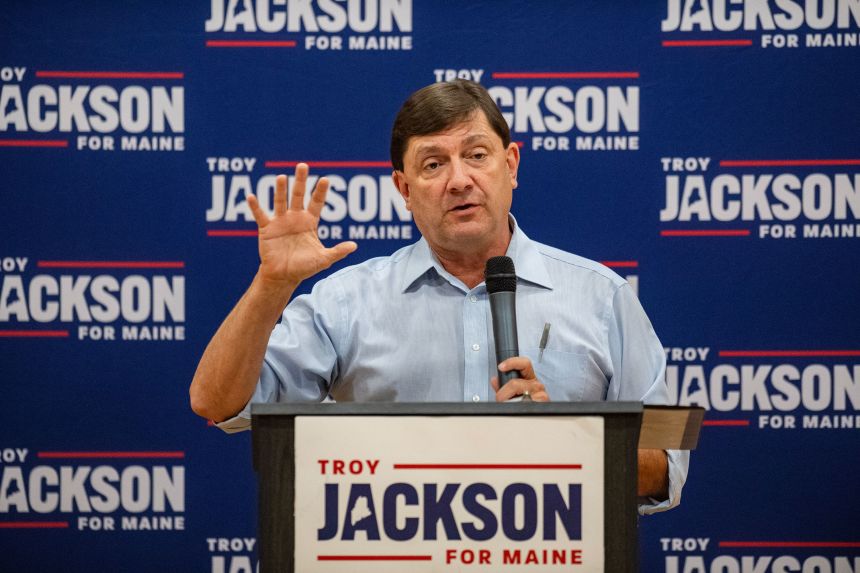
The big problem for them is that voters just aren’t enamored of Jackson. His image was underwater in both Times (41% favorable to 49% unfavorable among likely voters) and Marist College (43%-47% among registered voters) polling.
And a CBS News-YouGov poll showed just 47% of Democrats and independents said they were glad he was the Democratic nominee, compared to 53% who preferred someone else.
The Times poll also showed likely voters said 51%-35% that the state was headed in the wrong direction. That was the worst of all the states where the Times has polled Senate races.
(And it would explain why Collins spent much of Tuesday’s debate attacking Maine’s Democratic leaders.)
Democrat Abdul El-Sayed led by 5 points among likely voters in the Times poll and 7 points among registered voters in a Marist poll. But other polls like a Fox News survey show a margin-of-error race.
It’s pretty clear the closeness of the race reflects at least some voter uncertainty about El-Sayed, a left-wing candidate whom many Democrats worried about nominating in the first place.
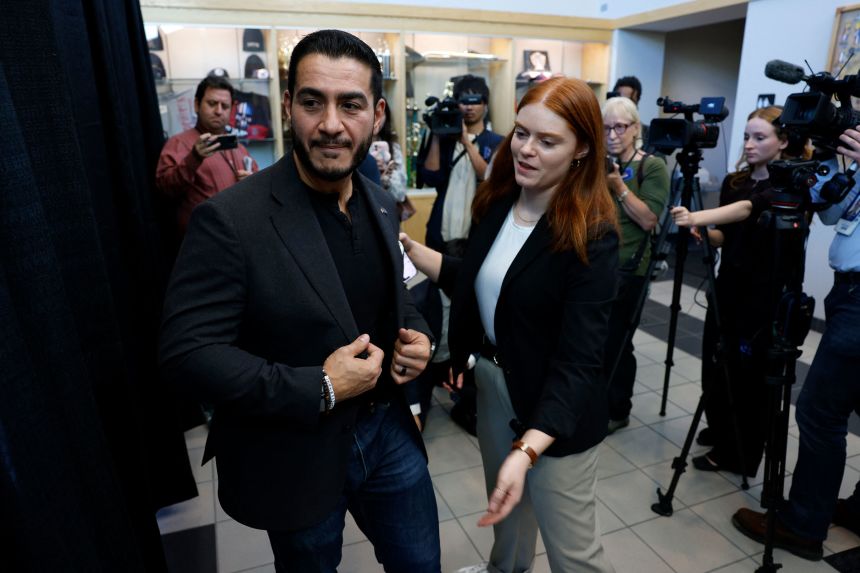
El-Sayed lags the Democratic nominee for governor, Secretary of State Joceyln Benson, consistently in polling. And his image ratings are usually only about even.
The Times poll showed 50% of likely voters said El-Sayed was the more extreme candidate in the race, compared to 36% who said the same of Republican former Rep. Mike Rogers. The Fox poll showed 52% of voters were concerned about El-Sayed being too liberal — about as many as the 54% who worried about Rogers being too close to Trump.
All of which helps explain why El-Sayed is getting the least crossover voters from Republicans of any Democratic nominee in a major Senate race, according to a recent CNN review. While other Democrats are getting as much as double-digit support from GOP voters, he’s in the low single digits, according to polling.
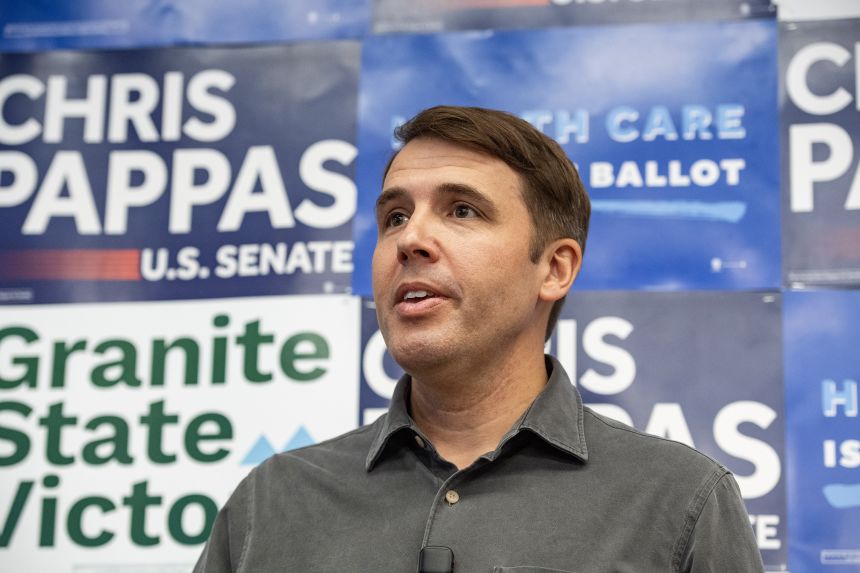
Democratic Rep. Chris Pappas has a lead over former GOP Sen. John E. Sununu in most recent quality polling. He led by 5 points in a Times poll and 8 points in a University of New Hampshire poll.
But Democrats will wish it weren’t even that close, given this is a state Kamala Harris carried in 2024.
Part of the reason it’s somewhat close is that Pappas’ image is only OK (43% favorable to 44% unfavorable in the Times poll).
Another is that GOP Gov. Kelly Ayotte is popular and primed for reelection at the top of the ticket. She led by 11 points in the Times poll.
And then there’s the name ID that comes with Sununu. It’s not just that he comes from a famous political family in New Hampshire; his brother Chris Sununu was a popular GOP governor until just last year.
There is even speculation that some people think John E. Sununu is the former governor, and that that’s helping him. The Cook Political Report recently cited that as a factor helping John E. Sununu, whose campaign signs don’t include his first name. And the Washington Post recently found that some New Hampshire residents thought Chris Sununu was the one running for Senate.
However, to the extent that confusion is a factor, it could be mitigated as voters are bombarded with more ads and start to pay more attention to who is actually on the ballot.