
The U.S. imposed new sanctions against Iran as it seeks to apply further economic pressure on Tehran.
The Department of the Treasury said on Thursday it is “targeting the remnants of Iran’s shadow fleet: the aging network of tankers the regime relies on to move billions of dollars’ worth of petroleum and petroleum products to foreign markets.”
“Treasury is starving the tyrannical regime in Tehran of the money it uses to wage war in the region, and we will continue exposing those who enable the regime’s oil sales,” Treasury Secretary Scott Bessent said in a statement along with the announcement.
“The vessels involved, registered across more than a dozen jurisdictions and operated by an intricate web of international front companies, underscore the global scale of Iran’s illicit shipping architecture and the sophistication with which the regime attempts to mask its sanctions evasion,” the document added.
The Trump administration has made several announcements of the kind over the past weeks as part of “Operation Economic Outcast,” which seeks to isolate Iran economically. Earlier this month it targeted the country’s automotive and rail industries while targeting foreign companies accused of helping Tehran sustain its industrial base and evade U.S. restrictions.
Among the most significant targets are Iran Khodro Company and SAIPA Iranian Automobile Manufacturing Company, which Treasury said together account for “over 90 percent of Iran’s domestic auto market.” Their subsidiaries, including Iran Khodro Diesel, Pars Khodro and Zamyad, were also designated.
The Iranian economy keeps deteriorating in the meantime. President Masoud Pezeshkian called on Iranians to cut energy consumption.
“If we can control consumption somewhat, we will not need anything, Pezeshkian said in a meeting of senior police commanders on Thursday.
“With just a 10% reduction in consumption, a significant amount will be saved and we will no longer need to import energy,” he added.
The president went on to describe the ongoing economic pressure as “far harder and heavier” than military conflict.
Secretary of State Marco Rubio said this week that economic pressure is working as it has sent Tehran’s economy into “total and complete freefall.”
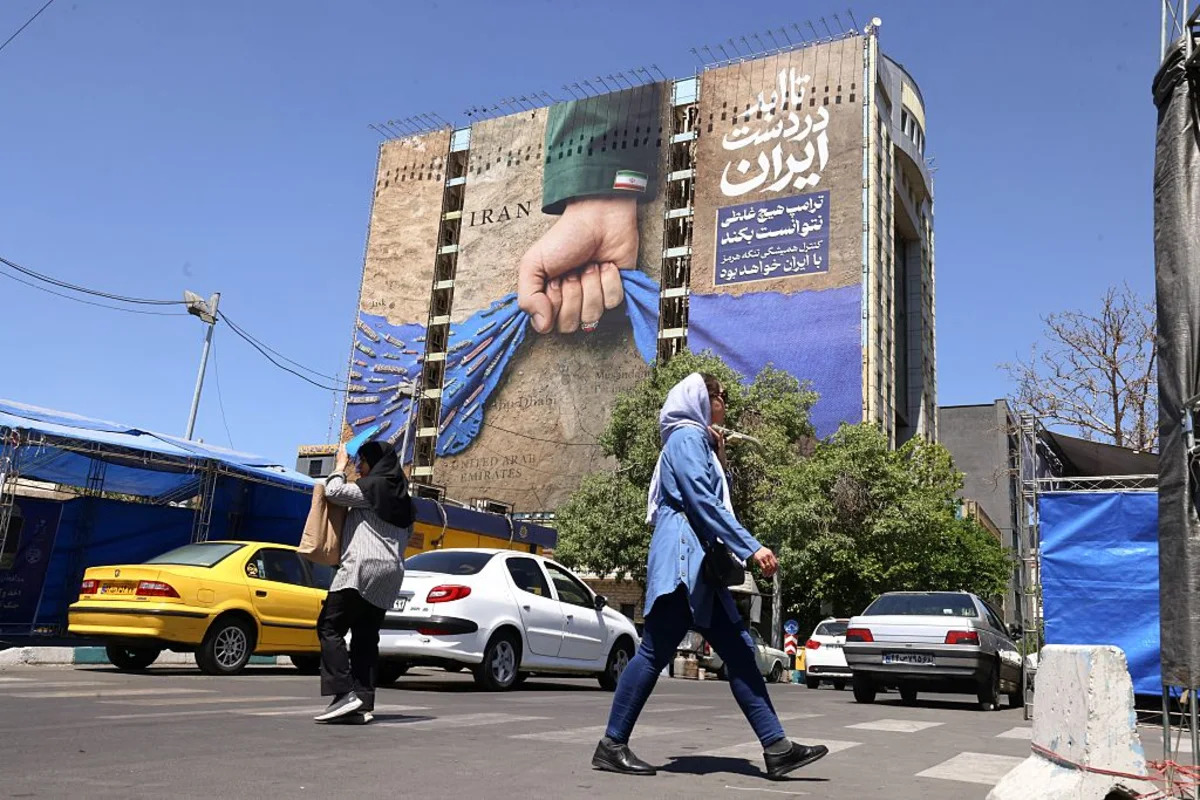
Speaking to press during a visit to Athens, Rubio went on to say that Tehran has “lost complete control” of the Strait of Hormuz and is unable to prevent ships from going through the waterway.
“The Strait of Hormuz is open. There’s almost as much oil flowing out now as there was before this conflict began,” he added.
The Iranian economy does appear to be taking a large hit from the U.S.’s latest measures. Iranian state television claimed that Mohsen Paknejad, who has served as oil minister since August 2024, tendered his resignation over the past days.
The development came as the Iranian oil industry faces unprecedented challenges. Homayoun Falakshahi, the head of crude oil analysis at market intelligence platform Kpler, reported on Thursday that Iran had loaded no oil whatsoever at its export terminals in September, marking the first time Iran’s oil loadings had completely stopped since the 1979 Islamic revolution.