
(Oct. 8, 2026 / JNS)
Two massacres, two Islamic terror attacks, two world-historical events.
The anniversaries of Sept. 11, 2001 and Oct. 7, 2023 mark incidents that changed the course of history in both obvious and subtle ways. Among the results were the American war against Iraq and the Israeli war against Hamas in Gaza, respectively. Neither has been entirely successful, but both removed immediate threats while embedding other threats more deeply in Western society.
American academia could have reacted to 9/11 by patiently explaining what Association for the Study of the Middle East and Africa (ASMEA) founder Bernard Lewis called “the roots of Muslim rage”: the failure to create devout and thus “just” Muslim societies, the failure to establish good governance and subjugate the world and the rise of vastly more successful societies of Western nonbelievers who also practiced imperialism and colonialism, like every society in history.
But that was a minority view among most academics, especially in Middle Eastern Studies. The academic result of 9/11 was that all too many faculty blamed America and Israel for the attacks and lodged “American imperialism” and “Israeli settler-colonialism” deep within the higher-education curriculum.
Today no discipline is free to discuss either the real roots of 9/11 or the way in which anti-Americanism and anti-Israel resentment have fundamentally shaped academia itself. A new poll conducted by ASMEA showed that academia is dramatically less able—and less free—to discuss 9/11. Moreover, the ideological constraints of DEI-saturated universities have prevented young faculty from speaking their minds on other controversial issues.
Imperialism and settler-colonialism, inaccurately regarded as uniquely Western, form the backbone of disciplines from Middle East Studies to English, with decolonization—in other words, the dismantling of Western systems of thought and nation-states—as a related political goal. Israel is the leading target, but the West as a whole is in the crosshairs.
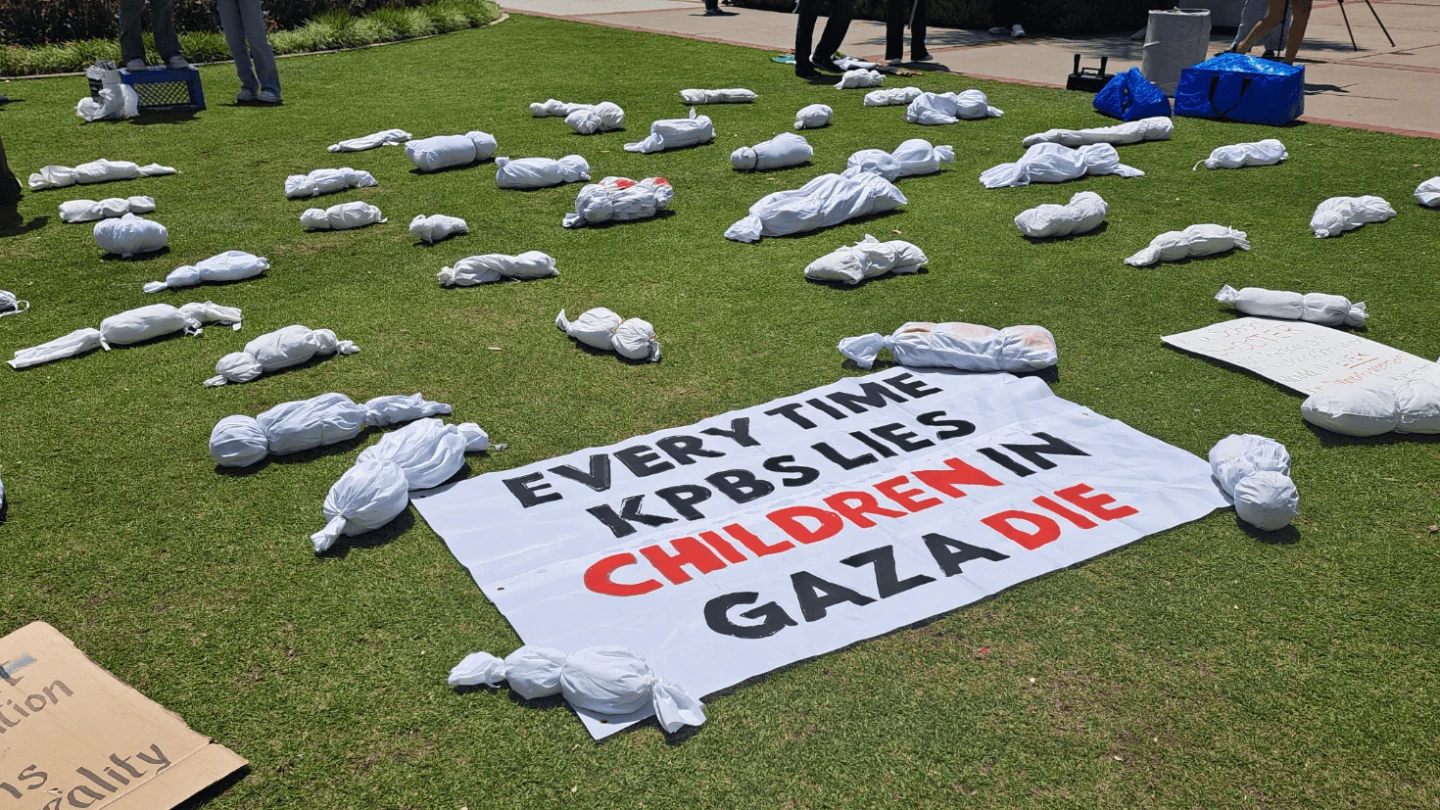
If the long-term impact of 9/11 on academia was to cast America and Israel as villains, the Hamas attacks of Oct. 7, 2023 completed the process. Protests against a nonexistent “genocide” began the very next day, before any Israeli military response, and brought crowds to campus quads and the streets of London and other cities. They showed how cognitive processes had been short-circuited by indoctrination masquerading as education. Facts no longer mattered, only slogans and emotions. The “genocide” is no more real today than it was at the beginning, but it is now part of an accepted, almost religious doctrine that has spread from campus to politics and culture.
Beginning that day in 2023, a cascade effect produced campus encampments and building takeovers, walkouts by high school students and the harassment of Jewish students. It has escalated into shots fired at synagogues and Jews being chased through the streets of Western cities, including New York. This week, global celebrations of Hamas’s massacres will take place under the guise of giving “glory to the martyrs” and decrying the nonexistent “genocide.” The erasure of facts, and of Jews, will be singular and profound.
Americans’ loss of confidence in higher education may be attributed in no small part to Hamas’s decision to attack Israel.
Jews everywhere live behind higher and higher walls as attitudes fostered on campus have percolated into politics and culture, contributing to rising violence. Jews are the leading targets of hate crimes in the United States and Europe.
But, as interview after interview showed, students could not identify which “river” and which “sea” were referenced in their new favorite chant. Nor could they define where “Palestine” is or what “free Palestine” means: a separate state living alongside Israel, a single binational state where Jews and Muslims magically coexist or a purely Muslim Palestine where the Jews have been disappeared.
At their root, these failures are educational: the product of decades of indoctrination overseen by an administrative mediocrity that was displayed before Congress and the nation when three university presidents behaved like deer caught in the headlights of an oncoming train, unable to articulate their own institutions’ policies on antisemitism.
The resulting loss of confidence in higher education among the American public has been palpable and may be attributed in no small part to Hamas’s decision to attack Israel, use its population as human shields and badly lose its war of extermination. Academia’s failure to prepare Americans to understand this, along with the attention suddenly thrust upon academia’s fantastic and unsustainable costs and low rate of return, has obviously ruined its reputation among a broad swath of Americans.
U.S. President Donald Trump’s campaign against higher education, which has seen countless lawsuits and countersuits as well as the cutoff of research funding, is another result. The cozy relationship between the federal government and higher education—in which the former shovels money and looks the other way while the latter does and charges whatever it wants—is now over.
The impact of Oct. 7 on American society has also been felt profoundly in the Jewish community. The majority of American Jews have long considered themselves to be on the left, but they now see the institutions they have wholeheartedly supported falsely accuse fellow Jews of “genocide” and deem American Jews supporters of this chimera.
The response has been twofold: a large number have moved rightward, away from these institutions, including a Democratic Party increasingly dominated by “democratic socialists” and Muslims. Democrats call for the cutoff of all aid to Israel and vilify AIPAC as the arm of an “Epstein class” manipulating world politics. Other left-leaning institutions, such as those in the arts and publishing, have taken the opportunity to purge themselves of Jews.
Zionism itself—the Jewish national liberation movement and nation-building project, founded on millennia of Jewish religious belief and residence in their land of origin—is again vilified as a form of “racism.” The small but loud minority of Jews who adhere to this view are among Oct. 7’s most pathetic casualties, trading a literal birthright for Marxist nostrums and hints of acceptance from a feral leftist movement. The declaration by Britain’s Green Party that its Jewish members face expulsion for attending “Zionist” synagogues shows the inevitable logic that Jews in the United States will face.
Sept. 11 and Oct. 7 bookend 25 years of profound decline in education at every conceivable level. Reversing the impact by rethinking and rebuilding academia is an American imperative.