
Facebook
Twitter/X
LinkedIn
Pinterest
Reddit
Email
Print
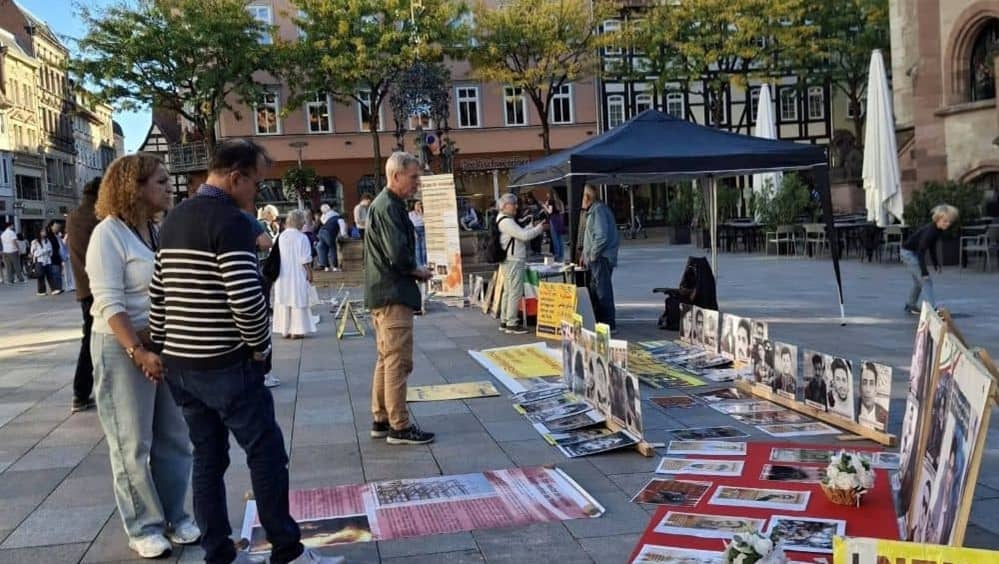 On October 6, 2026, NCRI supporters in Göttingen, Germany, held a book stand and photo exhibition in support of the “No to Execution Tuesdays” campaign inside Iran
THIS PAGE WILL BE UPDATED WITH THE LATEST NEWS
UPDATE: 7:30 AM CEST
Iran’s Resistance Units Defy Regime’s Execution Campaign with Operations Across the Country

On October 6, PMOI/MEK Resistance Units carried out 20 operations against the Iranian regime’s centers and symbols of repression in response to the execution of Alireza Sepahi and Alireza Raisi, two young protesters arrested during the January 2026 uprising.
The operations were reported in Tehran and 15 other cities, including Shahriar, Andisheh, Isfahan, Mashhad, Chabahar, Zahedan, and Bandar Abbas. They targeted IRGC Basij facilities, propaganda promoting the regime’s intelligence and surveillance apparatus, and billboards and posters featuring regime leaders.
The campaign came just one day after the two young protesters were executed in Isfahan, demonstrating the contrast between the regime’s attempts to intimidate society through executions and the continued activities of organized resistance across Iran.
Several operations directly targeted institutions associated with the regime’s security and intelligence apparatus.
In Chabahar, Resistance Units set fire to the entrance of an IRGC Basij base. In Iranshahr, they targeted a regime building, while in Zahedan, they set fire to a signpost of another Basij base.
Executions of Women in Iran in 2026: The Human Cost of State Violence

As the World Day Against the Death Penalty is observed, the situation of executions of women in Iran presents a horrifying picture of the scale of structural violence against women.
According to information documented by the Women’s Committee of the National Council of Resistance of Iran, at least 28 women have been executed in prisons across Iran since the beginning of 2026. Over a twelve-month period, from October 2025 to October 2026, the number of women executed in Iran reached at least 54. This shocking figure underscores the continued use of the death penalty against women.
These figures have been recorded under circumstances in which, following the nationwide protests of January 2026, months of widespread internet shutdowns, severe communication restrictions, and extensive censorship made the flow of information from inside Iran to the outside world extremely difficult and, in many cases, virtually impossible.
At the same time, a significant number of executions are never officially announced by judicial authorities or state-run media.
Iran’s Dollar Crisis Exposes the Limits of Regime Currency Intervention

The Iranian regime’s latest attempt to halt the collapse of the rial has done little to calm the currency market. After the Central Bank announced plans to inject up to $2 billion into the foreign-exchange market, the dollar nevertheless approached 2.7 million rials in the open market. By October 3, Reuters reported a rate of around 2.688 million rials per dollar, while the rial had lost more than half of its value over the previous year.
The significance of this intervention goes beyond economics.
The increasingly heated dispute among regime officials over the $2 billion operation reflects a deeper fear: the exchange rate has become directly connected to social and political instability.
That connection was made especially clear by the remarks of regime parliamentarian Gholam-Ali Haddad-Adel’s parliamentary colleague Amir-Hossein Kouchakzadeh, who attacked the plan associated with Central Bank Governor Abdolnaser Hemmati. His argument was straightforward: ordinary Iranians do not have the enormous amount of rials required to purchase thousands of dollars at the subsidized rate. The beneficiaries, he argued, would be those with access to capital and the regime’s privileged financial networks.
Iran’s Rent Crisis: Millions Sacrifice Basic Needs to Keep a Roof Over Their Heads
Iran’s escalating rent crisis is no longer simply a matter of rising housing costs. It has become a stark measure of the economic and social pressure imposed on millions of households by Iran’s regime. For millions of tenants, keeping a roof over their heads increasingly means sacrificing food, healthcare, education, and other basic necessities.
A recent report by Etemad newspaper, titled “The Nightmare of Rent on Life,” highlights only part of this widening crisis. At its core is a housing market shaped by rampant commodification, entrenched rent-seeking interests, economic instability, and the absence of effective mechanisms through which citizens can defend their rights.
According to a campaign advocating tenants’ rights cited in the report, around 7 million Iranian households are tenants. That represents tens of millions of people exposed to repeated rent increases, non-renewal of leases, forced relocation, and growing insecurity over their housing.
The campaign argues that housing cannot be treated merely as a commodity because access to secure housing directly affects the ability to establish a family, maintain health, educate children, and participate in society.
Iran’s Transportation Sector Loses Millions of Dollars Daily
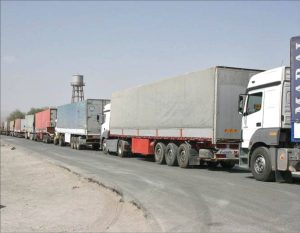
Delays involving trucks at Iran’s land borders have become one of the costliest challenges facing the country’s foreign trade. Queues of thousands of trucks at the Bazargan and Rimdan crossings impose millions of dollars in costs every day. These expenses affect truck owners, merchants, manufacturers, and ordinary people’s livelihoods.
In recent days, the head of the Transportation Commission of the Tehran Chamber of Commerce has painted a troubling picture of conditions at Iran’s borders. According to him, between 4,000 and 5,000 trucks are stranded at the Bazargan crossing on the Turkish border, while approximately 3,000 are stuck at Rimdan on the Pakistani border. Together, the two queues amount to around 8,000 trucks. These figures indicate the widespread scale of border congestion. He said that, depending on the size of each crossing, more than 3,000 to 4,000 trucks may be waiting at some borders.
At the Bazargan crossing, some trucks remain stranded for 23 to 25 days, even though crossing the border should take about two days. In other words, the delays last more than 12 times longer than normal. Truck congestion on this scale disrupts supply chains and makes delivery schedules unpredictable. Some cargo previously transported by sea has now been diverted to road and rail routes. The influx of this volume of goods has placed additional pressure on the transportation network.
Iran: Shervin Bagherian, a Young Man Sentenced to Death in the Alikhani Square Case, at Risk of Execution
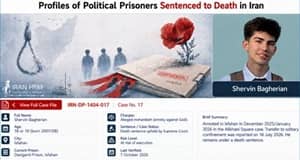
Shervin Bagherian was born in 2007/08. His occupation, education and family circumstances are unknown. Without his day and month of birth, his exact age at the time of the events of 8 January 2026 cannot be established: he may have been 17 or 18. Clarifying this is essential to the legal assessment of his death sentence.
Shervin was arrested in Isfahan in December 2025/January 2026. The case known as “Alikhani Square” concerns the protests of 8 January 2026 in the area between Malek Shahr and Kaveh. Judicial authorities linked the case to the deaths of four members of the Basij and special police units. Following these events, 59 people were arrested and 12 defendants in this case were sentenced to death.
Branch One of the Isfahan Revolutionary Court sentenced Shervin to death on a charge of moharebeh (enmity against God), and the Supreme Court upheld the sentence. Mohammad Barati-Dorcheh and Mohammad Tavakoli, known as Vakili, have been identified as judges in the case. The dates of sentencing and notification, and the lawyer’s name, are unknown. Accounts differ on the number of death sentences imposed on Shervin; his death sentence is confirmed, but the exact number remains unclear.
Reports concerning defendants in this case describe restrictions on effective access to lawyers of their choice, brief court hearings, and allegations of torture and forced confessions. Individual details of Shervin’s interrogation, defence and the evidence used against him are unknown.
Iran: Death Sentences Against Protesters
The issuance and execution of death sentences against individuals arrested during nationwide protests in Iran have taken on increasingly alarming dimensions. An examination of recent cases involving protesters in Tehran, Arak, and Pakdasht demonstrates that the judiciary of the Islamic Republic—relying on confessions extracted under torture, denying access to independent legal representation, and ignoring the minor age of defendants at the time of the alleged offenses—violates the most fundamental principles of fair trial and international human rights law. A participant in the January 2026 protests in Tehran who was transferred to Fashafouyeh (Greater Tehran) Prison after several months of detention and torture in security facilities. His trial was held in July 2026 before Branch 26 of the Tehran Revolutionary Court, presided over by Judge Iman Afshari. He was sentenced to death on charges of “Moharebeh” (Enmity against God), a verdict recently formally communicated to him in prison.
A resident of Kermanshah and a protester from the January 2026 demonstrations who was arrested in March 2026 and subsequently transferred to Greater Tehran Prison. His court session took place approximately two months ago in Branch 23 of the Tehran Revolutionary Court. His death sentence on charges of “cooperation with hostile states” was recently served to his attorney. Details regarding the evidence relied upon and the conditions of his interrogation remain obscured in opacity.
Arman Almasi, 43, married and father to two children aged 2 and 6, was arrested in the early morning of January 4, 2026, when Markazi Province intelligence officers raided his home in Mahallat. The charge levied against him is “setting fire to a Mahallat Intelligence Department vehicle.” Following his arrest, he was transferred to a detention center and has been held for nearly eight months in Arak Prison, the administrative center of Markazi Province.
Reports indicate severe physical and psychological pressures during the first five days of detention aimed at extracting coerced confessions. Security agents used physical torture alongside false promises that admitting guilt and offering financial compensation would guarantee immunity from the death penalty. Relying on these assurances, his family sold their shop and inventory to pay 8.5 billion IRR in damages for the vehicle. Nonetheless, the Arak Revolutionary Court issued a death sentence, disregarding his statements regarding torture and the invalidity of the confessions.
Iran: Revival of 26 Baha’i Cases in Shiraz and a New Wave of Heavy Sentences
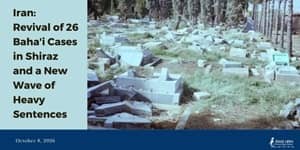
This report examines the alarming dimensions of the revival of the judicial case involving 26 Baha’i citizens in Shiraz after a decade of legal proceedings and an acquittal ruling. The case—which followed the overturning of initial rulings by the Supreme Court and a definitive acquittal issued by the Shiraz Court of Appeal in January 2023—has now been re-initiated following an objection by the Chief Justice of Fars Province and the invocation of Article 477 of the Code of Criminal Procedure. In addition to this case, the document highlights a widespread wave of heavy sentences issued against Baha’i citizens in various cities (including Tehran and Karaj) in recent months, providing a legal analysis of the judiciary’s invocation of Article 500 bis of the Islamic Penal Code and its blatant contradiction with fair trial standards and the International Covenant on Civil and Political Rights (ICCPR).
The violation of the rights of religious minorities, particularly Baha’i citizens in Iran, has always been a core pillar of the repressive policies implemented by the Islamic Republic’s judicial structure. In recent months, the judiciary has organized a new wave of pressure, summons, arrests, and heavy prison sentences against followers of the Baha’i faith by activating extraordinary legal mechanisms such as Article 477 and applying vague charges such as Article 500 bis of the Islamic Penal Code. While documenting the case of the 26 Baha’i citizens in Shiraz and several other cases in Tehran and Karaj, this report evaluates the legal dimensions and blatant contradictions of these judicial practices with the Iranian government’s international obligations.
Iran Lawmakers Challenge Central Bank Plan to Sell Up to $2 Billion in Foreign Currency
The Central Bank says selling foreign currency, with a purchase cap of $10,000 per person, will help manage the market, but lawmakers have raised questions about the use of foreign-currency resources, production priorities and how the decision was made.
Iran’s Central Bank has launched a plan to supply up to $2 billion in foreign currency to the market, with an initial $1 billion phase allowing people over the age of 18 to purchase up to $10,000 each, a decision that has drawn objections from a number of lawmakers and questions over how the country’s foreign-currency resources should be prioritized.
Abdolnaser Hemmati, governor of the Central Bank, has said the $10,000 ceiling does not mean every applicant is purchasing that amount, and that the average purchase has been about $5,000. The Central Bank considers the policy part of its intervention to regulate the market and has argued that selling foreign currency “at the margin of the market” can prevent rent-seeking created by differences between exchange rates.
Berlin Sit‑In Enters Day 221: PMOI Supporters Demand Embassy Closure and End to Executions in Iran
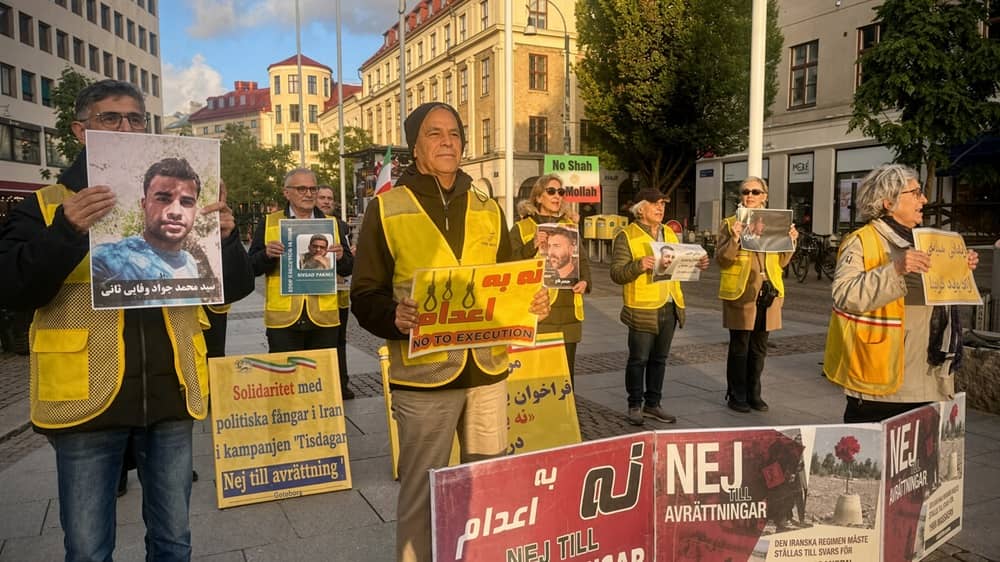
Berlin, Germany — October 6, 2026: For the 221st consecutive day, supporters of the People’s Mojahedin Organization of Iran (PMOI/MEK) maintained their sit-in protest outside the Iranian regime’s embassy in Berlin. The demonstrators condemned the executions carried out by the mullahs’ regime, with particular emphasis on the killing of political prisoners and the ongoing wave of executions targeting protesters arrested during uprisings across Iran. They also reiterated their call for an end to the death penalty.
The protesters called for the closure of the embassy, as a center of espionage and terrorism operated by the Iranian regime in Germany. They are also demanding accountability for the regime’s systematic repression, human rights violations, and continuing executions in Iran.
The sit-in reflects the protesters’ opposition to both the clerical dictatorship and a return to the former monarchical system. Their position is expressed in the slogan, “Down with the oppressor, be it the Shah or the Supreme Leader.” They say Iran’s future should be based on a free and democratic republic rather than another form of dictatorship.
Göttingen Exhibition Shows Solidarity With Iran’s “No to Execution Tuesdays” Campaign
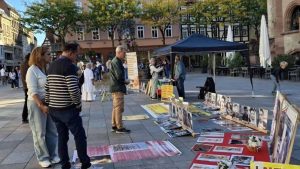
Göttingen, Germany — October 6, 2026 — Supporters of the Iranian Resistance held a book table and photo exhibition in Göttingen in support of the “No to Execution Tuesdays” campaign. The event condemned the Iranian regime’s widespread use of the death penalty and called for an end to repression, regime change, and the establishment of a democratic republic in Iran.
Participants highlighted the campaign against executions and expressed solidarity with political prisoners and individuals facing the threat of execution.
The exhibition featured powerful images of those killed during popular uprisings against Iran’s theocratic dictatorship. The photographs commemorated their courage and sacrifice and underscored their demands for freedom, human rights, and democracy.