
Prime Minister Benjamin Netanyahu’s claims that he didn’t receive warnings ahead of October 7 are false, former senior Shin Bet (Israel Security Agency) official Ilan Segev said during an interview on Kan News’ Reshet Bet on Friday.
“We need to distinguish between an intelligence picture and an intelligence warning,” Segev said during the interview. “There was indeed an intelligence picture, and no one should tell us that we didn’t know Hamas wanted to attack or that we didn’t understand its capabilities.”
Netanyahu himself had outlined in April 2017 the exact scenario of the attack during a State Control Committee meeting, Segev claimed.
During the meeting that took place about six years before the attack, Netanyahu described “commandos, drones, the takeover of communities, the kidnapping of civilians, the kidnapping of soldiers. It’s all there. There’s a video on YouTube that absolutely anyone can watch,” said Segev.
The claims come just a day after Netanyahu’s former military secretary Avi Gil revealed that Netanyahu’s chief of staff allegedly tried to change the official record of the prime minister’s schedule.
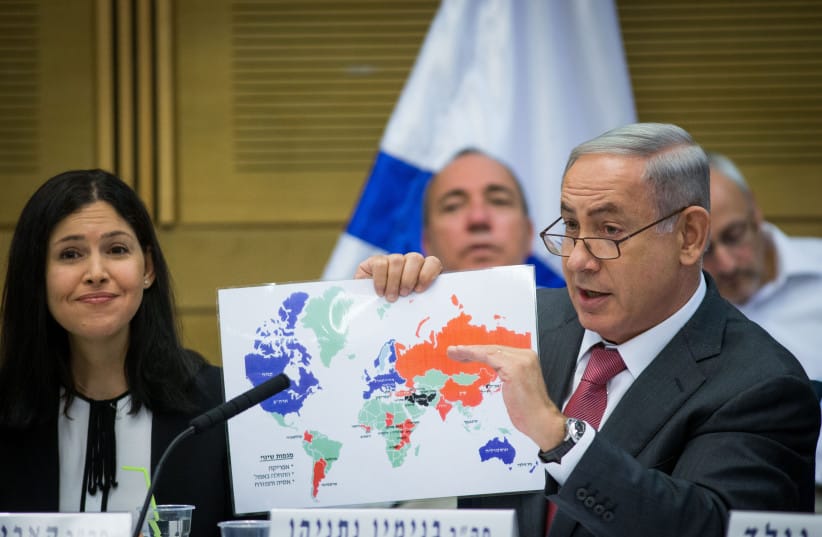 Israeli Prime Minister Benjamin Netanyahu (R) attends a session of the State Control Committee at the Knesset, Israeli parliamant in Jerusalem. on July 25, 2016. (credit: YONATAN SINDEL/FLASH90)
Gil recounted the hours leading up to the attack, alleging that intelligence reports circulated through the security establishment’s systems overnight and reached computers in the offices of the head of the Research Division and the Military Intelligence Directorate.
Netanyahu received intelligence from Shin Bet, Segev claims
Segev accused the prime minister of receiving intelligence from the Shin Bet, adding that his claim that he “didn’t know or hear anything” was false. “Come on, guys, seriously, there’s a limit,” he said during the interview.
Segev also alleged that Netanyahu had repeatedly rejected the agency’s recommendations over the years to assassinate senior Hamas officials. He recalled having recommended the assasination of Hamas military chief Ahmed Jabari, who had been on the Shin Bet’s list of assassination targets.
“We approached the prime minister with an operation to assassinate him after identifying that Jabari followed the same fixed routine every day,” Segev said. “It was a very complex operation involving complicated technological preparations, and we conducted several simulations in northern Israel to make sure it would work properly.”
“We reached a point where we knew we were capable of assassinating Jabari, and of course this was brought to the prime minister. His response was, as in another case, ‘Maintain readiness,’ he continued.
Segev said that readiness for such operations doesn’t entail “putting the operational orders in a drawer and waiting for someone to tell us to carry them out.”
“It means keeping entire teams working and active, the technology division, explosives, a thousand and one other things,” he said. “But every time we came back and said, ‘We’re ready,’ we received the same response: ‘Maintain readiness.'”
Miriam Sela-Eitam and Corinne Baum contributed to this report.