
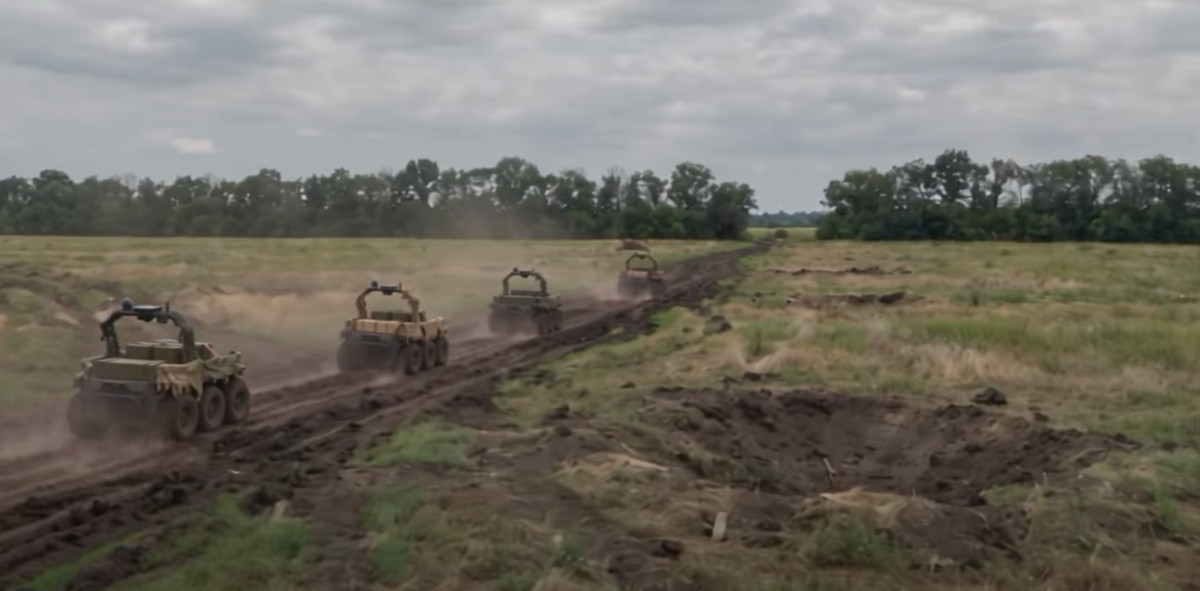
Ukraine’s ground robots rescued 45 soldiers from under Russian fire and transported more than 41 tons of supplies to frontline positions during the summer of 2026, according to the Artan special unit under Ukraine’s Military Intelligence Directorate (HUR).
Artan commander Col. Viktor Torkotiuk, call sign Titan, said crews operating the unmanned ground vehicles (UGVs) worked continuously along the front, according to RBC-Ukraine.
JOIN US ON TELEGRAM
Follow our coverage of the war on the @Kyivpost_official.
During the summer campaign, the platforms covered a combined distance of approximately 4,258 kilometers (2,646 miles), with tasks ranging from supporting frontline logistics to evacuating wounded Ukrainian troops and transporting captured Russian soldiers.
Robots enter areas too dangerous for vehicles
The ground platforms allowed Ukrainian forces to evacuate wounded troops from exposed positions without sending additional personnel or conventional vehicles into areas monitored by Russian drones.
Torkotiuk said the drones help free up valuable resources.
“Technology is transforming the combat capabilities of units on the front line,” Torkotiuk said. “Innovative logistics frees up capabilities and forces for active operations and offensive actions,” he added.
The unit did not specify how many vehicles took part in the missions, how many individual journeys they completed, or which ground-robot models they used.
Ground robotic systems vary in size and configuration. Some transport ammunition, food and other supplies, while others can carry wounded soldiers, conduct reconnaissance, clear mines or operate mounted weapons.
Other Topics of Interest
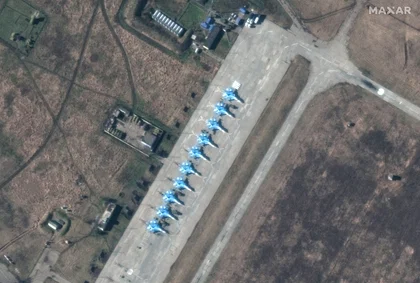
Russia Steps Up Production of Improved Su-34 ‘Fullback’ Bombers
Russia received its second batch of upgraded Su-34M/NVO fighter bombers for 2026 on Wednesday as the manufacturer promises no let up in the aircraft’s rates of production.
Ukrainian troops have said such platforms are particularly useful inside the so-called kill zone, where ordinary evacuation vehicles can quickly be detected and targeted by surveillance and attack drones.
Frontline soldiers have previously told Kyiv Post that robots are not replacing troops but are increasingly performing the most dangerous logistical and medical evacuation missions.
Artan operates in Zaporizhzhia and near Lyman
Artan said its main area of operations is currently the Zaporizhzhia front in southern Ukraine, a region where over 70 percent is under Russian occupation, most of which since 2022.
The unit also participated in one stage of Ukraine’s Operation Vivaldi near Lyman in eastern Ukraine during the spring and summer campaign. The operation recovered at least 125 square kilometers (48 square miles) of territory and disrupted Russian attempts to advance toward Sloviansk and Kramatorsk.
Analysts suggest the operation has reversed Russian gains made in 2026 and thwarted Moscow’s goal to capture eastern Ukraine’s Donetsk region.
The HUR special operations unit was formed on June 1, 2022. Its personnel have fought in some of the war’s most contested areas and participated in land and Black Sea operations, including the 2023 campaign that helped open the road to Klishchiivka and create an escape route for Ukrainian forces encircled by the Russians in the Donetsk region’s Bakhmut.
Ukraine expands its robotic army
Ukraine is rapidly increasing its use of ground robots to reduce the number of soldiers exposed during supply runs and casualty evacuations.
President Volodymyr Zelensky set a target to provide the military with at least 50,000 ground robotic systems by 2026.
The systems are becoming a regular part of frontline operations as Ukraine seeks to compensate for personnel shortages and adapt to a battlefield where drones can detect and attack conventional vehicles several kilometers behind the contact line.