
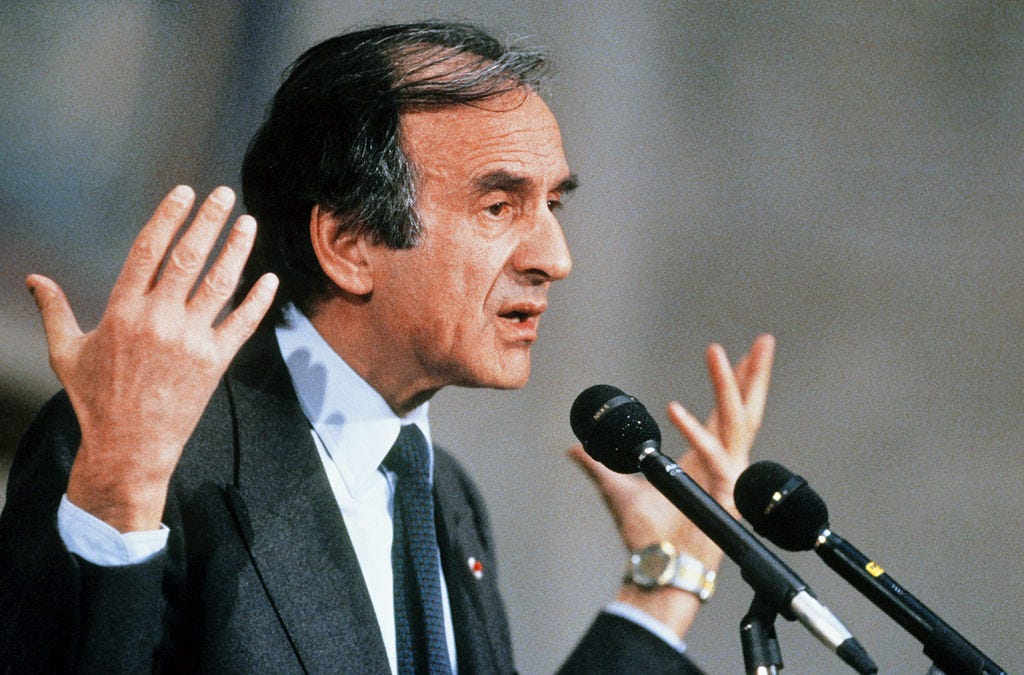
On December 10, 1986, I was 14 years old, sitting in Oslo City Hall as my father, Elie Wiesel, accepted the Nobel Peace Prize. I will never forget the look of hope on his face that day. He had spent his life tortured by the thought that the world had looked away from the Jewish people as the Nazis filled the gas chambers and crematoria with our brothers and sisters, aunts and uncles, children. Finally, he felt seen, and he had a message to share. As he put it in his acceptance speech, “We must always take sides. Neutrality helps the oppressor, never the victim.” My father was honored because he had turned the memory of genocide into a moral duty to the living.
This morning, the same committee awarded the same prize to Navi Pillay, who chaired the UN commission of inquiry that, on September 16 of last year, betrayed the meaning of the word genocide and weaponized it against Israel. Her commission held Israel to impossible moral standards demanded of no other sovereign nation defending itself from attack. The decision followed years of anti-Israel advocacy by Pillay, including signing a manifesto in 2020 calling on governments to “Sanction Apartheid Israel.” Others have been able to see Pillay for who she is. In 2022, for example, Berlin’s mayor withdrew her support from an event honoring Pillay with a peace medal. The event was subsequently canceled.
The decision to honor Pillay is not a onetime lapse for the Nobel Committee. It is part of a long-standing trend. Members of the committee have said publicly that they wished they could take back former Israeli prime minister Shimon Peres’s 1994 prize because of concerns over Israel’s conduct. A decade later, four of the five members were still defending former Palestine Liberation Organization chairman Yasser Arafat’s prize, awarded that same year. The Israeli laureate was judged by everything he did afterward. The Palestinian laureate was never judged again. Antisemitism today looks less like hatred than like scrutiny with one permanent defendant, carried out in the language of justice. Kåre Kristiansen, a member of the committee, understood this. He resigned within an hour of the 1994 announcement because he could not honor a man whose record was soaked in terror.